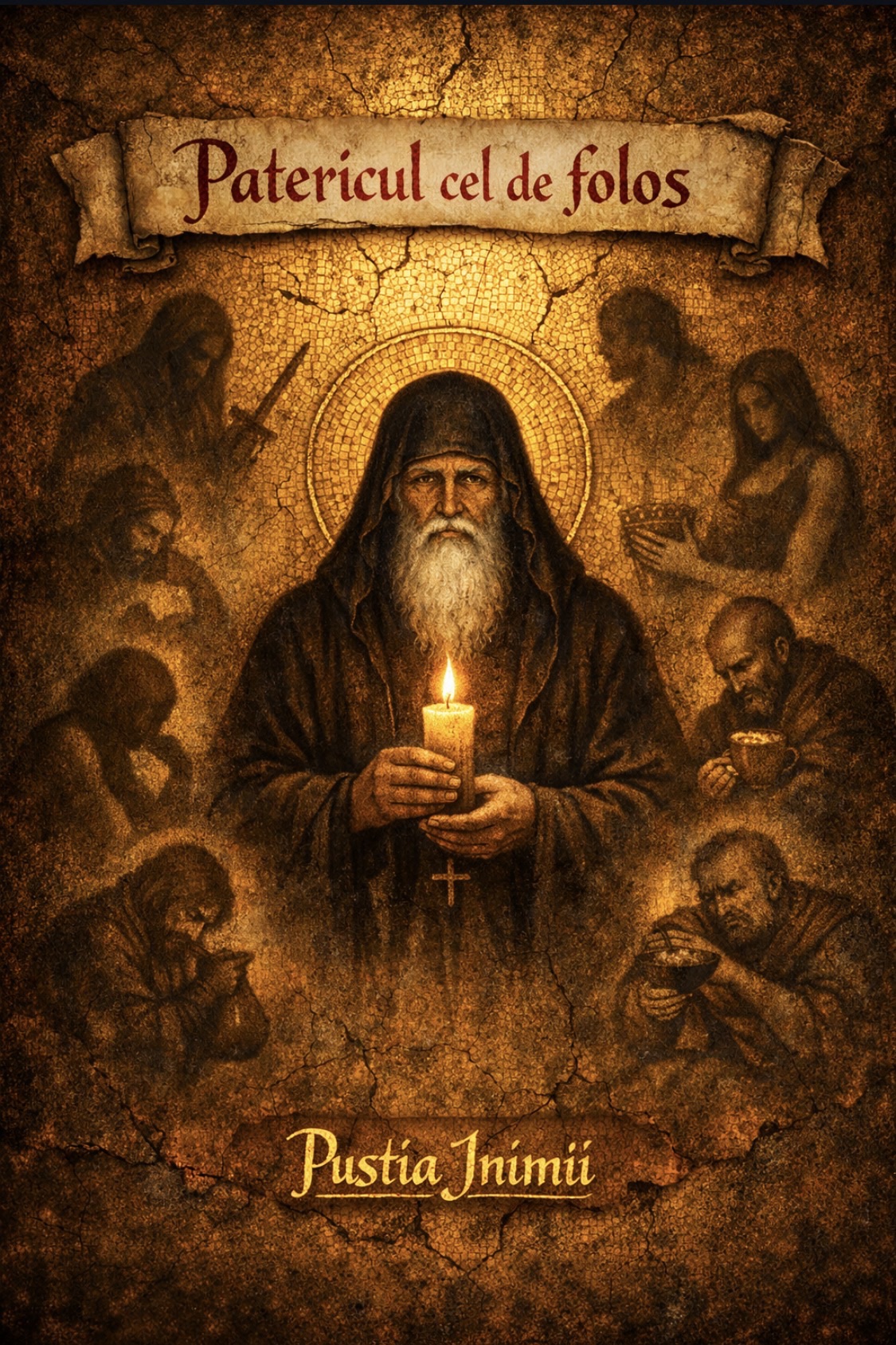

An elder said:
“I saw a brother swollen like a bladder full of wind, and I asked him: what do you carry within you?
And he answered: I believe myself greater than other men.
And I said to him: this is pride, mother of all falls, which cast the shining angel down from heaven into darkness.
And I said again: the proud man sees no one, not even himself—therefore he falls without knowing from where.”
He said again:
“Another ate without ceasing, though his body was like a bottomless sack.
I asked him why he did not stop, and he said: I know not how to be filled.
This is gluttony of the belly, which kills the spirit through the flesh.
And I saw that it was not the food that devoured him, but he himself had become food for his own desire.”
And concerning lust a father said:
“This fire burns swifter than all others, for it enters through the eyes and through thought,
and he who guards not his senses is like a man who keeps a burning coal in his bosom and wonders that he is burned.
And I said also: he who is burned no longer knows where the wound is and where the fire is—and then he can flee from neither.”
Of avarice an elder said:
“He who gathers without measure is like a man drinking seawater—the more he drinks, the thirstier he becomes.
And I saw that silver did not serve him, but he served silver as a merciless master.”
And of envy an Abba said:
“I saw a brother wasting in the face, though he lacked for nothing.
I asked what illness he had, and he said: my brother’s good fortune pains me more than my own misfortune.
This is envy, which gnaws the bone as rot gnaws the wood.
And I said: envy is healed only by thanksgiving—for only he who gives thanks can behold the light in another without darkening himself.”
Of wrath an elder said:
“The wrathful man is like a house whose roof the wind has torn away—every rain enters and ruins it from within.
And I said: wrath does not strike the other first, but the one who bears it—for he tears off his own roof and wonders that the rain falls on him.”
And of sloth, most cunning of the demons, a father said:
“It comes at noonday and whispers to the monk that the day is long and his cell is narrow,
and it makes all the other brothers seem worthy of contempt,
and makes him grow slothful until he forgets why he came into the desert.
And I said: sloth does not strike, it unbinds—it unbinds the mind, unbinds the will, unbinds prayer, until nothing is left to be unbound.”
And the elder concluded, saying:
“All these are seven doors of death, but all open from a single threshold: forgetfulness of God.
He who remembers Him in every hour leaves no entrance for the enemy.
For the remembrance of God is like light: it does not chase away the darkness, it makes it cease to be.”

