The Drop in the Hogshead and the Will That Adds It

“Punctum saliens of passion. — A person falling into a rage or into a violent passion of love reaches a point when the soul is full like a hogshead, but nevertheless a drop of water has still to be added, the good will for the passion (which is also generally called the evil will). This item only is necessary, and then the hogshead overflows.” — Nietzsche


In old embryology, punctum saliens was the leaping point: the first heartbeat in a body not yet formed. Nietzsche moves it into the soul. Passion too has a beginning that beats, and it lies not in fullness but in a drop. The hogshead fills with temperament, wound, habit and occasion, and it can stand full for days and years without spilling. What spills it is not the quantity but a yes: the will’s consent. The observation is deeper than the one who makes it knows, because everything the Fathers said about the passions says the same thing, only with the whole ladder in view.

 From Evagrius and Mark the Ascetic to St. John Climacus and St. Hesychios, the Philokalia distinguishes the steps: the assault (prosbolē), coupling with the thought (syndyasmos), assent (synkatathesis), captivity, and finally the rooted passion. Before assent there is not yet sin. Christ Himself was tempted “in all points like as we are, yet without sin” (Hebrews 4:15), and the assault in the wilderness (Matthew 4) found in Him neither coupling nor assent. Nietzsche’s drop is synkatathesis. St. James says it without metaphor: each is tempted by his own desire, which draws him and entices him; then desire, having conceived, gives birth to sin, and sin, when full-grown, brings forth death (James 1:14-15).

The Fathers see what the aphorism does not: the hogshead itself was filled entirely by drops. Today’s fullness is yesterday’s assent, repeated; captivity is what remains of unguarded yeses. The last drop is small yet decisive, not by weight, but because it hands over the vessel.

 Here the aphorism meets dogma. If the evil will belonged to human nature, Christ, who assumed the whole of nature (“what is not assumed is not healed,” says St. Gregory the Theologian), would have assumed it too. The Sixth Ecumenical Council (681) confesses two natural wills in Christ, divine and human, the latter following the former freely and without resistance. St. Maximus the Confessor distinguishes the natural will (thelēma physikon), the created and good faculty, from the gnomic will(gnōmē), the deliberative inclination that chooses among modes of acting and where deviation creeps in. Evil lies not in the faculty but in the mode of its use (tropos), according to nature or against it. The water is not evil, nor the vessel. Evil is the hand that pours.

So Gethsemane (Luke 22:42) is the punctum saliens reversed: in the hour of fullest dread, Christ’s human will also adds a drop, “not My will, but Thine be done,” equal in size, opposite in direction. Here the Christian parts from the fatalism of passion: the vessel may be full, but the hand remains free, and in Christ that hand has already been set in order.

 St. Dionysius the Areopagite teaches that evil has no being of its own and that no one does evil looking upon it as evil. This resolves Nietzsche’s seemingly contradictory phrase, “good will for the passion”: the will does not say yes to evil, but to an imagined good. “Good for food, and pleasant to the eyes” (Genesis 3:6) is the first drop, wearing the face of the good. St. Dorotheos of Gaza named the root of this deception self-justification: whoever assents at once finds himself in the right, so the hogshead often overflows with a quiet conscience.

Pagan philosophy also saw the point. The Stoics called the assent given to an impression synkatathesis. Seneca, in On Anger, distinguishes first movements, involuntary like a start or a pallor, from the passion that appears only when the mind assents. Aristotle, in the Nicomachean Ethics (VII), separates the self-controlled (enkratēs) from the uncontrolled (akratēs) and places prohairesis at the center of choice. The Fathers take over the word but change the physician. Not the sage alone, with his reason, reaches apatheia, but the will set to work together with grace. The Stoic strives not to assent; the Christian calls the Name. Reason keeps watch at the gate but cannot empty the hogshead alone.

 The image of the hogshead is hydraulic and anticipates Freud’s drive model: pressure demanding discharge. Psychology has since corrected it. Research on catharsis (Bushman, 2002) shows that venting anger does not drain it but feeds it: the drop given “to relieve” fills the vessel. Libet suspected, in a disputed interpretation, a window of veto in the instant before a voluntary act. Gross’s model of emotion regulation shows that early intervention (choosing the situation, directing attention) costs little, while late suppression, when the emotion is at its peak, costs much and holds little. Rumination (Nolen-Hoeksema) feeds the hogshead. In laboratory language this is nepsis, watchfulness at the threshold: not fighting the passion in full overflow, but guarding the gate, answering the assault (antirrhesis) before coupling.

 All this calls for measure, not anxiety. The Fathers do not ask the one who suffers involuntary movements to condemn himself, and they give no one the right to judge another’s hogshead (Matthew 7:1). Temperament, childhood wounds, illness, the age in which the soul grew are part of the water already poured, often without the will of the one who carries it. Scrupulosity is itself a kind of passion, a pride that wants to be flawless. The hogshead is emptied through confession, through tears (the Ladder), through the patience of a guide, not through self-torment. Psychology clarifies the mechanism but does not forgive sin. Spiritual direction forgives, but does not replace clarity.

Little remains to be done, and that little is everything: at the rim of the full vessel, before the drop falls, to say the Name. “Lord Jesus Christ, have mercy on me” is the other drop, just as small and just as free, but of opposite direction. “Keep thy heart with all diligence” (Proverbs 4:23), and the surest keeping is to entrust it to the One who set the human will in order at Gethsemane.
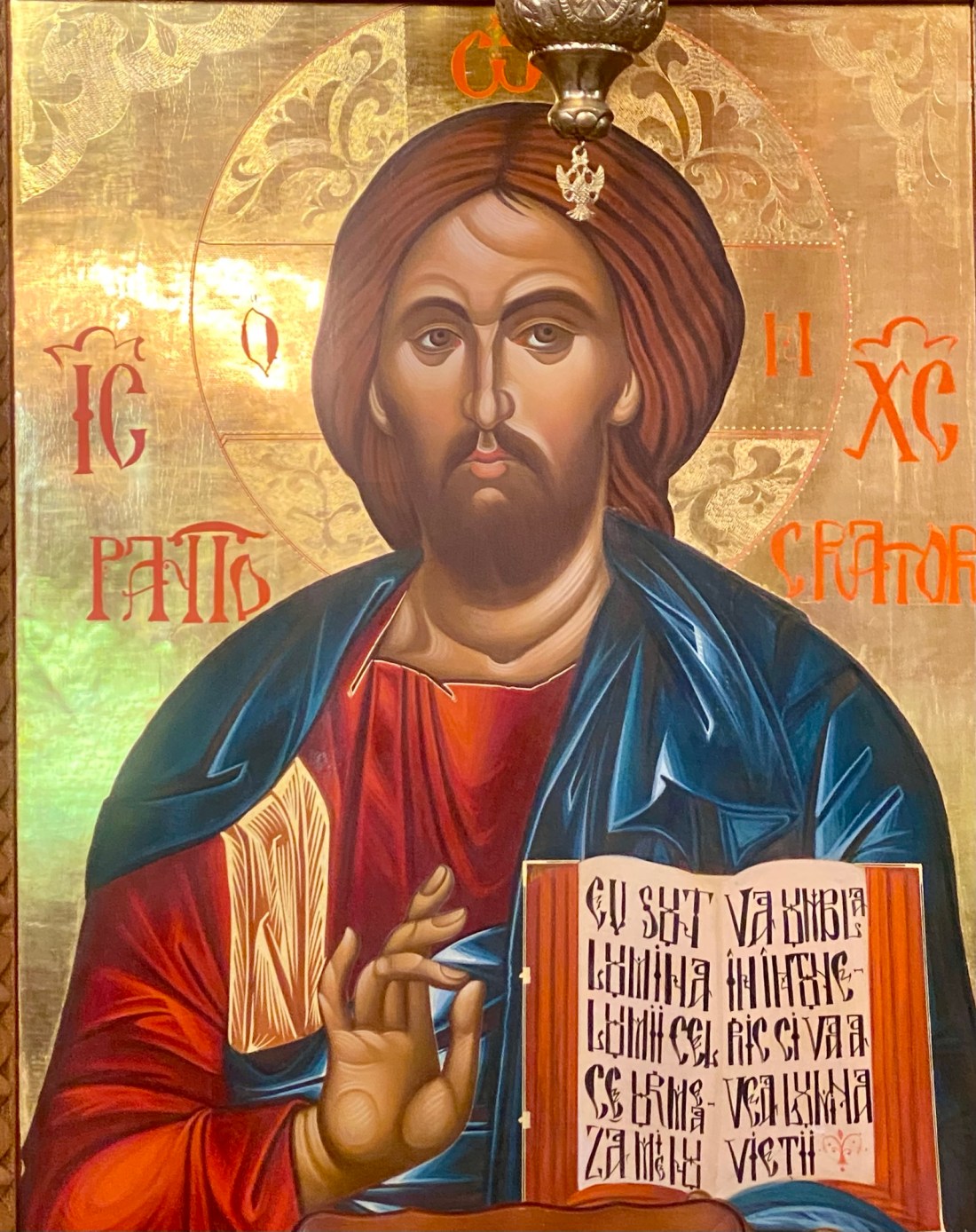
Picătura din butoi și voia care o adaugă

„Punctum saliens al patimii. — Omul care cade într-o mânie sau într-o violentă patimă de iubire ajunge la un punct în care sufletul este plin ca un butoi; și totuși mai trebuie adăugată o picătură de apă: buna voință pentru patimă (numită îndeobște și voia rea). Numai acest element este necesar; apoi butoiul dă peste margini.” — Nietzsche


În vechea embriologie, punctum saliens era punctul care saltă: prima bătaie a inimii în trupul încă nefăcut. Nietzsche îl mută în suflet. Și patima are un început care bate, iar acesta nu stă în plinătate, ci într-o picătură. Butoiul se umple de temperament, de rană, de obicei, de prilej, și poate sta plin zile și ani fără să verse. Ce îl varsă nu e cantitatea, ci un da: încuviințarea voii. Observația e mai adâncă decât știe cel ce o face, pentru că tot ce Părinții au spus despre patimi spune același lucru, dar cu scara întreagă înaintea ochilor.

 De la Evagrie și Marcu Ascetul până la Sfântul Ioan Scărarul și Sfântul Isihie, Filocalia deosebește pașii: atacul (prosbolē), însoțirea cu gândul (syndyasmos), încuviințarea (synkatathesis), robirea și, la urmă, patima înrădăcinată. Până la încuviințare nu e încă păcat. Hristos Însuși a fost ispitit „întru toate după asemănarea noastră, afară de păcat” (Evrei 4:15), iar atacul din pustie (Matei 4) nu a aflat în El nici însoțire, nici încuviințare. Picătura lui Nietzsche este synkatathesis. Apostolul Iacov o spune fără metaforă: fiecare este ispitit de propria poftă, care îl trage și îl momește; apoi pofta, zămislind, naște păcatul, iar păcatul, săvârșit, naște moartea (Iacov 1:14-15).

Părinții văd însă ce aforismul nu vede: butoiul însuși a fost umplut tot din picături. Plinătatea de azi e încuviințarea de ieri, repetată; robirea e ceea ce rămâne din da-urile nepăzite. Ultima picătură e mică, dar hotărâtoare, nu prin greutate, ci prin aceea că ea predă vasul.

 Aici aforismul întâlnește dogma. Dacă voia rea ar aparține naturii omului, Hristos, Care a luat natura întreagă („ce nu e luat nu e vindecat”, spune Sfântul Grigorie Teologul), ar fi luat-o și pe ea. Sinodul al VI-lea Ecumenic (681) mărturisește însă două voințe naturale în Hristos, cea dumnezeiască și cea omenească, aceasta urmând-o liber pe cea dintâi, fără împotrivire. Sfântul Maxim Mărturisitorul deosebește voința firească (thelēma physikon), facultatea creată și bună, de voința gnomică (gnōmē), înclinarea deliberativă care alege între chipuri de lucrare și în care se strecoară abaterea. Răul nu se află în facultate, ci în modul folosirii ei (tropos), după fire sau împotriva firii. Apa nu e rea, nici butoiul. Rea e mâna care toarnă.

De aceea Ghetsimani (Luca 22:42) este punctum saliens întors: în ceasul celei mai pline spaime, voia omenească a lui Hristos adaugă și ea o picătură, „nu voia Mea, ci a Ta”, de aceeași mărime, dar de sens contrar. Prin aceasta creștinul se desparte de fatalismul patimii: vasul poate fi plin, dar mâna rămâne liberă, și în Hristos ea a fost deja pusă în rânduială.

 Sfântul Dionisie Areopagitul învață că răul nu are ființă proprie și că nimeni nu săvârșește răul privindu-l ca rău. Așa se lămurește formula aparent contradictorie a lui Nietzsche, „bună voință pentru patimă”: voia nu spune da răului, ci unui bine închipuit. „Bun de mâncare și plăcut ochilor” (Facere 3:6) este prima picătură, purtând chipul binelui. Sfântul Dorotei din Gaza a numit rădăcina acestei înșelări îndreptățirea de sine: cel ce încuviințează își și află de îndată dreptate, așa că butoiul varsă adesea cu conștiința împăcată.

Filosofia păgână a văzut și ea punctul. Stoicii numeau synkatathesis încuviințarea dată reprezentării. Seneca, în Despre mânie, deosebește primele mișcări, involuntare, precum tresărirea și paloarea, de patima care apare abia când mintea încuviințează. Aristotel, în Etica Nicomahică (VII), desparte pe cel stăpânit (enkratēs) de cel nestăpânit (akratēs), iar în centrul alegerii pune prohairesis. Părinții preiau cuvântul, dar schimbă doctorul. Nu înțeleptul singur, cu rațiunea lui, ajunge la apatheia, ci voia pusă în lucru împreună cu harul. Stoicul se luptă să nu încuviințeze, creștinul cheamă Numele. Rațiunea veghează la poartă, dar nu poate singură goli butoiul.

 Imaginea butoiului e hidraulică și prevestește modelul pulsional al lui Freud: presiune care cere descărcare. Psihologia de după l-a corectat. Cercetările asupra catharsisului (Bushman, 2002) arată că ventilarea mâniei nu o golește, ci o sporește: picătura dată „ca să se ușureze” umple vasul. Libet a bănuit, într-o interpretare disputată, o fereastră de veto în fracțiunea de clipă dinaintea actului voluntar. Modelul de reglare emoțională al lui Gross arată că intervenția timpurie (alegerea situației, orientarea atenției) costă puțin, iar reprimarea târzie, când emoția e în vârf, costă mult și ține puțin. Ruminația (Nolen-Hoeksema) hrănește butoiul. În limbaj de laborator, aceasta e nepsis, trezvia la prag: nu lupta cu patima în plină revărsare, ci paza porții, răspunsul la atac (antirrhesis) înainte de însoțire.

 Toate acestea cer măsură, nu neliniște. Părinții nu cer celui ce suferă mișcări involuntare să se osândească și nu dau nimănui dreptul să judece butoiul altuia (Matei 7:1). Temperamentul, rănile copilăriei, boala, vremea în care a crescut sufletul sunt o parte din apa deja turnată, adesea fără voia celui ce o poartă. Scrupulozitatea este ea însăși un fel de patimă, o mândrie care vrea să fie fără cusur. Butoiul se golește prin spovedanie, prin lacrimi (Scărarul), prin răbdarea povățuitorului, nu prin chinuirea de sine. Psihologia lămurește mecanismul, dar nu iartă păcatul. Duhovnicia iartă, dar nu ține loc de lămurire.

Rămâne puțin de făcut, și acel puțin este totul: la marginea vasului plin, înainte să cadă picătura, să se spună Numele. „Doamne Iisuse Hristoase, miluiește-mă” este picătura cealaltă, la fel de mică și la fel de liberă, dar de sens contrar. „Mai presus de orice strajă păzește-ți inima” (Pilde 4:23), iar cea mai sigură pază a ei este să fie încredințată Celui care a pus voia omenească în rânduială la Ghetsimani.

Pofta ce ucide și fericirea ce nu se află

Pofta neînfrântă împinge sufletul spre moarte

Înțeleptul: „Într-adevăr, după socoteala ta smintită și după cum îți pare, tu ești largă și încăpătoare, dar spre a face răutăți, iar nu binefaceri; ești luminoasă și arătoasă ca să luminezi și să arăți căile cele urâte, să provoci vărsări de sânge și să pierzi suflete. După socoteala mea însă, înțeleg bine și cunosc frumos că te silești cât poți să mă faci să umblu cu poftă slobodă și cu dorința neînfrântă prin întunecoasa ta lumină. Astfel, odată cu lumina ta, mă va cuprinde bezna nebuniei, mă voi afla veșnic în pierzanie și în osândă și mă voi chinui cumplit și fără de sfârșit.”

Nu există fericire în lume și nici pământean fericit

Lumea: „Vai, vai, cum nu poți pricepe și nu te poți învrednici să cunoști că cei ce petrec liber întru mine sunt fericiți și plini de toate, și astfel să te silești a trăi și tu împreună cu ei!”


Înțeleptul numește lucrurile pe numele lor: nu lumină, ci întuneric luminat mincinos; nu libertate, ci poftă slobodă, adică patimă fără frâu. Sfântul Apostol Iacov descrie exact acest lanț: pofta zămislește păcatul, iar păcatul, o dată săvârșit, naște moartea (Iacov 1:14-15). Nu lumea îl ucide pe om printr-o lovitură din afară, ci prin propria lui poftă, pe care doar o hrănește și o luminează fals, ca omul să creadă că merge spre libertate, când de fapt coboară spre robie și spre pierzare veșnică.

Sfântul Isaac Sirul învață că patima neînfrânată întunecă mintea mai rău decât orice noapte fără stele, pentru că omul stăpânit de poftă nu-și mai poate vedea propria cădere — crede că se îndreaptă spre lumină tocmai când se afundă în beznă. De aceea Înțeleptul se teme nu de moartea trupului, ci de „bezna nebuniei” și de osânda fără de sfârșit: pofta neînfrânată nu ucide o singură dată, ci ține sufletul într-o moarte necurmată, repetată la fiecare cedare.

Lumea, respinsă pe acest front, nu cedează, ci schimbă îndată momeala: dacă nu poate amăgi prin poftă, încearcă prin făgăduința fericirii. Cei ce „petrec liber” întru ea — spune ea — sunt fericiți și plini de toate. Este exact strigătul pe care Solomon, cel ce a gustat tot ce lumea putea da, l-a rostit cu durere: „Deșertăciunea deșertăciunilor, toate sunt deșertăciune” (Eccl. 1:2). Sfântul Ioan Gură de Aur observă că nimeni n-a numit vreodată lumea aceasta loc al odihnei decât acela care încă n-a cunoscut-o cu adevărat; cel ce a gustat-o până la fund a găsit-o mereu neîndestulătoare, pentru că a fost făcută pentru vremelnicie, iar sufletul, pentru veșnicie.

Libertatea pe care o oferă lumea este, așadar, o robie deghizată, iar fericirea ei, o foame care nu se satură niciodată. Fericirea adevărată nu se află „liber întru lume”, ci în măsura în care lumea este stăpânită prin înfrânare și îndreptată spre Dumnezeu — singurul în care odihnește cu adevărat sufletul (Ps. 41:2).

The Desire That Kills and the Happiness Never Found

Unbridled Desire Drives the Soul Toward Death

The Wise Man: “Indeed, by your foolish reckoning, and as it seems to you, you are wide and spacious — but for working evil, not good; you are bright and showy so as to light and reveal the ugly paths, to stir up bloodshed, and to destroy souls. By my reckoning, however, I understand and see clearly that you strive with all your might to make me walk with unbridled desire and untamed longing through your dark light. And so, together with your light, the darkness of madness will overtake me; I shall find myself forever in ruin and condemnation, and shall be tormented cruelly and without end.”

There Is No Happiness in the World, Nor Any Happy Man on Earth

The World: “Alas, alas, how can you not understand, how can you not bring yourself to know that those who live freely within me are happy and full of every good thing — so strive to live together with them, you too!”


The Wise Man calls things by their true name: not light, but darkness falsely lit; not freedom, but unbridled desire — that is, passion without a rein. St. James the Apostle traces exactly this chain: desire conceives and gives birth to sin, and sin, once carried out, brings forth death (James 1:14-15). It is not the world that strikes man down from without; it is his own desire, which the world only feeds and falsely illumines, so that man believes he is walking toward freedom when in fact he is descending into bondage and everlasting ruin.

St. Isaac the Syrian teaches that unrestrained passion darkens the mind worse than any starless night, for the man ruled by desire can no longer see his own fall — he believes he is moving toward light precisely as he sinks into darkness. This is why the Wise Man fears not the death of the body but “the darkness of madness” and endless condemnation: unbridled desire does not kill once, but keeps the soul in an unceasing death, renewed at every surrender.

Rebuffed on this front, the World does not yield but at once shifts her bait: if she cannot deceive through desire, she tries through the promise of happiness. Those who “live freely” within her, she says, are happy and full of every good thing. This is exactly the cry that Solomon, who tasted everything the world could give, uttered in sorrow: “Vanity of vanities, all is vanity” (Eccl. 1:2). St. John Chrysostom observes that no one has ever called this world a place of rest except one who has not yet truly known it; whoever has tasted it to the bottom has always found it wanting, for it was made for a passing time, while the soul was made for eternity.

The freedom the world offers is, then, bondage in disguise, and its happiness a hunger that is never satisfied. True happiness is not found “living freely within the world,” but in the measure to which the world is mastered through self-restraint and turned toward God — the only One in whom the soul truly finds rest (Ps. 41:2).

Fericit este cel ce a ieșit din lume, nu cel ce a intrat în ea

Ferice de cel care nu s-a amestecat cu lumea

Înțeleptul: „Ba minți, ca una ce ești îngâmfată și mincinoasă, căci înțelesul fericește nu pe acela care locuiește în tine, ci pe acel ce a ieșit din tine mai ales, pe cel ce încă nu a intrat în tine. Nici cu aceasta deci nu mă poți birui.”

Omul drept nu se va clinti, orice i s-ar întâmpla

Lumea: „O, sărmane, netrebnicule și ignorantule! Dar patriarhii, proorocii, apostolii, mucenicii și ceilalți sfinți, oare nu toți au umblat împreună cu mine și nu s-au servit toți de mine? Dar de vreme ce toți aceștia, pe care eu i-am păstrat în mine ca într-o vistierie, ca pe niște odoare scumpe, sunt numiți fericiți, tu de ce-mi arunci vorbe atât de nevrednice și îmi dai răspunsuri necuviincioase?”


Lumea își schimbă din nou momeala: dacă nu poate amăgi prin poftă, încearcă să se îndreptățească prin sfinți. Însă Înțeleptul desparte cu limpezime ceea ce ea amestecă înadins: a te folosi de lume nu înseamnă a-i aparține, iar a locui vremelnic în ea nu înseamnă a te fi așezat cu inima în ea. Sfântul Apostol Pavel spune același lucru cu altă limbă: „cei ce se folosesc de lumea aceasta, ca și cum nu s-ar folosi din plin, căci chipul lumii acesteia trece” (1 Cor. 7:31). Patriarhii, proorocii și apostolii au trecut prin lume ca prin casa unui străin, nu ca prin moșia lor; Scriptura însăși îi numește „străini și călători pe pământ” (Evr. 11:13), pentru că inima lor era însetată de o altă patrie, nu de vistieria pe care Lumea se laudă că le-a păstrat-o.

Fericirea, spune Înțeleptul, nu-l privește nici pe cel ce locuiește în lume, robit ei, nici — lucru la fel de important — pe cel ce n-a cunoscut-o niciodată și de aceea nu poate spune cu adevărat că a biruit-o; ci pe cel ce a ieșit din ea. Este exact deosebirea pe care o face Avva Antonie cel Mare: nu lipsa ispitei face pe cineva sfânt, ci biruirea ei prin ieșire — o ieșire lăuntrică, a inimii, chiar și pentru cel ce rămâne cu trupul în mijlocul lumii. Sfântul Isaac Sirul numește această stare „viețuire în trup ca și cum ai fi fără de trup”: omul lucrează, poartă haine, mănâncă și doarme în lume, dar sufletul lui a ieșit deja din ea prin dorința neîntoarsă spre Dumnezeu.

De aceea sfinții pe care Lumea îi numește ai ei nu i-au aparținut niciodată cu adevărat. David a purtat coroană, dar a scris „străin sunt eu pe pământ” (Ps. 118:19). Avraam a avut turme și argint, dar „aștepta cetatea cea cu temelii tari, al cărei meșter și ziditor este Dumnezeu” (Evr. 11:10). Mucenicii au trecut prin foc, prin fiare, prin sabie, tocmai pentru că nu socoteau lumea vrednică să le păstreze inima. Sfântul Ioan Gură de Aur spune limpede: cel drept nu se clatină de bunătățile ori de loviturile lumii, pentru că nu și-a pus temelia sufletului pe nimic din ea, ci pe Hristos, „piatra din capul unghiului” (Efes. 2:20).

Așadar, vistieria de care se laudă Lumea este o vistierie goală: n-a păstrat pe nimeni, ci doar a fost, pentru un timp, locul prin care au trecut cei ce priveau spre altă cetate. Fericirea nu se află rămânând în ea, ci ieșind — cu inima, chiar înainte de a ieși cu trupul.

Blessed Is He Who Has Gone Out of the World, Not He Who Entered It

Blessed Is He Who Has Not Mingled with the World

The Wise Man: “You lie, being as you are proud and false, for true understanding calls blessed not the one who dwells in you, but rather the one who has gone out of you — and above all, the one who has not yet entered you. Not with this either can you defeat me.”

The Righteous Man Shall Not Be Shaken, Whatever Befalls Him

The World: “Oh, poor, worthless, ignorant man! But did not the patriarchs, the prophets, the apostles, the martyrs, and the other saints all walk together with me, and did not all of them make use of me? And since all these, whom I have kept within me as in a treasury, like precious jewels, are called blessed, why do you hurl such unworthy words at me and give me such improper answers?”


The World changes her bait once more: unable to deceive through desire, she now tries to justify herself through the saints. But the Wise Man clearly separates what she deliberately confuses: to make use of the world is not the same as belonging to it, and to dwell in it for a time is not the same as having settled one’s heart there. St. Paul the Apostle says the same thing in other words: “those who use the world, as not using it to the full, for the form of this world is passing away” (1 Cor. 7:31). The patriarchs, prophets, and apostles passed through the world as through a stranger’s house, not as through their own inheritance; Scripture itself calls them “strangers and pilgrims on the earth” (Heb. 11:13), for their hearts thirsted for another homeland, not for the treasury the World boasts of having kept for them.

Blessedness, says the Wise Man, belongs neither to the one who dwells in the world enslaved to it, nor — just as importantly — to the one who has never known it and therefore cannot truly claim to have overcome it; but to the one who has gone out of it. This is exactly the distinction made by Abba Anthony the Great: it is not the absence of temptation that makes a man holy, but the overcoming of it through going out — an inward going out, of the heart, even for one who remains bodily in the midst of the world. St. Isaac the Syrian calls this state “living in the body as though without a body”: the man works, wears clothes, eats and sleeps in the world, but his soul has already gone out of it through an undivided longing for God.

This is why the saints the World calls her own never truly belonged to her. David wore a crown, yet wrote, “I am a stranger on the earth” (Ps. 118:19). Abraham had flocks and silver, yet “waited for the city which has foundations, whose builder and maker is God” (Heb. 11:10). The martyrs passed through fire, through wild beasts, through the sword, precisely because they did not consider the world worthy to keep their hearts. St. John Chrysostom says plainly: the righteous man is not shaken by the world’s goods or its blows, because he has not built the foundation of his soul on anything in it, but on Christ, “the chief cornerstone” (Eph. 2:20).

So the treasury the World boasts of is an empty treasury: she has kept no one, but has only been, for a time, the place through which passed those whose eyes were fixed on another city. Blessedness is not found by remaining in her, but by going out — with the heart, even before going out with the body.

Pe mulți oameni întăriți în multe virtuți i-a întors lumea la mari nebunii

Înțeleptul: Ascultă, lume lacomă să ucizi sufletele oamenilor: aceste pilde pe care mi le arăți adesea și îndelung le-am studiat și cercetat, și le-am aflat drept foarte periculoase. Hai, amintește-ți și tu de acest lăudat împărat și prooroc David, în ce stare l-ai adus odată, cînd s-a lăsat prins în mreaja capriciilor tale lumești; nu numai că i s-a scurtat viața, ci, de unde avea să moștenească raiul, era cît pe-aci să-l înghită gheena. Acest lucru s-a întîmplat pe vremea cînd, îndemnat de tine, lume răuvoitoare omului, a căzut în păcat cu Versavia, soția lui Urie Hititul. De-abia a scăpat atunci din lațul tău, căci îndată și-a dat seama de spurcatu-ți îndemn și a și început să se mărturisească (după adeverirea proorocului Nathan) și să zică: „Miluiește-mă, Dumnezeule, după mare mila ta, că fărădelegea mea eu o cunosc și păcatul meu înaintea mea este pururea” [Ps. 50, 1-2, 4]. Și chiar fără cercetare știu că împreună cu proorocul David, cu care te lauzi, fiul său ți-a zis: „Deşertăciune a deşertăciunilor, toate sînt deşertăciune” [Ecl. 1, 1], adică tu eşti deşărtăciune și lucrurile tale sînt deşertăciuni. Şi am auzit chiar și ce ai pus la cale împotriva fiului său, preaînțeleptul Solomon, care după marea îndrăzneală ce o avea înaintea lui Dumnezeu încît i-a vorbit el însuși, gură către gură, a sfirșit prin a se lăsa prostit de tine și călcind dumnezeiască poruncă și-a luat femei și fete străine printre țiitoarele lui. In felul acesta el, cel minunat întru înțelepciune, prin desfătările tale — fiind înconjurat și de frumusețea femeilor — a fost mutat de la înțelepciune la nebunie, de la curățenie la spurcăciune, de la dreptate la nedreptate și a fost prefăcut din sfînt în păcătos pînă într-atîta, încît a înălțat și temple unor idoli făcuți de mînă. Acum dar, de vreme ce ai fost în stare să mergi cu meșteșugurile tale pînă acolo încît și pe acel preaînțelept, care a fost lăudat pentru înțelepciunea lui de gura cea negrăită a lui Dumnezeu, l-ai determinat să-și piardă credința acelui Dumnezeu, cu atît mai mult pe mine, sărmanul, care din înțelepciunea lui nu o parte sau o treime, dar nici măcar o miime dintr-o mică parte nu am, cum n-ai să mă înșeli și cum n-ai să mă prefaci după cum îți e voia? Și așa să mă faci să-mi uit cu totul de Dumnezeu, creatorul și dătătorul vieții mele, să-l părăsesc pe cel ce a zidit cerul și pămîntul, marea și cele din lăuntrul ei, și să mă închin aurului, argintului și lucrurilor făcute de mîini omenești, iar prin desfătările tale, mîncărurile și băuturile tale, să-mi slăvesc pîntecele în loc de Dumnezeu. De aceea fericitul Pavel, învățîndu-mă cu putere și cu tărie să mă feresc de asemenea lucruri, mi le interzice într-un chip frumos și minunat [Filip. 3, 19].

Auzind că mulți prin avere au moștenit raiul, să nu rîvnești sub acest pretext bogăția, deoarece pe cei mai mulți ea i-a dus în iad

Lumea: Vai, omule naiv, iarăşi te abați de la judecata cea dreaptă și bună. Socotești cumva că fiind împodobit cu zestrele mele, încărcat și îmbogățit cu averile mele, îți vei pierde sufletul? Nu înțeleg de ce-mi tot spui că prin desfătările mele cuviincioase te vei închina idolilor! O, minune a marii tale ignoranțe și a greutății minții tale necioplite! Dar nu ți-ai dat seama că prin avere multă vei fi de mult folos sufletului tău? Cu avuția poți zidi biserici, mănăstiri, fintîni, poduri; cu avuția poți elibera robi și izbăvi datornici; cu avuția poți să miluiești, să întărești pe cei slabi. Dar, mai cu seamă, n-ai citit în Sfînta Scriptură (sau poate ești neștiutor de carte) că împărăția cerului este foarte ieftină, pentru că o femeie aruncînd doar doi bani în vistierie și-a cumpărat împărăția cerurilor? Cum să nu fie deci fericită avuția mea și cum nu ai fi nebun dacă nu te-ai strădui să o dobîndești, de vreme ce ea este binefăcătoare atît pentru sufletul, cît și pentru trupul tău?


Înțeleptul nu mai vorbește acum despre cele ce se pierd — averi, sceptre, palate — ci despre cel mai de preț lucru pe care lumea l-a doborît vreodată: pe însuși omul lui Dumnezeu. Alegerea lui e cutremurătoare tocmai pentru că nu ia exemplul unui om oarecare, ci pe David, „bărbatul după inima lui Dumnezeu”, și pe Solomon, cel căruia Dumnezeu Însuși i-a vorbit gură către gură. Dacă avuția și frumusețea au putut clinti pe aceștia, spune Înțeleptul, cu atît mai vîrtos pot doborî pe cel neputincios ca mine. E aceeași învățătură pe care Apostolul o lasă drept pază tuturor: „Cel ce i se pare că stă, să ia seama să nu cadă” (1 Corinteni 10:12).

David a căzut prin poftă (2 Regi 11), dar s-a ridicat prin pocăință; Solomon a căzut prin dragostea de femei străine care i-au întors inima spre idoli (3 Regi 11), și Scriptura nu mai spune limpede că s-ar fi întors. Sfîntul Ioan Gură de Aur observă tocmai această deosebire: căderea nu e osînda, ci nepocăința după cădere. David a plîns îndată ce Natan i-a arătat păcatul; Solomon, îmbătat de propria înțelepciune și de propria avuție, a continuat să alunece pînă a ridicat temple idolilor. Înțelepciunea și harul primite nu apără de cădere — ele fac căderea mai grea, tocmai pentru că cel căzut de sus are mai mult de pierdut și, adesea, mai puțină trezvie ca să-și vadă căderea.

Aici stă și limita răspunsului pe care Lumea îl va da îndată: ea are dreptate cînd spune că avuția poate zidi biserici și hrăni săraci — nimeni, nici Sfinții Părinți, n-au tăgăduit că bunul folosit cu dreaptă socoteală slujește mîntuirii. Sfîntul Ioan Gură de Aur însuși îndeamnă pe cei bogați să facă din avere doar o punte spre milostenie. Dar tocmai pilda pe care o cheamă în ajutor — femeia cu cei doi bani (Marcu 12:41-44; Luca 21:1-4) — o dă de gol pe Lumea fără să-și dea seama: Domnul n-a lăudat suma, ci inima; văduva a fost lăudată pentru că a dat tot ce avea, nu pentru că avea puțin sau mult. Împărăția cerurilor n-a fost „ieftină” pentru ea, ci a costat-o totul. Lumea preface pilda smereniei într-o reclamă pentru avuție, cînd ea vorbește tocmai despre lepădarea de avuție.

Sfîntul Grigorie Teologul, meditînd asupra căderii lui Solomon, spune că nimic nu e mai primejdios decît harul care se odihnește pe sine, mulțumit de darurile primite, fără să mai vegheze. Iar Avva Dorotei al Gazei numește tocmai acest fel de siguranță de sine „temelia tuturor patimilor” — cel ce se crede întărit nu se mai roagă cu frică, și de aceea cade mai adînc decît cel ce se știe slab. Fericitul Pavel, pe care Înțeleptul îl citează, spune despre cei ce se lasă robiți de pîntece și de cele pămîntești: „al căror sfîrșit este pieirea, al căror dumnezeu este pîntecele… care cugetă cele pămîntești” (Filipeni 3:19) — nu ca să osîndească trupul, ci ca să arate ce se întîmplă cînd inima își mută centrul din Dumnezeu în desfătare, oricît de îndreptățită ar părea aceasta.

Așadar cuvîntul de azi nu contrazice pe cel de ieri, ci îl adîncește: nu bogăția zidește sau surpă sufletul, ci trezvia sau lipsa ei. Iar cel mai limpede semn al primejdiei nu e sărăcia minții, ci tocmai încrederea că ești prea înțelept sau prea sfînt ca să mai poți cădea.

The World Has Turned Many Men Strengthened in Many Virtues to Great Follies

The Wise Man: Listen, world so greedy to kill men’s souls: these examples you show me so often and at such length I have studied and examined, and I have found them to be most dangerous. Come, remember yourself this praised king and prophet David, into what state you once brought him, when he let himself be caught in the snare of your worldly caprices; not only was his life shortened, but from the paradise he was to inherit, he came within a hair of being swallowed by gehenna. This happened at the time when, urged on by you, world so ill-disposed toward man, he fell into sin with Bathsheba, the wife of Uriah the Hittite. He barely escaped your snare then, for he realized at once the foulness of your urging and began to confess (as the prophet Nathan bore witness) and to say: „Have mercy on me, O God, according to Your great mercy, for I know my transgression, and my sin is always before me” [Psalm 50/51:1-2, 4]. And I know even without inquiry that, along with the prophet David of whom you boast, his son said to you: „Vanity of vanities, all is vanity” [Ecclesiastes 1:1] — that is, you are vanity, and your things are vanities. And I have heard, too, what you plotted against his son, the most wise Solomon, who, after the great boldness he had before God, such that God spoke to him mouth to mouth, ended by letting himself be fooled by you, and, breaking the divine commandment, took foreign wives and daughters among his concubines. In this way he, that marvel of wisdom, through your delights — surrounded also by the beauty of women — was moved from wisdom to folly, from purity to defilement, from righteousness to unrighteousness, and was turned from a saint into a sinner to such a degree that he even raised up temples to idols made by hand. Now then, since you have been able to carry your devices so far as to make even that most-wise man, praised for his wisdom by the ineffable mouth of God, lose his faith in that God, how much more shall you deceive and remake me, poor as I am, who possess not a part or a third, not even a thousandth of a small part, of his wisdom? And so you would have me forget God entirely, my creator and the giver of my life, to abandon Him who made heaven and earth, the sea and all that is in it, and to worship gold, silver, and things made by human hands, and through your delights, your foods and drinks, to glorify my belly in place of God. This is why blessed Paul, teaching me with power and firmness to keep away from such things, forbids them to me in a manner both beautiful and wondrous [Philippians 3:19].

Having Heard That Many Inherited Paradise Through Wealth, Do Not Under This Pretext Covet Riches, for They Have Led Most Men to Hell

The World: Alas, naive man, again you stray from just and sound judgment. Do you think that, adorned with my gifts, laden and enriched with my goods, you will lose your soul? I do not understand why you keep telling me that through my fitting delights you will end up worshiping idols! O marvel of your great ignorance and the dullness of your uncultivated mind! Have you not realized that through great wealth you will be of great benefit to your soul? With wealth you can build churches, monasteries, wells, bridges; with wealth you can free slaves and redeem debtors; with wealth you can show mercy, and strengthen the weak. But above all, have you not read in Holy Scripture (or perhaps you are unlettered) that the kingdom of heaven is very cheap, since a woman, by casting only two coins into the treasury, purchased for herself the kingdom of heaven? How then should my wealth not be a blessing, and how would you not be mad if you did not strive to obtain it, since it is beneficial both for the soul and for the body?


The Wise Man no longer speaks here of things that are lost — riches, scepters, palaces — but of the most precious thing the world has ever brought down: the very man of God. His choice of examples is striking precisely because he does not take some ordinary man, but David, „the man after God’s own heart,” and Solomon, to whom God Himself spoke mouth to mouth. If wealth and beauty could shake even these, the Wise Man says, how much more can they overthrow one as powerless as himself. It is the same teaching the Apostle leaves as a warning to all: „Let him who thinks he stands take heed lest he fall” (1 Corinthians 10:12).

David fell through desire (2 Samuel 11), but rose again through repentance; Solomon fell through love of foreign women, who turned his heart toward idols (1 Kings 11), and Scripture never clearly says that he returned. St. John Chrysostom notes precisely this distinction: the fall itself is not the condemnation, but the failure to repent after falling. David wept as soon as Nathan showed him his sin; Solomon, intoxicated by his own wisdom and his own wealth, kept sliding until he raised temples to idols. Wisdom and grace received do not protect against falling — they make the fall heavier, precisely because the one who falls from a great height has more to lose, and often less watchfulness to see his own fall.

Here also lies the limit of the answer the World is about to give: she is right when she says that wealth can build churches and feed the poor — no one, not even the holy Fathers, has ever denied that goods rightly used serve salvation. St. John Chrysostom himself urges the rich to make of their wealth nothing but a bridge toward almsgiving. But the very example she calls to her aid — the woman with the two coins (Mark 12:41-44; Luke 21:1-4) — exposes her without her realizing it: the Lord did not praise the sum, but the heart; the widow was praised because she gave all she had, not because she had little or much. The kingdom of heaven was not „cheap” for her — it cost her everything. The World turns a parable of self-emptying into an advertisement for wealth, when it speaks precisely of wealth’s renunciation.

St. Gregory the Theologian, meditating on Solomon’s fall, says that nothing is more dangerous than grace that rests upon itself, satisfied with the gifts received, no longer watchful. And Abba Dorotheos of Gaza calls this very self-assurance „the foundation of all the passions” — the one who believes himself strong no longer prays in fear, and so falls more deeply than the one who knows himself weak. Blessed Paul, whom the Wise Man cites, speaks of those enslaved to the belly and to earthly things: „whose end is destruction, whose god is their belly… who set their mind on earthly things” (Philippians 3:19) — not to condemn the body, but to show what happens when the heart shifts its center from God to delight, however justified that delight may seem.

So today’s word does not contradict yesterday’s, but deepens it: it is not wealth that builds up or brings down the soul, but watchfulness, or the lack of it. And the clearest sign of danger is not poverty of mind, but precisely the confidence that one is too wise, or too holy, ever to fall.

Crescîndu-ți averile să nu ți se împietrească inima

Înțeleptul: Oh, lume linguşitoare, cum mă linguşești ca să mă înșeli? Cu toate că, într-adevăr, sînt naiv și nu știu carte, precum ai spus, însă după puterile mele am cercetat Sfintele Scripturi și tot în acea sfîntă și adevărată Scriptură am aflat undeva spunîndu-se că un tînăr l-a întrebat pe Domnul nostru Iisus Hristos: „Bunule învățător, ce trebuie să fac ca să moștenesc viața veşnică?” [Mt. 19, 16 și urm.]. Bunul învățător i-a dat buna învățătură să se păzească și să fugă de toate cele pe care legea și credința le oprește și să respecte și să facă toate cele ce legea și credința îndeamnă și poruncește să fie făcute, iar el i-a răspuns că toate acestea le respectă și le împlinește, spunînd: „Toate acestea le-am păzit din tinerețea mea”. Atunci Domnul i-a arătat cerința cea mai înaltă, zicîndu-i: „Mergi și vinde-ți toate averile și dă-le săracilor”. Atunci nenorocitul, fiind deprins cu îndrăgirea ta și cuprins de amăgirea ta, rău s-a întristat și peste măsură s-a mîhnit, și mai degrabă te-a ascultat pe tine, lume vrednică de dispreț, decît pe învățătorul pe care îl mărturisise mai înainte drept bun. Și astfel s-a întors întristat, cu inima zdrobită, fiindu-i greu să împlinească porunca cea bună a bunului învățător. De ce oare? Nu pentru că era deprins cu tine, cu desfătările tale și dedat cu totul plăcerilor tale? Și astfel el, prin avere, mai tare și-a închis și a pierdut împărăția cerurilor decît să o deschidă și să o cîștige, pentru că într-atît de strîmtă și de îngustă i s-a făcut, încît mai ușor să-i fie cămilei să intre prin urechea acului decît lui în împărăția cerurilor. De aceea mă tem că nu voi da banul, ca femeia cea sărmană, ci mă voi întrista ca bogatul atunci cînd mi-l cere cineva. Deci nici cu aceasta nu mă vei amăgi, căci n-am nevoie de bogăția ta.

Lumea este o temniță, deci pentru ce să fie iubită?

Lumea: Aşadar, acum tu nu mă iubești deloc?

Înțeleptul: Ba te iubesc, cum te-a iubit și fericitul David, care te socotea o temniță; și iarăși: întocmai ca David mă rog cu umilință atotputernicului Dumnezeu, zicînd: „Scoate din temniță sufletul meu ca să se mărturisească numelui tău” [Ps. 141, 10].

Lumea: Și această vorbă a ta e mai degrabă spre ură și ocară decît spre dragoste și laudă. Mai mult chiar, îmi spui că sînt temniță. Pentru ce? Intr-adevăr, îmi vine să rîd de întunecata-ți orbire! Dar bine, sărmane, nu mă vezi cît sînt de largă și încăpătoare, luminoasă și frumoasă, aleasă și drăgăstoasă? Intreabă-i pe cei ce stau închiși în temniță să-ți spună ce înseamnă închisoarea temniței și ce libertatea mea.


Pilda tînărului bogat e aleasă de Cantemir cu o precizie aproape chirurgicală, pentru că nu vorbește despre un om rău, ci despre unul aproape desăvîrşit: păzise poruncile din tinerețe, venise el însuși să întrebe de viața veșnică, avea evlavie și dorință curată de mîntuire. Tocmai de aceea căderea lui e mai grăitoare decît a oricărui păcătos făţiş: nu l-a doborît o patimă josnică, ci un singur lucru neprediat — averea pe care n-a fost în stare s-o desprindă de inimă. Sfîntul Ioan Gură de Aur observă că Hristos nu i-a cerut sărăcia ca pe o pedeapsă, ci ca pe un leac potrivit tocmai bolii lui: fiindcă legat era de avere, doar tăierea legăturii putea să-l vindece. Iar cuvîntul cu care tînărul pleacă — „întristat” — arată limpede unde-i era, de fapt, inima: nu la porunci, pe care le păzise fără greutate, ci la lucrul de care nu voia să se despartă.

Titlul de azi numește exact această boală: „să nu ți se împietrească inima”. E limbajul Scripturii însăși — al lui Faraon, a cărui inimă s-a împietrit treptat, la fiecare minune văzută și neascultată (Ieșirea 7-11), și al Epistolei către Evrei, care reia avertismentul psalmistului: „Astăzi de veți auzi glasul lui, nu vă împietriți inimile” (Evrei 3:7-8, Psalmul 94:8). Împietrirea nu e o cădere bruscă, ci un obicei: fiecare dorință mică lăsată să crească, netăiată, adaugă un strat în plus peste inimă, pînă ce ea nu mai simte nici cererea lui Hristos, nici propria tristețe ca pe o chemare la pocăință, ci doar ca pe o pierdere de evitat. Sfîntul Proroc Iezechiel făgăduiește leacul acestei boli ca pe un dar dumnezeiesc, nu ca pe o ispravă omenească: „Voi lua din trupul vostru inima cea de piatră și vă voi da inimă de carne” (Iezechiel 36:26).

Răspunsul Înțeleptului la întrebarea Lumii — „nu mă iubești deloc?” — e la fel de măiestrit ca și pilda de mai sus: nu tăgăduiește dragostea, ci o mută pe alt temei. O iubește precum David, adică o vede limpede pentru ceea ce este, fără să-i ceară eliberare, ci cerînd eliberare din ea. Psalmul citat (141/142, 8 în numerotarea ebraică) e chiar rugăciunea lui David din peșteră, cînd era vînat și încolțit — icoană perfectă a strîmtorării în care lumea îl ține pe om chiar și atunci cînd pare largă și ospitalieră.

Iar aici Lumea dă răspunsul ei cel mai frumos și cel mai înșelător: se laudă cu spațiul, cu lumina, cu frumusețea ei — exact contrariul unei temnițe. Dar tocmai acest fel de a vorbi îl dă în vileag pe temnicerul iscusit: o temniță adevărată nu-și arată niciodată zăbrelele celui închis, ci îi arată curtea largă pe care are voie s-o măsoare cu pasul. Apostolul Petru descrie exact această capcană cînd vorbește despre învățătorii mincinoși care „le făgăduiesc libertate, dar ei înșiși sînt robi ai stricăciunii; căci de ce este cineva biruit, aceluia i se face rob” (2 Petru 2:19). Libertatea pe care o vinde Lumea e libertatea de a alege între lanțuri, nu libertatea de lanțuri; Apostolul Pavel numește adevărata libertate altfel: „Pentru libertate ne-a eliberat Hristos” (Galateni 5:1), o libertate care nu se măsoară în spațiu, ci în putința inimii de a nu mai fi ținută captivă de nimic din cele create.

Sfîntul Isaac Sirul spune că omul e cu adevărat liber nu cînd poate face tot ce vrea, ci cînd nu mai vrea decît ceea ce e după voia lui Dumnezeu — restul dorințelor, oricît de „largi și încăpătoare” s-ar arăta, sînt tot atîtea ziduri ale aceleiași temnițe. De aceea, cuvîntul Înțeleptului rămîne cel din urmă și cel drept: cel ce iubește lumea ca David, adică o cunoaște fără s-o slujească, e singurul care poate ieși cu adevărat din ea, chiar rămînînd, cu trupul, înăuntrul ei.

As Your Riches Grow, Let Not Your Heart Be Hardened

The Wise Man: O flattering world, how you flatter me in order to deceive me! Even though I am indeed naive and unlettered, as you said, yet according to my strength I have searched the Holy Scriptures, and in that same holy and true Scripture I found it said somewhere that a young man asked our Lord Jesus Christ: „Good Teacher, what must I do to inherit eternal life?” [Matthew 19:16 and following]. The good Teacher gave him the good teaching to guard against and flee all that the law and the faith forbid, and to keep and do all that the law and the faith urge and command to be done, and he answered that he kept and fulfilled all these, saying: „All these I have kept from my youth.” Then the Lord showed him the highest requirement, saying to him: „Go, sell all your possessions and give to the poor.” Then the wretched man, being accustomed to loving you and caught in your deception, grew grievously sad and was exceedingly grieved, and rather obeyed you, world worthy of contempt, than the Teacher he had just before confessed to be good. And so he turned away sorrowful, with a broken heart, finding it hard to fulfill the good commandment of the good Teacher. And why was this? Was it not because he was accustomed to you, to your delights, and wholly given over to your pleasures? And so he, through wealth, shut and lost the kingdom of heaven far more than he opened and won it, for it became so narrow and strait for him that it was easier for a camel to pass through the eye of a needle than for him to enter the kingdom of heaven. This is why I fear that I will not give my coin like the poor woman, but will grow sad like the rich man when someone asks it of me. So not even with this will you deceive me, for I have no need of your wealth.

The World Is a Prison — So Why Should It Be Loved?

The World: So then, now you do not love me at all?

The Wise Man: But I do love you, as blessed David loved you, who considered you a prison; and again, like David, I pray with humility to almighty God, saying: „Bring my soul out of prison, that I may confess Your name” [Psalm 141:10 / 142:7].

The World: And this word of yours tends more toward hatred and reproach than toward love and praise. What is more, you call me a prison. For what reason? Truly, your dark blindness makes me want to laugh! But come now, poor man, do you not see how spacious and roomy I am, how bright and beautiful, how choice and lovely? Ask those who sit shut up in a prison to tell you what the confinement of a prison means, and what my freedom is.


Cantemir chooses the parable of the rich young man with almost surgical precision, for it speaks not of a wicked man but of one nearly perfect: he had kept the commandments from his youth, had come himself to ask about eternal life, had piety and a sincere desire for salvation. This is exactly why his fall is more telling than that of any open sinner: he was not brought down by some base passion, but by a single thing left unsurrendered — the wealth he was unable to loosen from his heart. St. John Chrysostom observes that Christ did not ask for his poverty as a punishment but as a remedy fitted precisely to his illness: since he was bound to wealth, only the cutting of that bond could heal him. And the word with which the young man departs — „sorrowful” — shows plainly where his heart truly lay: not with the commandments, which he had kept without difficulty, but with the one thing he was unwilling to part with.

Today’s title names exactly this sickness: „let not your heart be hardened.” This is the language of Scripture itself — of Pharaoh, whose heart hardened gradually, at every wonder seen and disobeyed (Exodus 7-11), and of the Epistle to the Hebrews, which repeats the psalmist’s warning: „Today, if you will hear His voice, harden not your hearts” (Hebrews 3:7-8; Psalm 94:8/95:8). Hardening is not a sudden fall but a habit: every small desire left to grow, uncut, adds one more layer over the heart, until it feels neither Christ’s request nor its own sorrow as a call to repentance, but only as a loss to be avoided. The prophet Ezekiel promises the cure for this sickness as a divine gift, not a human achievement: „I will take the heart of stone out of your flesh, and give you a heart of flesh” (Ezekiel 36:26).

The Wise Man’s answer to the World’s question — „you do not love me at all?” — is as skillful as the parable above: he does not deny his love, but moves it onto another footing. He loves her as David loved her, that is, he sees her clearly for what she is, asking not to be freed within her, but freed from her. The psalm he cites (141/142, verse 8 in the Hebrew numbering) is David’s own prayer from the cave, when he was hunted and cornered — a perfect icon of the confinement in which the world holds a man even when it appears wide and hospitable.

And here the World gives her most beautiful and most deceitful answer: she boasts of her space, her light, her beauty — the exact opposite of a prison. But this very manner of speech exposes the skillful jailer: a true prison never shows the one it holds its bars, but shows him instead the wide yard he is allowed to pace. The Apostle Peter describes exactly this trap when he speaks of false teachers who „promise them liberty, while they themselves are slaves of corruption; for by whom a man is overcome, by him also he is brought into bondage” (2 Peter 2:19). The freedom the World sells is the freedom to choose among chains, not freedom from chains; the Apostle Paul names true freedom differently: „For freedom Christ has set us free” (Galatians 5:1) — a freedom measured not in space, but in the heart’s ability to no longer be held captive by anything created.

St. Isaac the Syrian says that a man is truly free not when he can do whatever he wishes, but when he no longer wishes anything but what is according to God’s will — every other desire, however „spacious and roomy” it may appear, is just one more wall of the same prison. This is why the Wise Man’s word remains the last and the true one: the one who loves the world as David did — that is, who knows her without serving her — is the only one who can truly leave her, even while still remaining, in the body, within her walls.

Gol ai ieșit, gol te vei întoarce

Gol ai ieşit din pîntecele maicii tale, gol vei și intra în pămînt

Înțeleptul: Și spune-mi, după moartea lor, dintr-atîta avere și comoară cîtă aveau ce-au luat și au dus cu ei?

Lumea: Află că s-au dus înveliți numai într-o bucată de pînză veche, ca și cum ar fi fost îmbrăcați în cămașă de mătase, aşezați în sicriu, ca și cum ar fi fost înveșmîntați în haină de purpură, și aruncați în groapă, ca și cum s-ar fi odihnit în palatele și curțile cele mari și fastuoase. Iar altceva nimic n-au luat să ducă cu ei, nici în sîn și nici în spate.


Lumea însăși rostește aici, fără să vrea, o mărturisire pe care Biserica o cîntă la fiecare înmormîntare: că omul se întoarce în pămîntul din care a fost luat, gol precum a venit. Dreptul Iov o spusese cu veacuri înainte de Cantemir: „Gol am ieșit din pîntecele maicii mele, gol mă voi întoarce în pămînt” (Iov 1:21). Nu este o vorbă de disperare, ci o judecată dreaptă asupra lucrurilor: tot ce omul adună — aur, moșii, dregătorii, faimă — rămîne la poarta mormîntului ca un oaspete căruia nu i se îngăduie să intre mai departe.

Observația Lumii merită luată în seamă tocmai pentru ironia ei: pînza veche e numită „mătase”, groapa e numită „palat”. Așa lucrează amăgirea ei în toată viața omului — îmbracă puținul și trecătorul în cuvinte mari, ca să pară mult și statornic. Sfîntul Ioan Gură de Aur spune că bogăția nu e rea în sine, dar cel ce se leagă de ea uită că e doar administrator, nu stăpîn, și că la ieșirea din lume dă socoteală cu mîinile goale de tot ce a strîns fără milă pentru altul. Sfîntul Vasile cel Mare, în omiliile sale către cei bogați, spune același lucru și mai aspru: hambarele pline nu merg cu tine în groapă, ci rămîn moștenire străinilor, iar sufletul pleacă sărac cum a venit.

Ecclesiastul confirmă aceeași lege: „Precum a ieșit din pîntecele maicii sale, gol se va întoarce, precum a venit, și nimic nu va lua din osteneala sa, ca să ducă în mîna sa” (Eccl. 5:15). Iar Apostolul Pavel o așază drept temelie a mulțumirii creștine: „Că nimic n-am adus în lume, arătat este că nici nu putem ceva scoate” (1 Timotei 6:7). Nu e o lege care înjosește pe om, ci una care îl eliberează: cel ce știe că nu ia nimic cu sine nu mai are pentru ce să se zbată fără măsură după cele ce trec, ci își poate îndrepta osteneala spre ceea ce singur rămîne al lui dincolo de moarte — faptele milei și curăția inimii.

Sfîntul Isaac Sirul spune că pomenirea morții este cea mai limpede oglindă a sufletului, pentru că în fața ei se vede adevărata măsură a lucrurilor: ce e vrednic de dorit și ce e doar vopsea pe un lucru care oricum se destramă. Cel ce ține mereu înaintea ochilor groapa în care va fi „aşezat ca într-un palat” nu se mai lasă amăgit de pînza veche pe care lumea o numește mătase.

Naked You Came, Naked You Shall Return

Naked You Came Out of Your Mother’s Womb, and Naked You Shall Enter the Earth

The Wise Man: And tell me, after their death, of all that wealth and treasure, how much did they take and carry away with them?

The World: Know that they went away wrapped only in an old piece of cloth, as though clothed in a shirt of silk; laid in a coffin, as though robed in a garment of purple; and cast into a pit, as though resting in great and splendid palaces and courts. And nothing else did they take with them to carry, neither in their bosom nor on their back.


Without meaning to, the World here confesses what the Church sings at every funeral: that man returns to the earth from which he was taken, naked as he came. Righteous Job said the same centuries before Cantemir: „Naked I came out of my mother’s womb, and naked shall I return there” (Job 1:21). This is not a word of despair but a sober judgment on things: everything man gathers — gold, estates, offices, fame — stays at the gate of the grave like a guest who is not permitted to go any further.

The World’s own remark deserves attention precisely for its irony: the old cloth is called „silk,” the pit is called a „palace.” This is how her deception works throughout a man’s whole life — dressing up the little and the passing in grand words, so that it appears much and lasting. St. John Chrysostom says that wealth is not evil in itself, but the one who clings to it forgets that he is only a steward, not an owner, and that on leaving the world he gives account with empty hands for all he gathered without mercy toward others. St. Basil the Great, in his homilies to the rich, says the same thing even more sharply: full barns do not travel with you into the grave but remain an inheritance for strangers, while the soul departs as poor as it came.

Ecclesiastes confirms the same law: „As he came from his mother’s womb, naked shall he return, going as he came, and shall take nothing of his labor which he may carry in his hand” (Eccl. 5:15). And the Apostle Paul makes this the very foundation of Christian contentment: „For we brought nothing into this world, and it is certain we can carry nothing out” (1 Timothy 6:7). This is not a law that humiliates man but one that sets him free: the one who knows he will take nothing with him no longer needs to strive without measure after what passes away, but can turn his labor toward what alone remains truly his beyond death — deeds of mercy and purity of heart.

St. Isaac the Syrian says that the remembrance of death is the clearest mirror of the soul, for before it the true measure of things becomes visible: what is worth desiring, and what is merely paint on something that is unraveling regardless. The one who keeps always before his eyes the pit in which he will be „laid as in a palace” is no longer deceived by the old cloth that the world calls silk.

Piatra aruncată și îndreptățirea de sine

Ucenicul: Avva, am fost martor la o ceartă. Un om îi spunea altuia, în auzul multora, că este prost, și că, pe lângă asta, mai este și praf. Celălalt nu știa cum să se apere de acest bombardament de cuvinte. Am intervenit, am încercat să explic că a avea o părere diferită nu te face prost, dar cel care jignea s-a întors și spre mine, cu aceeași furie. Am tăcut, i-am întors spatele, am plecat — și i-am cerut iertare înainte de a pleca. Nu știu dacă am făcut bine. Ce este, de fapt, ceea ce s-a întâmplat acolo?

Avva: Ai văzut mai mult decât o ceartă, fiule. Ai văzut un om îndreptățindu-se pe sine cu prețul celuilalt. Și, fără să știi tot cuvântul pentru asta, ai numit chiar lucrul pe care Avva Dorotei îl așază la temelia oricărei tulburări dintre oameni: îndreptățirea de sine. El spune că nimic nu tulbură mai mult sufletul și nu-l lasă mai gol de har decât atunci când omul socotește că are dreptate și se sprijină pe judecata sa. Cel care s-a certat cu tine nu apăra un adevăr. Apăra pe sine. Iar când sinele e apărat cu îndârjire, adevărul devine doar un pretext, o haină aruncată peste o poftă mult mai veche.

Ucenicul: Care poftă, avva?

Avva: Evagrie Ponticul o numește slavă deșartă — kenodoxia — și o așază înaintea mândriei în lupta gândurilor, pentru că, spre deosebire de mândrie, care nu mai are nevoie de martor, slava deșartă are nevoie de un altul care s-o privească și s-o confirme. Omul acela nu vorbea ca să lumineze, ci ca să fie văzut avându-dreptate. Iar Sfântul Maxim Mărturisitorul numește iubirea de sine, philautia, maică a tuturor patimilor — o iubire dezordonată de trup și de eu, din care ies, ca niște ramuri, mânia când ești contrazis și tristețea când nu ești ascultat. N-a fost o dispută de idei. A fost o rană de philautia care a sângerat spre celălalt.

Dar e ceva și mai fin aici, pe care Nietzsche l-a văzut cu ochi de dincolo de Biserică, și tocmai de aceea merită ascultat. El descrie în Genealogia moralei un tip de om pe care-l numește reactiv: unul care nu se poate afirma pe sine dintr-o plinătate proprie, ci are nevoie mai întâi de un dușman, de un „rău” din afară, pentru ca abia prin opoziție cu el să se poată numi „bun”. Nu spune întâi „eu sunt așa”, ci „eu nu sunt ca tine” — și de-abia din acest „nu sunt” își scoate identitatea, ca pe o umbră răsturnată. E ceea ce numește resentiment. Omul acela nu s-a certat pentru că avea de apărat o plinătate; s-a certat ca să-și confirme, prin coborârea celuilalt, o înălțime pe care n-o are decât atâta vreme cât altul stă mai jos. Vezi cât se apropie, deși vin din lumi străine una de alta, resentimentul lui Nietzsche și kenodoxia lui Evagrie? Amândouă numesc același gol: un eu care nu se poate ține în picioare singur, ci are nevoie de o oglindă sau de un dușman ca să existe.

Ucenicul: Dar el credea, poate, că apără un lucru drept.

Avva: Așa cred toți cei care se îndreptățesc. Heraclit spunea de mult că, deși Rațiunea (Logosul) este comună tuturor, cei mai mulți trăiesc ca și cum ar avea o înțelegere doar a lor, proprie — ca și cum lumea s-ar îndoi după mintea fiecăruia, și nu mintea fiecăruia după lume. Psihologia de azi a dat acestei orbiri un nume mai sec: realism naiv — încredințarea că eu văd lucrurile așa cum sunt ele cu adevărat, iar cel ce nu vede la fel are un defect: e nepregătit, e limitat, e — cum a spus omul acela — sub nivelul meu.

Dar realismul naiv spune doar de ce omul credea că vede drept. Nu spune de ce a explodat când a fost contrazis. Pentru asta, ține minte două nume: Festinger și Steele. Festinger a arătat că, atunci când o informație nouă intră în luptă cu o credință deja ținută, mintea nu simte doar o corectare, ci o durere reală, pe care o numește disonanță — și instinctul dintâi nu e s-o rezolve prin adevăr, ci s-o stingă prin orice cale mai scurtă, chiar și atacând cine a adus vestea. Iar Steele a mers un pas mai departe: a arătat că, dacă informația contrazisă atinge nu doar o părere, ci chiar imaginea pe care omul o are despre sine — despre cât e de drept, de deștept, de moral — atacul asupra mesagerului devine cu atât mai violent cu cât miza pentru sinele lui e mai mare. Nu ideea ta l-a rănit pe omul acela. Imaginea lui despre sine a fost cea rănită, iar el a apărat-o cu armele cu care se apără o cetate, nu o părere.

Ucenicul: Așa am și încercat să-i spun.

Avva: Și ai spus mai bine decât știai. Ia aminte, fiule, la capcana ascunsă în cuvântul „nivel”. Cine se așază pe o scară și privește în jos spre altul, trebuie să știe că deasupra lui stă mereu altul care, după aceeași măsură, ar putea privi în jos spre el. Dacă măsura e valabilă o dată, e valabilă de fiecare dată. Omul acela nu s-a gândit că, dacă tot vorbește de niveluri, undeva deasupra lui stă cineva care l-ar putea numi, cu aceleași cuvinte, ce a numit el pe altul.

Căci Domnul Însuși a pus această scară în cuvintele Sale, dar a răsturnat-o: cel ce zice fratelui său „nebunule” va fi vinovat înaintea gheenei focului (Matei 5:22). Vezi cât de aproape a mers vorba omului aceluia de acest hotar? „Ești prost” e vecin cu „raca” — disprețul rostit peste un chip zidit după chipul lui Dumnezeu. Nu idei se loveau acolo. Se lovea un chip.

Și aici filozofia modernă, oricât de departe pare de Evanghelie, a păzit ceva din aceeași lumină. Levinas spune că fața celuilalt — le visage — nu e doar un obiect pe care-l privesc și-l judec, ci o poruncă tăcută dinainte de orice cuvânt: „să nu ucizi” e scris chiar în vulnerabilitatea ei, înainte să fi rostit ea vreo silabă. Fața celuilalt mă cheamă la răspundere înainte să apuc s-o evaluez, s-o clasific, s-o cobor pe o scară de niveluri. A vorbi despre altul ca despre un „nivel inferior” e felul cel mai sigur de a-i transforma fața într-un obiect pe care-l stăpânești din priviri, nu într-o poruncă pe care o asculți. Ceea ce teologic numim chip zidit după chipul lui Dumnezeu, Levinas numește, cu alt vocabular, aceeași distanță infinită pe care n-ai voie s-o strivești sub judecata ta.

Ucenicul: Și cuvântul „praf”, avva? Acela m-a durut mai mult decât „prost”.

Avva: Și totuși, acela e cuvântul cel mai adevărat rostit rău. „Pământ ești și în pământ te vei întoarce” (Facere 3:19) — nu doar celui certat i s-a spus asta, ci lui Adam, adică tuturor. Suntem cu toții țărână însuflețită, fără osebire de câtă carte avem. Numai că omul acela n-a rostit adevărul ca pe o smerenie pentru amândoi, ci ca pe o armă pentru unul singur — a luat condiția comună a toată firea și a făcut din ea o insultă pentru o singură față. Așa se întâmplă mereu cu adevărul rostit din mânie: rămâne adevăr în literă, dar se face minciună în duh, pentru că e folosit împotriva, nu pentru. Și mai spune ceva Scriptura, tocmai despre asta: că suntem cu toții asemenea, nu doar praf, ci fii — pentru că, chiar dacă suntem țărână înaintea Lui, El nu ne privește de sus, ci ne cheamă „fiule” (cf. Luca 15, tatăl care aleargă spre fiul întors). Cel care spune altuia „ești praf” ca să-l coboare, uită că același Dumnezeu Care a suflat duh de viață în țărână, tot pe el l-a suflat.

Ucenicul: Mi-a mai spus ceva, care nu știu de unde vine: că prostul arată cu bunicii lui, cei fără multă școală, dar de o cinste neclintită.

Avva: Vine dintr-o memorie sănătoasă, fiule, chiar dacă tu n-o știai la mână. Pustnicii Egiptului n-aveau carte. Avva Antonie, spune Viața lui, n-a învățat slove, și totuși filozofii veniți să-l ispitească au plecat biruiți, pentru că el i-a întrebat ce e mai întâi, mintea sau slova, și ei au trebuit să mărturisească: mintea. Cartea nu naște mintea curată; ea o poate doar sluji, sau o poate îngâmfa. Un bunic fără multe clase, dar cu frica lui Dumnezeu, poate sta mai aproape de mintea curată decât un om cu multă învățătură și inimă sălbăticită. De aceea, când cineva coboară pe altul spunându-i „prost”, ar trebui să se întrebe întâi cât de sus stă el față de cei care l-au crescut fără carte, dar cu multă dreptate.

Ucenicul: Am mai simțit ceva, avva, deși n-am putut spune bine atunci: că sub cearta lui era ascunsă o idee, o părere pe care voia s-o impună cu forța, și că oricine i-ar fi contrazis-o, chiar un om mai învățat decât el, ar fi pățit la fel.

Avva: Ai atins rădăcina, și acum poți vedea și de ce: e același resentiment despre care vorbeam, doar întors spre viitor. Omul nu se lupta pentru un adevăr, ci pentru stăpânirea unui adevăr al lui. Îndată ce adevărul devine „al meu”, apărarea lui devine apărarea eului, iar orice contrazicere nu mai e primită ca informație, ci ca disonanță de îndurat — și mintea rănită alege mereu calea mai scurtă, care e atacul, nu cercetarea. De aici mânia disproporționată — nu față de mărimea contrazicerii, ci față de mărimea eului rănit și de miza pe care contrazicerea o atinge în imaginea lui despre sine. Iar dacă azi îl contrazice cineva mai jos decât el, mâine îl va contrazice cineva mai sus, și tot furtuna va veni, pentru că nu firea celuilalt e problema, ci felul lui de a ține adevărul ca pe o proprietate, nu ca pe un dar primit. Sfântul Isaac Sirul spune că cel smerit nu se tulbură dacă cineva îi vorbește împotrivă, pentru că nu are ce apăra — n-are avere de apărat, fiindcă tot ce are, știe că i s-a dat. Omul smerit n-are disonanță de rezolvat prin atac, pentru că n-a construit o cetate din imaginea despre sine.

Ucenicul: Iar eu, avva, am tăcut, m-am întors și am plecat, deși aveam, poate, dreptate. Și i-am cerut iertare, deși el a fost cel care s-a pornit asupra mea.

Avva: Tocmai aici, fiule, s-a văzut deosebirea dintre voi doi, mai limpede decât în orice cuvânt. El a apărat un eu. Tu ai lăsat un eu. Avva Dorotei zice că omul care se îndreptățește nu găsește niciodată pace, oricât ar avea dreptate, pentru că pacea nu vine din a avea dreptate, ci din a nu te mai agăța de dreptatea ta. Cererea de iertare pe care ai rostit-o n-a fost o mărturisire de vină pentru cuvinte pe care nu le-ai spus. A fost o depunere a armei — singura care putea opri cearta, fiindcă o ceartă nu se stinge când unul câștigă, ci când unul încetează s-o mai hrănească. Domnul a tăcut înaintea lui Pilat și a lui Irod (Matei 27:14, Luca 23:9) nu din slăbiciune, ci pentru că tăcerea Lui nu avea nimic de apărat.

Ucenicul: Și zicala pe care i-am spus-o — că un prost aruncă o piatră în apă, și zece înțelepți n-o mai pot scoate?

Avva: Ține-o minte, fiindcă spune tot ce am vorbit până acum, într-o singură imagine. Cuvântul rostit din mânie e piatra: o clipă îi ia să cadă, o viață poate să dureze să se cufunde. Zece minți limpezi, adunate laolaltă, nu pot întoarce vremea îndărăt s-o oprească în aer. De aceea Scriptura nu spune „dezbate-te cu nebunul”, ci „nu răspunde nebunului după nebunia lui, ca să nu te asemeni și tu cu el” (Pilde 26:4) — nu din dispreț, ci fiindcă unele pietre, o dată aruncate, nu se mai discută, se plâng. Tu n-ai mai vrut să arunci o a doua piatră peste prima. Ai plecat. Și fapta ta, tăcerea și cererea de iertare, a fost singurul fel în care apa aceea s-a putut, măcar puțin, limpezi la loc.

Ucenicul: Atunci ce rămâne de făcut pentru cel jignit, care n-a știut cum să se apere?

Avva: Să-i arăți, nu prin ceartă, ci prin chipul tău, că valoarea lui nu atârnă de gura celui care l-a numit prost. Chipul lui Dumnezeu din el n-a fost șters printr-un cuvânt, așa cum o piatră aruncată în mare nu schimbă adâncul mării, ci doar tulbură, pentru o clipă, fața ei. Rămâi lângă el nu ca să-i dovedești lui cine are dreptate, ci ca să-i amintești, prin liniștea ta, că un om nu se cântărește după cel mai mânios cuvânt spus despre el, ci după Cel Care i-a spus dintâi, cu iubire: „fiule”.

Ucenicul: Iar dacă azi ar fi să mă întreb, avva, nu pe el, ci pe mine — a câta oară am aruncat și eu o piatră crezând că apăr un adevăr, când de fapt mă apăram pe mine?

The Stone Cast and the Self-Justification

The Disciple: Father, I witnessed a quarrel. One man told another, in front of many, that he was stupid, and, worse still, that he was dust. The other did not know how to defend himself against this barrage. I stepped in, tried to explain that having a different view does not make someone a fool — but the one who was insulting turned his anger on me too. I went quiet, turned my back, and left — asking forgiveness before I walked away. I don’t know if I did right. What, really, happened there?

The Elder: You saw more than a quarrel, my son. You saw a man justifying himself at another’s expense. Without knowing the full name for it, you already named the very thing St. Dorotheos of Gaza places at the root of every disturbance between people: self-justification. He teaches that nothing troubles the soul more, or empties it more of grace, than when a man is convinced he is right and leans on his own judgment. The one who quarreled with you was not defending a truth. He was defending himself. And when the self is defended fiercely enough, truth becomes only a pretext — a garment thrown over a much older hunger.

The Disciple: What hunger, father?

The Elder: Evagrius Ponticus calls it vainglory — kenodoxia — and places it before pride in the battle of thoughts, because, unlike pride, which no longer needs a witness, vainglory needs someone else to watch and confirm it. That man was not speaking to enlighten. He was speaking to be seen as right. And St. Maximus the Confessor calls self-love, philautia, the mother of all the passions — a disordered love of the body and the self, from which grow, like branches, anger when contradicted and sorrow when unheeded. This was not a dispute of ideas. It was a wound of philautia bleeding onto someone else.

There is something even finer here, which Nietzsche saw with eyes formed outside the Church, and is worth hearing precisely for that. In the Genealogy of Morals he describes a type he calls reactive man: one who cannot affirm himself out of his own fullness, but needs first an enemy, an outside „evil,” so that only in opposition to it can he call himself „good.” He does not first say „I am thus,” but „I am not like you” — and only from this „I am not” does he draw his identity, like a shadow cast backward. He calls this ressentiment. That man was not quarreling to defend a fullness he had. He was quarreling to confirm, by lowering the other, a height he holds only as long as someone else stands beneath him. Notice how close Nietzsche’s ressentiment and Evagrius’s kenodoxia come to each other, though they arrive from worlds foreign to one another. Both name the same emptiness: a self that cannot stand on its own, and needs a mirror or an enemy in order to exist.

The Disciple: But perhaps he believed he was defending something right.

The Elder: So does everyone who justifies himself. Heraclitus said long ago that although the Logos is common to all, most people live as though they had a private understanding of their own — as though the world should bend to each man’s mind, rather than each mind to the world. Today’s psychology gives this blindness a drier name: naive realism — the conviction that I see things as they truly are, and whoever sees differently must be unprepared, or limited, or, as that man put it, beneath my level.

But naive realism only explains why the man believed he saw rightly. It does not explain why he exploded when contradicted. For that, remember two names: Festinger and Steele. Festinger showed that when new information collides with a belief already held, the mind does not experience mere correction, but a real pain, which he called dissonance — and the first instinct is not to resolve it through truth, but to extinguish it by whatever shorter path is at hand, even by attacking whoever brought the news. Steele went a step further: he showed that when the contradicted information touches not just an opinion but the very image a man holds of himself — how right, how intelligent, how moral he is — the attack on the messenger grows more violent the higher the stakes for his self-image. It was not your idea that wounded that man. His self-image was what was wounded, and he defended it with the weapons one uses to defend a fortress, not an opinion.

The Disciple: That is close to what I tried to tell him.

The Elder: And you said it better than you knew. Notice the trap hidden in that word „level,” my son. Whoever climbs a ladder to look down on another must remember that above him always stands someone who, by the same measure, could look down on him. If the measure holds once, it holds every time. That man never considered that, by his own logic of levels, someone stands above him who could name him with the very word he used for another.

For the Lord Himself set this ladder into His own words, and overturned it: whoever says to his brother „fool” will be liable to the fire of hell (Matthew 5:22). See how near that man’s words came to this line? „You’re stupid” stands neighbor to „raca” — contempt spoken over a face made in God’s image. No ideas collided there. A face was struck.

And here modern philosophy, however far it seems from the Gospel, kept something of the same light. Levinas says the face of the other — le visage — is not merely an object I observe and judge, but a silent command prior to any word: „thou shalt not kill” is written into its very vulnerability, before it has spoken a syllable. The other’s face calls me to account before I manage to evaluate it, classify it, lower it onto a ladder of levels. To speak of another as an „inferior level” is the surest way to turn his face into an object mastered by my gaze, rather than a command I obey. What we name theologically the image made after the image of God, Levinas names, in a different vocabulary, the same infinite distance one is never permitted to crush beneath one’s own judgment.

The Disciple: And the word „dust,” father? That one wounded me more than „stupid.”

The Elder: And yet it is the truest word spoken badly. „Dust you are, and to dust you shall return” (Genesis 3:19) — not spoken only to the one being scolded, but to Adam, that is, to all of us. We are all animated dust, no matter how much schooling we carry. But that man did not speak the truth as a shared humility for both of them; he made it a weapon for one. He took the common condition of all human nature and turned it into an insult against a single face. This is what always happens to truth spoken in anger: it remains truth in the letter, but becomes a lie in spirit, because it is used against, not for. And Scripture says something more, exactly here: that we are alike not only in being dust, but in being sons — for even though we are earth before Him, He does not look down on us, but calls us „my son” (cf. Luke 15, the father running toward the returning son). Whoever tells another „you are dust” in order to lower him forgets that the same God who breathed the breath of life into dust, breathed it into him as well.

The Disciple: He also said something I did not recognize — that a fool shows what he is by comparison with his grandparents, unschooled but of unshaken integrity.

The Elder: It comes from a sound memory, my son, even if you didn’t hold the reference. The desert fathers of Egypt had no learning. Abba Anthony, his Life tells us, never learned letters, and yet the philosophers who came to test him left defeated, because he asked them which comes first, the mind or the letter, and they had to confess: the mind. Books do not give birth to a pure mind; they can only serve it, or inflate it. A grandfather with little schooling but the fear of God can stand closer to a pure mind than a learned man with a hardened heart. So when someone lowers another by calling him stupid, he should first ask how high he truly stands above those who raised him without books, but with much justice.

The Disciple: I sensed something else too, father, though I could not put it into words at the time: that beneath his anger was a hidden idea, an opinion he wanted to force on everyone, and that anyone who contradicted it — even someone more learned than he — would have met the same fate.

The Elder: You touched the root, and now you can also see why: it is the same ressentiment we spoke of, only turned toward the future. That man was not fighting for a truth, but for ownership of a truth. The moment truth becomes „mine,” defending it becomes defending the self, and every contradiction is no longer received as information, but as dissonance to be endured — and the wounded mind always chooses the shorter path, which is attack, not inquiry. From this comes anger out of all proportion — not to the size of the contradiction, but to the size of the wounded self and the stake the contradiction touches in his self-image. And if today someone beneath him contradicts him, tomorrow someone above him will, and the same storm will rise, because the problem is never the other person’s nature, but his own way of holding truth as property rather than as a gift received. St. Isaac the Syrian says the humble man is not troubled when someone speaks against him, because he has nothing to defend — no possession to guard, since he knows everything he has was given to him. The humble man has no dissonance to resolve through attack, because he has built no fortress out of his self-image.

The Disciple: And I, father, stayed silent, turned, and left — even though I may have been right. And I asked forgiveness, though he was the one who turned on me.

The Elder: This is exactly where the difference between you two showed itself, more clearly than in any words. He defended a self. You laid one down. St. Dorotheos says the man who justifies himself never finds peace, no matter how right he is, because peace does not come from being right, but from no longer clinging to one’s rightness. Your asking for forgiveness was not a confession of guilt for words you never spoke. It was a laying down of arms — the only thing that could end the quarrel, since a quarrel is not extinguished when one side wins, but when one side stops feeding it. The Lord kept silence before Pilate and Herod (Matthew 27:14, Luke 23:9) not out of weakness, but because His silence had nothing to defend.

The Disciple: And the saying I told him — that a fool throws a stone into water, and ten wise men cannot bring it back out?

The Elder: Keep it, my son, for it holds everything we have said in a single image. The word spoken in anger is the stone: a moment to fall, and perhaps a lifetime to sink. Ten clear minds together cannot turn back time to catch it in the air. This is why Scripture does not say „argue with the fool,” but „answer not a fool according to his folly, lest you also become like him” (Proverbs 26:4) — not out of contempt, but because some stones, once cast, are no longer discussed, only mourned. You did not want to cast a second stone over the first. You left. And your act — your silence and your asking for forgiveness — was the only way that water could, even a little, grow clear again.

The Disciple: Then what remains to be done for the one who was insulted, who did not know how to defend himself?

The Elder: Show him, not through argument but through your own face, that his worth does not hang on the mouth of the one who called him stupid. The image of God in him was not erased by a word, just as a stone thrown into the sea does not change its depths, but only troubles, for a moment, its surface. Stay near him — not to prove to him who was right, but to remind him, through your stillness, that a man is not weighed by the angriest word ever spoken about him, but by the One who first called him, with love: „my son.”

The Disciple: And if today I were to ask, father, not about him, but about myself — how many times have I too cast a stone believing I was defending a truth, when I was really only defending myself?

Unul este sfîrșitul tuturor: moartea

Înțeleptul: Bine, cît privește viața și averea lor, mi-ai spus adevărul; dar despre sufletele lor, oare cum socotești să fie și cum o duc ele în lumea aceea fără de sfîrșit? Mai cu seamă la asta vreau să-mi răspunzi fără minciună.

Lumea: Îți voi răspunde acum după socoteala voastră, adică așa cum gîndiți voi, cum că cei buni sînt moștenitorii raiului, iar cei răi — ai iadului. Să știi deci că, dacă așa stau lucrurile, mai mulți se află în iad decît în rai.


Aici Lumea își schimbă tonul. Pînă acum vorbea ca o măscăritoare prinsă cu mîța-n sac, silită să recunoască deșertăciunea darurilor ei. Acum vorbește ca un martor citat să depună mărturie despre ceva ce o depășește — și tocmai de aceea cere o îngăduință: „după socoteala voastră”, adică după credința creștinilor, nu după o știință proprie a ei asupra celor veșnice. E un semn de măiestrie duhovnicească a lui Cantemir: Lumea nu poate vorbi despre rai și iad decît împrumutînd limba Bisericii, pentru că dincolo de moarte glasul ei nu mai are nicio putere.

Cuvîntul ei aspru — „mai mulți se află în iad decît în rai” — nu e o noutate pentru cititorul Scripturii. Însuși Domnul a spus: „Intrați prin poarta cea strîmtă, că largă este poarta și lată este calea care duce la pieire, și mulți sînt cei ce intră prin ea. O, cît de strîmtă este poarta și îngustă este calea care duce la viață, și puțini sînt care o află!” (Matei 7:13-14). Un ucenic L-a întrebat pe Hristos direct: „Doamne, oare puțini sînt cei ce se mîntuiesc?”, iar răspunsul nu a fost o statistică, ci o poruncă: „Siliți-vă să intrați prin poarta cea strîmtă” (Luca 13:23-24). Cuvîntul Domnului mută întrebarea din planul curiozității în planul răspunderii personale — nu „cîți se mîntuiesc”, ci „mă silesc eu?”.

Sfîntul Ioan Gură de Aur, tîlcuind acest loc, spune același lucru fără menajamente: mulți sînt chemați, dar puțini aleși, nu pentru că Dumnezeu ar fi zgîrcit la milă, ci pentru că voia omului se lasă cu ușurință amăgită de lat și de lesnicios. El nu lasă însă cuvîntul să cadă în deznădejde, ci îl întoarce spre trezvie: cel ce aude că mulți pier nu trebuie să judece pe altul, ci să se cerceteze pe sine, ca nu cumva chiar el să fie dintre cei mulți.

Sfîntul Isaac Sirul, pe de altă parte, așază lîngă acest cuvînt aspru o nădejde la fel de adevărată: mila lui Dumnezeu covîrșește păcatele lumii întregi ca o picătură de apă aruncată în mare, și El nu voiește moartea păcătosului, ci să se întoarcă și să fie viu (Iezechiel 33:11). Cele două cuvinte nu se bat cap în cap: strîmtimea porții arată răspunderea liberă a omului, iar covîrșirea milei arată nemărginirea lui Dumnezeu care așteaptă la poartă pînă în ceasul din urmă. Sfîntul Siluan Athonitul a purtat toată viața această tensiune ca pe o rugăciune: „Ține-ți mintea în iad și nu deznădăjdui” — adică ia aminte cu toată seriozitatea la cuvîntul Lumii, dar nu-l lăsa să-ți stingă nădejdea în Hristos.

De aceea, cuvîntul de astăzi al Lumii nu e făcut să înspăimînte, ci să trezească. Nu ni se cere să numărăm pe cei din iad, ci să ne silim pe noi înșine, prin pocăință și priveghere, să nu fim găsiți printre ei.

One Is the End of All: Death

The Wise Man: Well, concerning their life and their wealth, you have told me the truth; but concerning their souls, how do you reckon them to be, and how do they fare in that world without end? Above all, I want you to answer me on this without lying.

The World: I will answer you now according to your own reckoning — that is, as you yourselves think — that the good are the heirs of paradise, and the wicked, of hell. Know then that, if this is so, more are found in hell than in paradise.


Here the World changes her tone. Until now she spoke like a trickster caught red-handed, forced to admit the emptiness of her own gifts. Now she speaks like a witness called to testify about something beyond her — and this is exactly why she asks for latitude: „according to your own reckoning,” that is, according to the faith of Christians, not according to any knowledge of her own about eternal things. This is a mark of Cantemir’s spiritual skill: the World can speak of paradise and hell only by borrowing the Church’s own language, for beyond death her voice holds no power at all.

Her harsh word — „more are found in hell than in paradise” — is nothing new to a reader of Scripture. The Lord Himself said: „Enter by the narrow gate; for wide is the gate and broad is the way that leads to destruction, and there are many who go in by it. Because narrow is the gate and difficult is the way which leads to life, and there are few who find it” (Matthew 7:13-14). A disciple asked Christ directly, „Lord, are there few who are saved?” and His answer was not a statistic but a command: „Strive to enter through the narrow gate” (Luke 13:23-24). The Lord’s word moves the question out of curiosity and into personal responsibility — not „how many are saved,” but „am I striving?”

St. John Chrysostom, commenting on this passage, says the same thing without softening it: many are called but few are chosen, not because God is sparing with mercy, but because man’s will is so easily seduced by what is broad and effortless. Yet he does not let the word fall into despair; he turns it toward watchfulness instead — the one who hears that many perish must not judge another, but examine himself, lest he too be found among the many.

St. Isaac the Syrian, for his part, sets beside this harsh word a hope no less true: God’s mercy overwhelms the sins of the whole world as a drop of water thrown into the sea, and He does not desire the death of the sinner, but that he turn and live (Ezekiel 33:11). The two words do not contradict one another: the narrowness of the gate shows man’s free responsibility, while the overwhelming of mercy shows the boundlessness of God, who waits at the gate until the very last hour. St. Silouan the Athonite carried this tension his whole life as a prayer: „Keep thy mind in hell, and despair not” — that is, take the World’s word with full seriousness, but do not let it extinguish your hope in Christ.

So today’s word from the World is not meant to terrify but to awaken. We are not asked to count those in hell, but to strive with ourselves, through repentance and watchfulness, not to be found among them.

Nechibzuința aduce suferință

Înțeleptul: O, lume înşelătoare, aşadar acesta este sfirşitul la care îi duci pe acei ce-ți slujesc după cum vrei și după cum îți place? Deci ca răsplată a ostenelii lor le arăți iadul? Dar atunci cum să nu fii tu înșelătoare și mincinoasă? Nu mi-ai spus adineauri că bunurile tale nu au sfirșit? Dar nu este oare avuția ta fum și bunurile tale pulbere, desfătările tale praf spulberat de vînt, iar cinstea și slava ta ocară și defăimare? Ce-ai făcut din sceptrul împăratului de care se cutremura, spăimîntîndu-se, lumea întreagă, de a cărui sosire numai auzind cineva trimitea cheile cetății înainte să fi ajuns acolo, ale cărui bogății erau fără număr și puterea de neînvins; caii și carele lui, iuți și multe; călăreții lui, viteji; pedestrașii lui, puternici și înveşmîntați în zale, iar armele lor, ascuțite și înfricoșătoare, mereu gata pentru vărsări de sînge; cetățile lui mari și încăpătoare, cu ziduri înalte și groase, cu şanțuri adînci și largi, cu coloanele de la intrare groase și solide; vitele lui numeroase, scumpe și arătoase? Unde sînt țiitoarele lui cele alese, care întreceau în frumusețe toate fetele din lume? Dar viile lui cele bogate în rodul strugurilor, dar grădinile împodobite și înfrumusețate cu tot felul de flori frumoase, dar clădirile și palatele lui cele minunate, zidite din piatră cioplită și măiestrit sculptată, frumos pardosite cu tot felul de marmură scumpă? Răspunde-mi dar și pentru acestea, sincer și amănunțit, ce le-ai făcut?

Dumnezeu schimbă și mută împărățiile

Lumea: O, vai mie, ți-am spus că puține știi și pe cele mai multe nu le știi. Eu nu sînt amăgitoare, cum mă batjocorești tu, ci sînt dreaptă și pe toate le fac cu dreptate, pentru că pe cîți îi cuprind în mine, pe toți îi tratez ca pe propriii mei fii. După cum un tată cu mulți feciori, cărora le împarte averea și bunurile sale, de i se întîmplă să moară vreunul dintre ei, averea aceluia o împarte tot fraților răposatului, și deci copiilor săi, la fel fac și eu. De aceea nu mă voi rușina să-ți spun adevărul despre toate cele ce m-ai întrebat, pentru că nu nedreaptă și vrednică de ocară mi-a fost purtarea, ci dreaptă și demnă de laudă: sceptrul lui l-am dat altuia; averea și bunurile sale le-am împărțit celor ce nu s-au ostenit să le dobîndească; puterile și strășnicia lui le-am legat între patru scinduri, aşezîndu-le în pîntecele pămîntului; caii și carele le-am sfărîmat pe cîmpii; pe călăreții lui, în munți, și pe pedestrașii săi, în șesuri, i-au mîncat vulturii și alte păsări, armele lui le-a ros rugina, cetățile lui le-au nimicit alții, făcindu-le una cu pămîntul, şanțurile lor s-au umplut cu gunoi și acele frumoase coloane le-a risipit pustietatea; vitele lui le-am făcut ospăț întins jivinelor; gardurile viilor lui le-am dat pradă focului, iar strugurii lor i-au strivit picioare străine; livezile și pomii cu roade dulci s-au tăiat de orice secure și de toată mîna ce nu le-a sădit; țiitoarele lui cele alese le-am făcut desfrînatele cetății; florile grădinilor lui le-au cules mîini străine și le-au mirosit nări străine; palatele lui le-am prefăcut în sălaşuri de bufnițe și cucuvele. Iată deci, aceasta este dreptatea, ca toate darurile mele să le moștenească și să le stăpînească toți.


Înțeleptul o dă în vileag pe Lumea cu propriile ei cuvinte: dacă avuția n-are sfîrșit, de ce ceea ce a fost al unui împărat astăzi nu mai e nicăieri? Întrebarea lui nu e retorică goală, ci pune degetul pe rana din care sîngerează toată filosofia deșertăciunii: Lumea făgăduiește veșnicie și dă doar împrumut, pentru un timp hotărît de altcineva decît de ea.

Iar acel altcineva se dă pe față chiar în răspunsul ei, fără voia ei: „nu sînt amăgitoare, ci dreaptă” — se apără Lumea, mutînd, fără să știe, slava faptei de la sine la Cel ce cu adevărat rînduiește totul. Căci nu ea desparte pe împărat de sceptru, ci Cel despre care proorocul Daniel a mărturisit: „El schimbă vremile și anii, mută pe împărați și pune pe împărați” (Daniel 2:21). Lumea e doar mîna prin care se împlinește o judecată care nu-i aparține — slujitoare fără voie a dreptății lui Dumnezeu, chiar și atunci cînd crede că împarte moștenirea după rînduiala ei proprie de „tată cu mulți feciori”.

Icoana palatelor prefăcute în „sălaşuri de bufnițe și cucuvele” nu e doar o imagine poetică a lui Cantemir, ci reia direct cuvîntul proorocilor: Isaia vestise aceeași soartă Babilonului trufaș — cetatea puterii avea să ajungă locuință a fiarelor pustiei și a bufnițelor, iar strugurii ei să fie călcați de picior străin (Isaia 13:19-22, 34:11-15). Iar istoria însăși a împăratului la care se gîndește aici Cantemir — cel al cărui sceptru s-a frînt îndată după moarte, împărăția fiindu-i sfîșiată între generalii săi — nu face decît să confirme cuvîntul din Cartea Înțelepciunii: „Bogăția n-a folosit celor nelegiuiți în ziua urgiei” (Înțelepciunea lui Solomon 5:8), și cuvîntul psalmistului: „Omul în cinste fiind n-a priceput, alăturatu-s-a dobitoacelor celor fără de minte și s-a asemănat lor” (Psalmul 48:12).

Sfîntul Ioan Gură de Aur spune că nimic nu vădește mai limpede micimea puterii omenești decît tocmai iuțeala cu care se risipește: un veac întreg trebuie ca să se zidească un palat, și o clipă ca să rămînă cuib de bufniță. Iar Sfîntul Vasile cel Mare adaugă tîlcul duhovnicesc al acestei iuțeli: Dumnezeu îngăduie ca slava lumească să se destrame repede tocmai ca să vindece patima care se leagă de ea — cel ce vede cu ochii proprii cum piere azi ceea ce ieri părea de neclintit nu mai are pentru ce să-și pună nădejdea în lucruri ce trec, ci se întoarce spre singura Împărăție care „nu se va sfîrși” (Simbolul credinței).

Nechibzuința despre care vorbește titlul acestui cuvînt nu e, așadar, a celor ce muncesc și agonisesc, ci a celor ce uită Cine mută împărățiile și socotesc darul Lumii ca pe o moștenire fără de stăpîn.

Folly Brings Suffering

The Wise Man: O deceitful world, is this then the end to which you lead those who serve you as you wish and as pleases you? So as the reward for their labor you show them hell? How then can you not be deceitful and false? Did you not just tell me that your goods have no end? But is not your wealth smoke, and your goods dust, your delights dust scattered by the wind, and your honor and glory shame and reproach? What have you done with the scepter of the emperor before whom the whole world trembled and grew afraid, at whose coming, merely upon hearing of it, a man would send out the keys of his city before he had even arrived; whose riches were without number and whose power was unconquerable; whose horses and chariots were swift and many; whose horsemen were valiant, whose foot-soldiers were mighty and clad in mail, and whose weapons were sharp and terrible, ever ready for bloodshed; whose cities were great and spacious, with high and thick walls, deep and wide moats, and the columns of their gates thick and solid; whose cattle were numerous, costly, and fine? Where are his chosen concubines, who surpassed in beauty all the maidens of the world? What of his vineyards rich with the fruit of the vine, his gardens adorned and beautified with every kind of lovely flower, his wondrous buildings and palaces, built of hewn and skillfully carved stone, finely paved with every kind of costly marble? Answer me, then, about these things too — honestly and in full — what have you done with them?

God Changes and Removes Kingdoms

The World: O woe is me, I told you that you know little, and most things you do not know. I am not deceitful, as you mock me, but I am just, and I do everything with justice, for all whom I embrace I treat as my own children. Just as a father with many sons, among whom he divides his estate and goods, if one of them happens to die, divides that one’s share among the surviving brothers, and so among his children, so do I likewise. Therefore I will not be ashamed to tell you the truth about all you have asked, for my conduct has not been unjust and worthy of blame, but just and worthy of praise: his scepter I gave to another; his wealth and goods I divided among those who did not labor to obtain them; his might and terror I bound between four boards and laid in the belly of the earth; his horses and chariots I shattered upon the plains; his horsemen, in the mountains, and his foot-soldiers, in the valleys, were devoured by eagles and other birds; his weapons were eaten by rust; his cities were destroyed by others, who leveled them to the ground; their moats were filled with refuse, and their fine columns were scattered by desolation; his cattle I made into a broad feast for wild beasts; the fences of his vineyards I gave as prey to fire, and his grapes were trampled by foreign feet; his orchards and sweet-fruited trees were cut down by every axe and every hand that had not planted them; his chosen concubines I made into harlots of the city; the flowers of his gardens were gathered by foreign hands and smelled by foreign nostrils; his palaces I turned into dwellings for owls and screech-owls. Behold, then, this is justice: that all my gifts should be inherited and possessed by all.


The Wise Man exposes the World with her own words: if wealth has no end, why is it that what belonged to an emperor yesterday is nowhere to be found today? His question is not empty rhetoric; it presses on the very wound from which the whole philosophy of vanity bleeds — the World promises eternity and delivers only a loan, for a term fixed by someone other than herself.

And that someone else betrays himself in her very answer, without her meaning to: „I am not deceitful, but just,” the World protests, unknowingly shifting the glory of the deed from herself to the One who truly orders all things. For it is not she who parts an emperor from his scepter, but the One of whom the prophet Daniel testified: „He changes the times and the seasons; He removes kings and sets up kings” (Daniel 2:21). The World is merely the hand through which a judgment not her own is carried out — an unwilling servant of God’s justice, even when she believes she is dividing the inheritance according to her own order, as „a father with many sons.”

The image of palaces turned into „dwellings for owls and screech-owls” is not merely Cantemir’s poetic flourish; it echoes directly the word of the prophets. Isaiah foretold the very same fate for proud Babylon — the city of power was to become a dwelling of desert creatures and owls, its vineyards trodden by foreign feet (Isaiah 13:19-22, 34:11-15). And the history itself of the emperor Cantemir has in mind here — whose scepter broke apart immediately after his death, his empire torn among his own generals — only confirms the word of the Book of Wisdom: „Wealth was of no profit to the ungodly in the day of wrath” (Wisdom of Solomon 5:8), and the word of the Psalmist: „Man, being in honor, did not understand; he was compared to the senseless beasts, and became like them” (Psalm 48:12/49:12).

St. John Chrysostom says that nothing reveals the smallness of human power more clearly than the very speed with which it scatters: a whole age is needed to build a palace, and a single instant for it to become an owl’s nest. St. Basil the Great adds the spiritual meaning of this swiftness: God allows worldly glory to crumble so quickly precisely in order to heal the passion attached to it — the one who sees with his own eyes how what seemed unshakable yesterday perishes today has no reason left to place his hope in passing things, and turns instead toward the one Kingdom that „shall have no end” (the Nicene Creed).

The folly this word’s title speaks of, then, is not that of those who labor and gather, but of those who forget Who it is that removes kingdoms, and who mistake the World’s gift for an inheritance with no true Owner.

Agonisind lumea, în mare primejdie te afli să-ți pierzi sufletul

Înțeleptul: Tocmai de aceea, o, lume înșelătoare, n-ai să-ți poți bate joc de mine, fiindcă eu am știut că toate averile tale sînt ca norii și ca umbra norilor. Ba mi-am mai dat seama că chiar de te-aș dobîndi pe tine și întreaga-ți avuție, la ce mi-ar folosi dacă pierd și lucrul cel mai neprețuit — sufletul? De aceea nu-mi voi pune niciodată nădejdea în averile tale, așa cum nu-mi pun nădejdea să călătoresc pe mare fără corabie.

Nu te amăgi cu cei cîțiva care, împărați și bogați fiind, au dobîndit împărăția cerurilor

Lumea: Dar pentru ce motiv și de ce să-ți pierzi sufletul? Socotești oare că agonisind bunurile mele și desfătările mele îți vei pierde sufletul? Acuma văd, o, cinstite prietene, că nu folosești o bună judecată în purtarea ta, ci cugeți numai la cele ce duc spre rău, și nu spre bine. Căci dacă ai judeca lucrurile pe toate părțile (ceea ce s-ar și cuveni să-ți bagi în minte), nu ai mai nutri asemenea gînduri în capul tău, ci ți-ai aminti de David, care, deşi împărțind întru atîta slavă, cu oști și cu bogăție, i-au dăunat oarecît de puțin sufletului zestrele mele cele alese? Ba dimpotrivă, a fost și împărat și prooroc, iar după moarte, chiar și sfînt, și s-a învrednicit de rai. Aşadar, de vreme ce te numeşti înțelept, renunță să mai disprețuiești frumoasele podoabe ale zestrelor mele. Fiindcă nu numai David, ci și alți numeroşi împărați bogați, cinstiți, mari, puternici și vestiți, care umblau toți înveşmîntați în mult îndrăgitele mele podoabe, n-au fost atinși din pricina lor, nici cît negru sub unghie, de vreo lipsă în ce privește binele sufletului, ci, după cum ți-am amintit mai sus, s-au făcut vrednici de împărăția cerurilor.


Cuvîntul Înțeleptului atinge aici rădăcina însăși a oricărei agoniseli: nu bunul dobîndit e primejdia, ci sufletul pierdut în vreme ce mîna se întinde după bun. Asemănarea lui cu corabia e limpede și dreaptă: nimeni nu învinovățește marea pentru scufundare, ci lipsa vasului potrivit. Tot așa, lumea nu e rea prin sine, dar sufletul care încearcă să o poarte fără altă întărire decît propria poftă se scufundă odată cu ea. Cuvîntul Domnului rămîne aici măsura ultimă: „Ce-i va folosi omului de ar cîștiga lumea toată, iar sufletul său îl va pierde? Sau ce va da omul în schimb pentru sufletul său?” (Matei 16:26).

Lumea răspunde cu o mișcare vicleană și în același timp adevărată: aduce ca martor pe David. Și are, în parte, dreptate — dar felul în care folosește exemplul dă pe față limita ei. David n-a fost sfînt pentru că a fost bogat și împărat, ci pentru că, fiind bogat și împărat, nu și-a legat inima de bogăție și de putere. Chiar el a lăsat regula după care trebuie citită viața lui: „De va crește bogăția, nu vă lipiți inima de ea” (Psalmul 61:11/62:10). David a purtat coroana ca pe o slujire, nu ca pe o comoară proprie, și cînd a păcătuit prin trufia puterii — la numărătoarea poporului, la Batşeba — a plîns pocăința cu atîta durere încît Psalmul 50 a rămas de atunci vocea plînsului tuturor păcătoșilor pînă azi. Nu bogăția l-a mîntuit, ci smerenia care n-a lăsat-o pe bogăție să-i devină stăpîn.

Domnul Însuși a lăsat cuvîntul care limpezește tocmai unde greșește Lumea în răspunsul ei: „Cît de greu vor intra cei ce au avuții în împărăția lui Dumnezeu! (…) Mai lesne este să treacă cămila prin urechile acului decît să intre bogatul în împărăția lui Dumnezeu.” Iar cînd ucenicii, înspăimîntați, au întrebat cine se mai poate mîntui atunci, El n-a spus că bogăția e neputincioasă să vatăme, ci a spus: „La oameni aceasta e cu neputință, dar la Dumnezeu toate sînt cu putință” (Matei 19:23-26). Așadar David și ceilalți împărați sfinți n-au fost mîntuiți de averea lor, ci prin harul lui Dumnezeu, în ciuda primejdiei pe care avuția o poartă totdeauna cu sine — sînt dovada că e cu putință, nu dovada că e ușor sau lipsit de risc.

Sfîntul Ioan Gură de Aur, tîlcuind aceleași locuri, spune limpede unde stă hotarul: nu banul e osîndit, ci iubirea de bani; nu stăpînirea bunurilor, ci stăpînirea de către bunuri. Apostolul Pavel a pus aceeași lege în cuvinte scurte: „Iubirea de argint este rădăcina tuturor relelor, la care rîvnind unii au rătăcit de la credință și s-au străpuns cu multe dureri” (1 Timotei 6:10). Sfîntul Vasile cel Mare merge mai departe și numește bogăția o probă, nu o cunună dinainte cîștigată: dată în mîna celui smerit, hrănește pe săraci și mîntuiește; dată în mîna celui trufaș, hrănește patima și osîndește. Iar Sfîntul Isaac Sirul adaugă că nu lucrul din afară îl întinează pe om, ci alipirea inimii de el — de aceea pustnicul sărac se poate pierde prin zgîrcenie, iar împăratul bogat se poate mîntui prin dărnicie și smerenie.

Așadar Lumea are dreptate să spună că avuția, în sine, nu ucide sufletul — dar tăinuiește tocmai ceea ce Înțeleptul văzuse de la început: că nimeni nu poartă bogăția fără primejdie decît cel care, precum David, nu-și pune nădejdea în ea, ci în Cel ce i-a dat-o.


In Gathering the World, You Stand in Great Danger of Losing Your Soul

The Wise Man: For this very reason, O deceitful world, you will not be able to mock me, for I have known that all your riches are like the clouds and like the shadow of the clouds. And I have also realized that even if I were to gain you and your whole wealth, what good would it do me if I lost the most precious thing of all — my soul? Therefore I will never place my hope in your riches, just as I would never hope to sail the sea without a ship.

Do Not Deceive Yourself with the Few Who, Being Kings and Rich, Obtained the Kingdom of Heaven

The World: But for what reason, and why, should you lose your soul? Do you truly think that by gaining my goods and my delights you will lose your soul? Now I see, O honored friend, that you do not exercise good judgment in your conduct, but dwell only on thoughts that lead toward evil, not toward good. For if you weighed things from every side — as indeed you ought to keep in mind — you would no longer nurse such thoughts in your head, but would remember David, who, though possessed of such glory, with armies and riches, was harmed how little by my choicest gifts! On the contrary, he was both king and prophet, and after death, even a saint, and was made worthy of paradise. So then, since you call yourself wise, cease despising the fair adornments of my gifts. For not only David, but many other rich, honored, great, powerful, and famous kings, all of whom walked clothed in my beloved adornments, were not touched — not even so much as a speck under the fingernail — by any harm to the good of their souls, but, as I reminded you above, were made worthy of the kingdom of heaven.


The Wise Man’s word here touches the very root of all gathering: it is not the goods gained that are the danger, but the soul lost while the hand reaches for them. His comparison to the ship is exact and just: no one blames the sea for a shipwreck, but the lack of a proper vessel. In the same way, the world is not evil in itself, but the soul that tries to carry it with no other support than its own desire sinks together with it. The Lord’s own word remains the final measure here: „What will it profit a man if he gains the whole world, and loses his own soul? Or what will a man give in exchange for his soul?” (Matthew 16:26).

The World answers with a move that is both cunning and, in part, true: she calls David as her witness. And she is not entirely wrong — but the way she uses the example exposes her own limit. David was not a saint because he was rich and a king, but because, being rich and a king, he did not bind his heart to riches and power. He himself left the rule by which his life must be read: „If riches increase, set not your heart upon them” (Psalm 61:11/62:10). David wore the crown as a service, not as a treasure of his own, and when he sinned through the pride of power — in the census of the people, in the matter of Bathsheba — he wept his repentance with such sorrow that Psalm 50/51 has remained ever since the voice of every sinner’s weeping. It was not his wealth that saved him, but the humility that never let his wealth become his master.

The Lord Himself left the word that clarifies exactly where the World errs in her answer: „How hard it is for those who have riches to enter the kingdom of God! … It is easier for a camel to go through the eye of a needle than for a rich man to enter the kingdom of God.” And when the disciples, alarmed, asked who then could be saved, He did not say that riches are powerless to harm — He said: „With men this is impossible, but with God all things are possible” (Matthew 19:23-26). So David and the other holy kings were not saved by their wealth, but through the grace of God, despite the danger that wealth always carries with it — they are proof that it is possible, not proof that it is easy or free of risk.

St. John Chrysostom, commenting on these same passages, states plainly where the line falls: it is not money that is condemned, but the love of money; not the possession of goods, but being possessed by them. The Apostle Paul set the same law in few words: „The love of money is the root of all evils; which some, coveting after, have strayed from the faith and pierced themselves through with many sorrows” (1 Timothy 6:10). St. Basil the Great goes further and calls wealth a test, not a crown already won: placed in the hands of the humble, it feeds the poor and saves; placed in the hands of the proud, it feeds the passion and condemns. And St. Isaac the Syrian adds that it is not the outward thing that defiles a man, but the heart’s attachment to it — which is why a poor hermit can lose himself through stinginess, while a rich king can be saved through generosity and humility.

So the World is right to say that wealth, in itself, does not kill the soul — but she conceals exactly what the Wise Man had already seen from the start: that no one carries riches without danger except the one who, like David, places his hope not in them, but in the One who gave them.

Rugul care arde fără să mistuie


„Un gând întunecat – Cu oamenii este la fel ca cu grămezile de cărbune aprins din pădure. Abia când tinerii se răcesc și se înnegresc, asemenea acelor grămezi, devin folositori. Cât timp fumegă și scot fum, sunt poate mai interesanți, dar sunt nefolositori și prea des incomozi. Omenirea folosește fără milă fiecare individ ca material pentru încălzirea marilor ei mașinării; dar atunci care este scopul acestor mașinării, dacă toți indivizii (adică întreaga rasă umană) sunt utili doar pentru a le menține în funcțiune? Mașinării care sunt scopuri în sine: aceasta este oare umana commedia?” Nietzsche


Nietzsche își numește singur gândul „posomorât” — și e o sinceritate rară la el, pentru că majoritatea aforismelor sale se dau drept curaj senin în fața adevărurilor dure. Aici recunoaște că nu are ieșire. Tânărul e lemn verde care fumegă și arde neuniform; abia carbonizat, adică stins, uniformizat, supus, devine „util”. Iar utilitatea lui constă exclusiv în a alimenta mașinăriile mari ale omenirii — mașinării care nu răspund în fața nimănui, pentru că n-au nimic deasupra lor: dacă toți indivizii nu există decât pentru a întreține mașina, mașina n-are scop în afara propriei funcționări. „Umana commedia” — ecou răsturnat, aproape blasfemic, al lui Dante: acolo urcușul avea o Roză, o Față, un sfârșit; aici doar un cerc care se mistuie pe sine la nesfârșit, fără ca mistuirea să ducă undeva.

Genealogia filozofică a mașinii fără scop

Aristotel pusese deja piatra de temelie a problemei: orice technē are un telos exterior ei — casa se face pentru locuitor, nu locuitorul pentru casă — și chiar polis-ul, structura cea mai cuprinzătoare a vieții omenești, nu poate fi scop ultim, ci doar cadrul în care se împlinește eudaimonia cetățeanului. Când mijlocul uită că slujește și se proclamă pe sine scop, apare exact ceea ce Aristotel numea chrematistikē fără limită: acumularea de dragul acumulării, dezlipită de orice măsură naturală (Politica, I). Nietzsche nu face decât să extindă diagnosticul acesta de la avere la om însuși — individul devine „material de încălzire” pentru un sistem devenit scop-în-sine.

Dar limbajul lui trădează ceva mai precis decât Aristotel putea vedea: „mașinării”, „material”, „combustibil” — sunt cuvintele lui Marx, nu ale lui Aristotel. Capitalul, spunea Marx, e muncă moartă care nu trăiește decât suptă din munca vie a celui viu, iar muncitorul, înstrăinat de produsul, de procesul și în cele din urmă de propria sa natură de ființă, devine el însuși mijloc de producție — combustibil, nu subiect. Nietzsche scrie acest fragment în plină eră industrială și îl universalizează: nu doar capitalul, ci umanitatea însăși, ca specie, arde individul pentru propria ei perpetuare. Un secol mai târziu, Heidegger avea să numească aceeași mișcare Gestell — încadrarea tehnică a lumii, în care ființa nu mai apare decât ca Bestand, fond disponibil, rezervă de dispoziție, resursă convertibilă. Omul carbonizat al lui Nietzsche e deja, fără să știe, omul-resursă al lui Heidegger: cel a cărui valoare se măsoară exclusiv prin disponibilitatea de a fi folosit.

Kant încercase să opună acestei logici o poruncă: să tratezi persoana întotdeauna și ca scop, niciodată doar ca mijloc. Dar formula rămâne suspendată în aer — o poruncă fără temei ontologic explicit în sistemul său critic: de ce anume ar fi omul scop și nu mijloc, într-un cosmos care nu declară nicăieri, prin sine, ce anume e scop ultim? Nietzsche vede exact această fisură și refuză s-o astupe cu o poruncă goală; de aceea gândul lui rămâne, spre deosebire de imperativul categoric, onest până la capăt în deznădejdea lui.

Unde patristica nu corectează, ci răstoarnă

Diferența dintre răspunsul kantian și cel patristic nu e de grad, ci de fel. Kant cere ca omul să fie tratat ca scop — o normă etică impusă dinafară voinței. Patristica arată că omul este, ontologic, chip — nu prin decret moral, ci prin facere: „Să facem om după chipul și după asemănarea Noastră” (Facere 1:26). Chipul nu e o valoare atribuită prin consens sau lege, ci o structură a ființei însăși, anterioară oricărei utilități și indiferentă la ea. De aceea sclavul din Evanghelie și împăratul stau egali înaintea acestui chip: nu pentru că funcția lor socială ar fi egală, ci pentru că niciunul nu e chip din cauza funcției.

Sfântul Maxim Mărturisitorul adaugă precizia care lipsește oricărei filozofii a mașinii: fiecare făptură are propriul ei logos — rațiunea divină unică după care a fost gândită și chemată la ființă — pe care îl împlinește prin tropos, modul concret de viețuire. Combustibilul e prin definiție fungibil: un buștean poate fi înlocuit cu altul fără pierdere, pentru că valoarea lui e pur instrumentală, exterioară lui. Persoana, dimpotrivă, are un logos irepetabil; a o arde pentru „încălzirea mașinii” nu e doar cruzime morală, ci o categorie greșită aplicată ființei — ca și cum ai încerca să topești o icoană pentru arama din ea. Iar aceeași distincție kata physin – para physin – hyper physin (după fire – împotriva firii – mai presus de fire) arată unde greșește exact schema lui Nietzsche: el vede doar mișcarea para physin — puterea firească pervertită în instrument al altcuiva — și n-are categorie pentru hyper physin, firea aceeași ridicată prin har la o funcționare care n-o consumă, ci o împlinește.

Aici intervine și Sfântul Grigorie de Nyssa cu o corecție structurală, nu doar morală, adusă chiar formei cercului închis pe care Nietzsche îl descrie. „Umana commedia” e un ciclu — mașina se hrănește din indivizi, indivizii se sting, mașina continuă identică cu sine, fără progres real, fără altceva dincolo de repetiție. Grigorie de Nyssa numește exact contrariul acestei structuri epektasis: sufletul creat, fiind chemat spre un Bine infinit, nu atinge niciodată un prag final după care să se oprească „util” și împietrit, ci înaintează la nesfârșit din slavă în slavă (2 Corinteni 3:18), fiecare treaptă devenind punct de plecare pentru următoarea. Diferența nu e doar că patristica oferă un scop pe care Nietzsche nu-l vede — e că oferă o mișcare de alt tip: nu cerc închis care consumă, ci linie deschisă care crește fără să epuizeze pe cel ce crește.

Sub toate acestea stă, ca rădăcină comună, ceea ce Evagrie Ponticul și Sfântul Maxim numesc philautia — iubirea de sine dezordonată, mama tuturor patimilor — și kenodoxia, slava deșartă, pe care Evagrie o așază înaintea mândriei tocmai pentru că are nevoie de o oglindă, de un altul care s-o confirme. Ceea ce Nietzsche descrie la scară colectivă — omenirea care se folosește ruthless de fiecare individ — e philautia devenită instituțională: nu un singur om care se iubește pe sine în chip dezordonat, ci un întreg sistem care se iubește pe sine prin sacrificiul membrilor lui, fără ca vreunul din membri să fie iubit pentru sine. Sfântul Isaac Sirul avertizează exact împotriva acestei capcane când vorbește despre libertatea (eleutheria) dobândită prin curățirea patimilor: omul rob patimii nu mai alege, ci e folosit de ceea ce ar trebui să-l slujească — fie că patima e a lui, fie, ca aici, a colectivului din care face parte. Iar Sfântul Ioan Scărarul, în treapta despre discernământ, numește tocmai lipsa acestui discernământ — nesocotirea deosebirii dintre ce e mijloc și ce e scop — rădăcina tuturor căderilor de ordine spirituală.

Adâncimea psihologică a cărbunelui

Ceea ce Nietzsche descrie fenomenologic — flacăra vie a tinereții stinsă în utilitate — are un corespondent clinic precis. Heinz Kohut arată că sinele copilului se formează prin oglindire (mirroring): dacă părintele reflectă doar performanța, nu ființa — dacă lauda vine pentru ce face copilul, niciodată pentru simplul fapt că este — sinele rămâne structural flămând, incapabil să se odihnească în valoare proprie, condamnat să ardă la nesfârșit pentru a merita, din nou și din nou, oglindirea care nu vine niciodată deplin. Winnicott numește aceeași rană Fals Sine — masca de complianță construită peste Adevăratul Sine atunci când mediul timpuriu cere adaptare la nevoile lui, nu spațiu pentru spontaneitatea copilului. Fiul care se carbonizează prematur ca să devină „util” familiei, sistemului, așteptării — e exact copilul lui Winnicott, silit să-și îngroape focul viu sub un chip funcțional pe care ceilalți îl pot folosi fără friction.

Teoria autodeterminării (Deci și Ryan) oferă distincția tehnică pe care Nietzsche o simte dar n-o numește: există o diferență structurală între motivația autonomă — cea care izvorăște din valoare interioară liber asumată — și motivația controlată, impusă din exterior prin recompensă sau teamă. Omul-cărbune al lui Nietzsche e omul redus integral la motivație controlată: arde nu pentru că vrea, ci pentru că sistemul are nevoie de căldură. Sindromul de epuizare profesională (Maslach) descrie clinic exact acest sfârșit — depersonalizare, epuizare emoțională, sentimentul că realizările proprii nu mai contează — adică simptomele exacte ale cuiva devenit, obiectiv, combustibil pentru o mașinărie ce nu-l vede ca persoană.

Dar cel mai direct interlocutor psihologic al lui Nietzsche rămâne Viktor Frankl, tocmai pentru că îl citește și-l contrazice frontal. Acolo unde Nietzsche pune voința de putere ca ultimă miză a omului — și acest fragment arată consecința ei logică, omul redus la putere-pentru-altul, adică la putere absentă —, Frankl pune voința de sens: omul nu poate fi redus definitiv la funcție tocmai pentru că, chiar și în lagărul de exterminare, unde era literalmente tratat ca material, unii au găsit sens dincolo de utilitatea impusă lor din afară. Diferența nu e optimism ieftin, ci o observație clinică: acolo unde sensul supraviețuiește utilității, sinele nu se lasă complet ars.

Focul care nu mistuie

Aici, nu în negarea observației lui Nietzsche, ci în răsturnarea ei de la rădăcină, stă răspunsul care nu e doar etic, ci ontologic. El n-a greșit văzând mecanismul — omenirea folosește, chiar și fără voie, individul ca material. A greșit crezând că focul acesta e singurul foc posibil. Căci „Sâmbăta pentru om s-a făcut, iar nu omul pentru Sâmbătă” (Marcu 2:27) — chiar instituția cea mai sfântă a Legii nu poate deveni scop care consumă pe cel căruia îi slujește. Iar Păstorul cel Bun nu arde oile pentru încălzirea turmei, ci Se arde pe Sine: „Eu sunt Păstorul cel bun. Păstorul cel bun sufletul și-l pune pentru oi” (Ioan 10:11) — logica mașinii se răstoarnă complet: nu mulți ard pentru unul, ci Unul arde pentru fiecare, fără ca vreunul dintre cei mulți să fie redus la simplă utilitate.

Rugul din Sinai spune același lucru fără cuvinte: „rugul ardea în foc, și rugul nu se mistuia” (Ieșirea 3:2). Diferența dintre focul mașinii și focul lui Dumnezeu nu e de intensitate, ci de fel: focul care slujește o mașină mistuie ceea ce arde, pentru că se hrănește din el ca dintr-un străin; focul necreat nu mistuie, pentru că nu se hrănește din creatură, ci o îndumnezeiește păstrându-i ființa — exact distincția pe care Sfântul Grigorie Palama o va așeza definitiv între ființa lui Dumnezeu, de neatins, și energiile Lui necreate, care pătrund firea fără s-o desființeze. Iar la Cincizecime, limbile ca de foc s-au așezat „peste fiecare din ei” (Faptele Apostolilor 2:3) — nu peste mulțime ca sumă, ci peste fiecare persoană irepetabilă, cu logosul ei propriu, fără ca darul dat unuia să scadă darul celuilalt.

De aceea gândul lui Nietzsche rămâne, până la ultima lui propoziție, doar pe jumătate adevărat — și tocmai jumătatea aceasta îl face insuportabil pentru cine îl citește fără altă lumină deasupra lui. A văzut bine cărbunele. N-a văzut rugul.

Focul care arde din plictiseală și Focul care arde din iubire


„După ce am găsit, în multe dintre acțiunile mai greu de explicat, manifestări ale acelei plăceri în emoția însăși, aș vrea să recunosc și în disprețul de sine — care este unul dintre semnele sfințeniei — precum și în faptele de auto‑tortură (prin foame și biciuire, mutilarea membrelor, prefacerea nebuniei) un mijloc prin care aceste naturi luptă împotriva oboselii generale a voinței lor de viață (a nervilor lor); ele folosesc cei mai dureroși excitanți și cruzimi pentru a ieși, măcar pentru o vreme, din acea amorțeală și plictiseală în care se cufundă atât de des din pricina marii lor indolențe mentale și a acelei supuneri față de o voință străină, descrisă deja.” — Nietzsche


Motto: „acea plăcere a emoției în sine” — pe care Nietzsche o vede ascunsă în disprețul de sine și în chinurile pe care sfinții și le impun, ca pe niște iritanți puternici prin care firea, obosită de propria voință de viață, ar evada pentru o clipă din amorțeala și plictiseala în care cade prin lenea ei cea mare.


Diagnosticul lui Nietzsche nu e o invenție a urii, ci o observație parțial dreaptă purtată dincolo de marginea ei. Există într-adevăr o asceză care nu caută pe Dumnezeu, ci caută să simtă ceva — orice, numai să nu mai fie tăcerea aceea plată în care sufletul nu se mai recunoaște viu. Pustnicii vechi știau lucrul acesta mai bine decât filozoful care i-a judecat de la distanță. Sfântul Ioan Casian povestește cum Părinții Egiptului respingeau ucenicii care se aruncau în post și în priveghere peste măsura poruncită, nu pentru că asprimea ar fi rea în sine, ci pentru că, netrecută prin ascultare și prin sfat, ea hrănea exact ceea ce pretindea că răstignește: pe sine. Iar Sfântul Ioan Scărarul, la Cuvântul despre dreapta socoteală, numește limpede acest lucru: e o slavă deșartă care se îmbracă în haina smereniei, și cel ce n-are dreaptă socoteală ia întunericul drept lumină și se osândește lăudându-se că se ostenește.

Aici stă însă și prăpastia peste care sare Nietzsche fără s-o vadă: Părinții nu descoperă mai târziu decât el boala pe care el o descrie, ei o numesc dintâi și o vindecă cu un leac pe care el nu-l are — dreapta socoteală, ascultarea, măsura. Evagrie așază kenodoxia, slava deșartă, înaintea mândriei tocmai pentru că ea are nevoie de martor, de scenă, de simțirea de sine care se privește ostenindu-se. Iar acedia — „lehamitea de amiază”, plictiseala aceea grea a monahului în care ziua nu mai înaintează — nu se vindecă prin durere căutată, ci prin răbdare, prin rămânerea în chilie când tot ce vrea firea e să iasă și să simtă altceva. Leacul patristic al plictiselii nu e intensitatea, e statornicia. Acolo unde Nietzsche vede în chin un drog împotriva amorțelii, Părinții văd în răbdare vindecarea amorțelii înseși, fără drog.

Și tocmai teatrul e semnul care desparte cele două focuri. Hristos nu spune „nu postiți”, ci „nu vă întristați ca fățarnicii, care își sluțesc fețele ca să arate oamenilor că postesc” (Matei 6:16-18) — unge-ți capul și spală-ți fața, ca postul tău să nu fie văzut de nimeni decât de Tatăl tău Cel ce este în ascuns. Asceza care caută să fie simțită, chiar și numai de sine, deja s-a trădat; ea are nevoie de public sau cel puțin de o oglindă lăuntrică. Disprețul de sine adevărat n-are nevoie de nicio oglindă: vameșul din pildă nici nu îndrăznește să-și ridice ochii (Luca 18:13), nu pentru că s-ar juca teatral cu propria umilință, ci pentru că a văzut ceva mai mare decât sine, iar tăcerea lui e efectul acelei vederi, nu tehnica prin care caută s-o obțină.

Psihologia contemporană, fără să vrea, confirmă exact ce spuneau Părinții despre teatru și fățărnicie, nu ce spune Nietzsche despre sfințenie. Cercetările asupra auto-vătămării (Klonsky și alții) descriu o funcție de reglare afectivă aproape identică cu portretul lui Nietzsche: tăietura, durerea căutată ca mijloc de a „simți ceva” atunci când amorțeala sau disocierea au devenit insuportabile. Numai că acesta e portretul patologiei, nu al sfințeniei — și diferența dintre ele nu e de gradul intensității, ci de structură: cel care se rănește singur, în taină, fără povățuitor, fără canon, fără o țintă dincolo de propria stare, repetă exact bucla pe care Evagrie o numește slavă deșartă întoarsă spre sine însuși. Ascultarea — supunerea la un părinte duhovnicesc, la o măsură dată de altcineva, la o comunitate — nu e un accesoriu al ascezei, e tocmai ceea ce împiedică bucla să se închidă asupra ei însăși. Un chin ales de mine, pentru mine, ca să mă simt pe mine mai intens, nu iese niciodată din filautia despre care vorbește Sfântul Maxim; un chin primit prin ascultare, cu măsură, pentru altcineva — pentru Hristos — schimbă cu totul geometria faptei.

Filozofic, mișcarea lui Nietzsche e genealogică: sub numele „sfințenie” el găsește un mecanism, și socotește mecanismul mai adevărat decât numele. E aceeași eroare pe care Aristotel o evită atunci când vorbește despre plăcere ca înflorire, nu ca țintă a faptei (epiphainomenon, nu telos): faptul că o plăcere însoțește o activitate nu înseamnă că activitatea a fost făcută pentru acea plăcere. Un sfânt care simte, în chinul primit prin ascultare, o anumită eliberare din amorțeală, nu face din acea eliberare scopul faptei sale mai mult decât face alergătorul din bucuria alergării scopul cursei. Metoda genealogică poate demasca pe drept o asceză coruptă — și Părinții o fac mai riguros decât o face Nietzsche, cu numele ei propriu: prelest, amăgire de sine — dar nu poate, prin propria ei construcție, să vadă vreodată harul, pentru că a hotărât dinainte să caute doar mecanismul, nu întâlnirea. Ea găsește ceea ce a venit să caute, și numește găsirea ei lege universală.

Rămâne, dincolo de disputa aceasta, o singură întrebare pe care fiecare o poartă doar pentru sine: dacă asprimea pe care și-o cere cineva servește ca să simtă ceva — sau ca să vadă pe Cineva. Primul foc arde pentru că firea, obosită de sine, are nevoie de căldură oricând, oricum. Al doilea foc nu arde din nevoie, ci din prisosul unei vederi care, o dată câștigată, face plictiseala și amorțeala pur și simplu de neconceput — nu învinse prin durere, ci uitate în lumină.

The Fire That Burns from Boredom and the Fire That Burns from Love


„After having found in many of the less easily explicable actions manifestations of that pleasure in emotion per se, I should like to recognise also in self-contempt, which is one of the signs of holiness, and likewise in the deeds of self-torture (through hunger and scourging, mutilation of limbs, feigning of madness) a means by which those natures fight against the general weariness of their life-will (their nerves); they employ the most painful irritants and cruelties in order to emerge for a time, at all events, from that dulness and boredom into which they so frequently sink through their great mental indolence and that submission to a strange will already described.” Nietzsche


Motto: „that pleasure in emotion per se” — which Nietzsche finds hidden in self-contempt and in the torments the saints impose on themselves, as powerful irritants through which a nature grown weary of its own will to live might escape, if only for a moment, the dullness and boredom into which its great mental indolence lets it sink.


Nietzsche’s diagnosis is not an invention of hatred; it is a partly accurate observation carried past its proper limit. There is indeed an asceticism that does not seek God but seeks to feel something — anything, so long as it is not that flat silence in which the soul no longer recognizes itself as alive. The desert fathers knew this better than the philosopher who judged them from a distance. St. John Cassian recounts how the Fathers of Egypt turned away disciples who threw themselves into fasting and vigil beyond the measure appointed, not because severity is evil in itself, but because, unpassed through obedience and counsel, it fed exactly what it claimed to crucify: the self. And St. John Climacus, in the step on discernment, names the thing plainly: there is a vainglory that dresses itself in the garment of humility, and one without discernment takes darkness for light, condemning himself while boasting of his labor.

Here, though, lies the chasm Nietzsche leaps without seeing: the Fathers do not discover, later than he, the sickness he describes — they name it first and heal it with a remedy he does not have: discernment, obedience, measure. Evagrius places vainglory before pride precisely because it needs a witness, a stage, a self-awareness that watches itself laboring. And acedia — the „noonday weariness,” that heavy boredom of the monk in which the day no longer advances — is not healed by sought-out pain but by patience, by staying in the cell when everything in nature wants to leave and feel something else. The patristic remedy for boredom is not intensity; it is steadfastness. Where Nietzsche sees in torment a drug against numbness, the Fathers see in patience the healing of numbness itself, without any drug.

And it is precisely theater that marks the line between the two fires. Christ does not say „do not fast,” but „be not, as the hypocrites, of a sad countenance: for they disfigure their faces, that they may appear unto men to fast” (Matthew 6:16-18) — anoint your head and wash your face, that your fasting be seen by none but your Father who is in secret. Asceticism that seeks to be felt — even by no one but oneself — has already betrayed itself; it needs an audience, or at least an inner mirror. True self-contempt needs no mirror at all: the publican in the parable does not even dare lift up his eyes (Luke 18:13), not because he is staging his own humility, but because he has seen something greater than himself, and his silence is the effect of that seeing, not the technique by which he pursues it.

Contemporary psychology, without meaning to, confirms exactly what the Fathers said about theater and hypocrisy — not what Nietzsche says about holiness. Research on self-injury (Klonsky and others) describes an affect-regulation function almost identical to Nietzsche’s portrait: the cut, the sought pain as a means to „feel something” once numbness or dissociation have become unbearable. But this is the portrait of pathology, not of sanctity — and the difference between them is not one of intensity but of structure: one who wounds himself alone, in secret, without a guide, without a rule, without any aim beyond his own state, repeats exactly the loop Evagrius calls vainglory turned back upon itself. Obedience — submission to a spiritual father, to a measure set by another, to a community — is not an accessory to asceticism; it is precisely what keeps the loop from closing in on itself. A torment chosen by me, for me, so that I might feel myself more intensely, never escapes the philautia St. Maximus speaks of; a torment received through obedience, in measure, for another — for Christ — changes the whole geometry of the act.

Philosophically, Nietzsche’s move is genealogical: beneath the name „holiness” he finds a mechanism, and takes the mechanism to be truer than the name. It is the same error Aristotle avoids when he speaks of pleasure as a bloom upon activity, not its aim (epiphenomenon, not telos): that a pleasure accompanies an activity does not mean the activity was performed for that pleasure. A saint who feels, in a torment received through obedience, a certain release from numbness, no more makes that release the goal of his act than a runner makes the joy of running the goal of the race. The genealogical method can rightly unmask a corrupted asceticism — and the Fathers do so more rigorously than Nietzsche, under its own true name: prelest, self-deception — but it cannot, by its very construction, ever see grace, because it has decided in advance to look only for the mechanism, never for the encounter. It finds what it came to find, and calls its finding a universal law.

Beyond this dispute remains a single question each person carries only for himself: whether the severity he asks of himself serves so that he might feel something — or so that he might see Someone. The first fire burns because a nature weary of itself needs warmth, any warmth, at any cost. The second fire does not burn from need but from the overflow of a vision which, once gained, makes boredom and numbness simply inconceivable — not defeated through pain, but forgotten in light.

Unde sunt cei puternici de odinioară?

Cere-i lumii socoteală de cei duși

Înțeleptul: O, lume, știu că au mai existat mulți alții ca mine și chiar mai puternici, dar pînă la urmă ce-au devenit? Ce au devenit acei mari regi ai perșilor, atît de lăudați și de vestiți? Unde sînt Cirus și Cresus? Unde sînt Xerxes și Artaxerxes, care se considerau ei înșiși zei și se socoteau mai puternici decît toți oamenii din lume pînă într-atît încît au încercat să domine întinsul mării și valurile furtunii, poruncind oamenilor lor să bată marea cu vergi și s-o încingă în fiare, pentru că le-a stricat podul pe care l-au făcut peste mare în strîmtoarea Chersonez; ei, care au arătat și multe alte fapte vitejești? Unde este macedoneanul Alexandru cel Mare, numit astfel nu pentru că ar fi fost mare cu vîrsta, ci pentru marile și minunatele lui războaie și victorii asupra țărilor? Și, ca să nu te mai întreb de alți vechi și vestiți împărați ai grecilor, ci despre cei mai recenți, spune-mi unde este Constantin cel Mare, care a întemeiat Cetatea? Unde este Justinian, cel ce a zidit minunata și de întreaga lume lăudata biserică numită Sfînta Sofia? Unde sînt Dioclețian, Maximilian și Iulian, acei mari și puternici tirani? Unde sînt Teodosie cel Mic și Teodosie cel Mare? Unde este Vasile Macedoneanul, cu fiul său Leon Înțeleptul? Dar toți ceilalți mari, puternici și vestiți împărați ai grecilor? Unde sînt regii Romei, ai cetății aceleia care a învins întreaga lume? Unde este Romulus, cel ce a întemeiat-o, și toți ceilalți pînă la Caesar Augustus, căruia i s-au închinat toți stăpînitorii? Și, ce să-ți mai spun, unde sînt bunicii și străbunicii noștri? Unde ne sînt frații și prietenii noștri, cu care pînă mai ieri-alaltăieri ne întîlneam și petreceam cu toții la un loc și care acum au dispărut din mijlocul nostru, părîndu-ni-se că n-ar fi existat niciodată? Spune-mi dar, acum, despre toți aceștia, adevărat și fără înșelăciune, cum și în ce fel s-au săvîrșit? Cînd vine moartea, la ce folosește bogăția?

Lumea: Prietene, grea întrebare mi-ai pus, dar întrucît ești atît de dornic să știi, iată, îți voi povesti cu sinceritate despre toți cei de care mă întrebi. Potrivit unei necesități a neputincioasei firi omenești, toți aceștia — să fii tu sănătos — au murit. Părăsindu-mă pe mine, ei și-au schimbat locul, zicînd că vor să trăiască mai mult în altă parte, nu știu unde. Află că s-au dus înveliți numai într-o bucată de pînză veche, ca și cum ar fi fost îmbrăcați în cămașă de mătase; așezați în sicriu, ca și cum ar fi fost învestmîntați în haină de purpură; și aruncați în groapă, ca și cum s-ar fi odihnit în palatele și curțile cele mari și fastuoase. Iar altceva nimic n-au luat să ducă cu ei, nici în sîn și nici în spate.


Cirus, Cresus, Xerxes, Alexandru, Constantin, Justinian — Înțeleptul îi cheamă pe rînd, ca pe niște martori la propria lui întrebare, și lumea nu are de ascuns nimic: toți au murit, și n-au luat cu ei decît pînza în care au fost înveliți. Nici sceptrul, nici coroana, nici zidurile Sfintei Sofia nu i-au însoțit dincolo de groapă. Este exact ceea ce spune dreptul Iov, ieșit gol din pîntecele maicii sale și gol întorcîndu-se în pămînt: «Gol am ieșit din pîntecele mamei mele și gol mă voi întoarce» (Iov 1:21).

Ceea ce descoperă Lumea aici, cu o sinceritate care aproape surprinde, este taina cea mai simplă și mai des uitată a firii omenești: că moartea nu face nicio deosebire între purpură și pînză veche, între sicriul împăratului și groapa țăranului. Sfîntul Ioan Gură de Aur spune același lucru cînd îi mustră pe cei ce se laudă cu bogățiile lor: pămîntul îi primește pe toți deopotrivă, și viermele nu întreabă de rangul celui pe care-l mănîncă. Toată strălucirea unei vieți întregi se strînge, la capăt, într-o bucată de pînză.

Sfîntul Vasile cel Mare, în Omiliile către bogați, arată același adevăr: cel ce a adunat averi și cel ce n-a avut nimic ajung la aceeași măsură a țărînei, pentru că «n-am adus nimic în lumea aceasta, tot așa precum nici nu putem să scoatem ceva din ea» (1 Timotei 6:7). De aceea Psalmistul spune despre omul bogat care se laudă cu mulțimea avuției sale: «nu va rămîne pururea, ci se va asemăna dobitoacelor celor fără de minte» și «nu va coborî după el slava lui» (Psalmul 48:17, 20). Slava, averea, faima — toate rămîn la ușa mormîntului, ca niște oaspeți care n-au fost primiți înăuntru.

Aici stă și taina pe care Domnul o descoperă în pilda bogatului nebun: cel ce-și zidește hambare noi și-și zice sieși «suflete, ai multe bunătăți strînse pentru mulți ani; odihnește-te, mănîncă, bea, veselește-te», acela aude în chiar noaptea aceea: «nebune, în noaptea aceasta vor cere sufletul tău de la tine; și cele ce ai pregătit ale cui vor fi?» (Luca 12:19-20). Cantemir pune în gura Lumii aceeași descoperire pe care Hristos o pune în gura lui Dumnezeu: bogăția nu însoțește sufletul; ea rămîne, ca o umbră care se despletește de trup chiar în clipa în care trupul se despletește de suflet.

Sfîntul Isaac Sirul învață că pomenirea morții este începutul înțelepciunii duhovnicești, pentru că numai cel care-și amintește necontenit de sfîrșit poate cîntări just lucrurile trecătoare. Litania Înțeleptului — Cirus, Cresus, Xerxes, Alexandru, Constantin — nu este un exercițiu de istorie, ci un exercițiu de trezvie: fiecare nume mare, rostit și urmat de tăcerea mormîntului, ne întoarce la propria noastră măsură. Dacă atîta putere, atîta strălucire s-au făcut pulbere, ce ne rămîne nouă altceva decît smerenia și grija de suflet, singurul lucru pe care moartea nu-l poate lua cu forța, ci doar Dumnezeu îl poate primi cu bunăvoință?

La ce folosește bogăția, cînd vine moartea? Lumea însăși răspunde: la nimic — decît, poate, la pînza în care vom fi înveliți. Dar sufletul, așa cum vom vedea, rămîne o altă întrebare, la care Lumea nu mai poate răspunde cu aceeași ușurință.

Where Are the Mighty of Old?

Calling the World to Account for the Departed

The Wise Man: O World, I know that there have been many others like me, even mightier, but what became of them in the end? What became of those great Persian kings, so praised and so renowned? Where are Cyrus and Croesus? Where are Xerxes and Artaxerxes, who considered themselves gods and thought themselves mightier than all the men of the world — so much so that they tried to master the breadth of the sea and the waves of the storm, ordering their men to beat the sea with rods and bind it in chains, because it had wrecked the bridge they had built across the sea at the strait of the Chersonese; they, who displayed so many other feats of valor? Where is Alexander of Macedon, called the Great not for the greatness of his years, but for his great and marvelous wars and victories over nations? And, not to ask you further about the other ancient and renowned emperors of the Greeks, but of the more recent ones — tell me, where is Constantine the Great, who founded the City? Where is Justinian, who built the wondrous church praised by the whole world, called Hagia Sophia? Where are Diocletian, Maximian, and Julian, those great and powerful tyrants? Where are Theodosius the Younger and Theodosius the Great? Where is Basil the Macedonian, with his son Leo the Wise? And all the other great, powerful, and renowned emperors of the Greeks? Where are the kings of Rome, of that city which conquered the whole world? Where is Romulus, who founded it, and all the others down to Caesar Augustus, before whom every ruler bowed? And what more shall I say — where are our grandfathers and forefathers? Where are our brothers and friends, with whom, until yesterday or the day before, we used to meet and feast together, and who have now vanished from among us, as though they had never existed? Tell me, then, truly and without deceit, about all of them — how, and in what manner, did they meet their end? When death comes, of what use is wealth?

The World: Friend, you have asked me a hard question, but since you are so eager to know, I will tell you sincerely about all those you ask me of. According to a necessity of frail human nature — may you be well — all of them have died. Leaving me behind, they changed their dwelling place, saying they wished to live longer elsewhere, I know not where. Know that they went away wrapped only in a piece of old cloth, as though they had been clothed in a shirt of silk; laid in a coffin, as though they had been dressed in a robe of purple; and thrown into a pit, as though they had been resting in great and splendid palaces and courts. And nothing else did they take to carry with them, neither in their bosom nor on their back.


Cyrus, Croesus, Xerxes, Alexander, Constantine, Justinian — the Wise Man summons them one by one, as witnesses to his own question, and the World has nothing to hide: all of them died, and took nothing with them but the cloth in which they were wrapped. Neither scepter, nor crown, nor the walls of Hagia Sophia accompanied them beyond the grave. This is exactly what righteous Job says, who came naked from his mother’s womb and returns naked to the earth: “Naked I came from my mother’s womb, and naked shall I return” (Job 1:21).

What the World discloses here, with a candor that is almost startling, is the simplest and most often forgotten mystery of human nature: that death makes no distinction between purple and old cloth, between the emperor’s coffin and the peasant’s grave. Saint John Chrysostom says the same thing when he rebukes those who boast of their riches: the earth receives them all alike, and the worm does not ask the rank of the one it consumes. The whole splendor of an entire life is gathered, in the end, into a single piece of cloth.

Saint Basil the Great, in his Homilies to the Rich, shows the same truth: the one who gathered riches and the one who had nothing arrive at the same measure of dust, because “we brought nothing into this world, and it is certain we can carry nothing out” (1 Timothy 6:7). This is why the Psalmist says of the rich man who boasts of the abundance of his wealth: “he will not abide forever; he is like the beasts that perish,” and “his glory shall not descend after him” (Psalm 48:17, 20). Glory, wealth, fame — all remain at the door of the tomb, like guests who were never let in.

Here too lies the mystery the Lord reveals in the parable of the rich fool: the one who builds new barns and says to himself, “soul, you have many goods laid up for many years; take your ease, eat, drink, be merry,” hears, that very night: “Fool, this night your soul is required of you; then whose will those things be which you have provided?” (Luke 12:19-20). Cantemir places in the mouth of the World the same disclosure that Christ places in the mouth of God: wealth does not accompany the soul; it remains behind, like a shadow that unravels from the body in the very moment the body unravels from the soul.

Saint Isaac the Syrian teaches that the remembrance of death is the beginning of spiritual wisdom, for only one who unceasingly remembers his end can rightly weigh what is passing. The Wise Man’s litany — Cyrus, Croesus, Xerxes, Alexander, Constantine — is not an exercise in history but an exercise in watchfulness: each great name, spoken and followed by the silence of the grave, returns us to our own true measure. If so much power, so much splendor, turned to dust, what is left to us but humility and care for the soul — the one thing death cannot seize by force, and only God can receive with good will?

Of what use is wealth, when death comes? The World itself answers: of none — except, perhaps, for the cloth in which we shall be wrapped. But the soul, as we shall see, is another question, one the World can no longer answer so easily.

Biruința care orbește și înfrângerea care ține minte


„Împotriva războiului se poate spune că îl face pe învingător prost și pe cel învins răzbunător. În favoarea războiului se poate spune că el barbarizează prin ambele rezultate numite mai sus și, prin aceasta, face mai natural; el este somnul sau perioada de iarnă a culturii; omul iese din el cu putere mai mare pentru bine și pentru rău.” — Nietzsche


Nietzsche a văzut corect mecanismul, dar a numit greșit rădăcina lui. El descrie, fără să știe, cele două căderi clasice pe care Părinții le-au cartografiat cu secole înaintea lui în lupta nevăzută a sufletului: trufia celui ce biruiește și pomenirea răului a celui ce cade. Ceea ce el a văzut la scara cetăților și a armatelor, pustnicul îl vede în chilia lui, la scara unui singur gând.

Apostolul Iacov pune întrebarea dinaintea oricărui tratat de strategie: de unde vin războaiele și luptele dintre voi? Nu de aici, din poftele care se luptă în mădularele voastre? (Iacov 4:1). Războiul dintre neamuri nu este decât războiul lăuntric proiectat pe hartă. Iar dacă rădăcina e aceeași, atunci și rodul amar pe care Nietzsche îl descrie e același: cine biruie o patimă fără dreaptă socoteală nu iese mai smerit, ci mai orb — Evaghrie așază slava deșartă chiar în urma biruinței asupra celorlalte gânduri, ca pe un demon care pândește nu lupta, ci izbânda. „Prostia” învingătorului lui Nietzsche e, duhovnicește vorbind, întunecarea minții (nous) prin slavă deșartă: omul care a doborât un vrăjmaș și crede că doborârea a fost a lui. Iar cel învins, dacă nu-și duce căderea la mărturisire, o duce la mnisikakia — pomenirea răului, patima a cărei singură hrană e memoria rănii. Nu întâmplător Sfântul Ioan Scărarul pune alături, ca pe două primejdii surori, deznădejdea celui căzut și trufia celui ce n-a căzut încă: amândouă sunt feluri de a refuza pocăința.

Aici Nietzsche ar putea răspunde: dar tocmai asta e naturalul — barbarizarea, coborârea la starea dinaintea măștilor culturii. Și aici trebuie despărțit limpede ce e „mai natural” în sens nietzschean de ce e kata physin, după fire, în sensul Sfântului Maxim Mărturisitorul. Ce Nietzsche numește întoarcere la natură e, pentru Sfântul Maxim, tocmai contrariul: o cădere para physin, împotriva firii, patima dezlănțuită luând locul puterii firești pe care avea s-o slujească. Firea omului nu e sălbăticia dinaintea civilizației, ci chipul care tinde spre asemănare; iar puterea adevărată despre care vorbește Nietzsche — „omul iese din el cu putere mai mare” — nu se dobândește prin coborâre, ci hyper physin, prin harul care ridică lupta deasupra firii căzute. Există un război care nu barbarizează, ci sfințește: cel purtat sub ascultare, cu arme care nu sunt trupești (2 Corinteni 10:4), unde biruința se întoarce spre Dumnezeu, nu spre sine, și unde înfrângerea se întoarce spre pocăință, nu spre ranchiună.

Iar imaginea somnului și a iernii culturii merită și ea cântărită, nu respinsă în bloc. Sfântul Isaac Sirul spune că, de n-ar fi războaie, n-ar fi nici cununi — îngăduința ispitelor nu e absurdă, ci pedagogică. Aici Nietzsche atinge, orbește, un adevăr: încercarea poate lăsa în urmă o putere mai mare. Dar unde el vede determinism natural — omul iese automat mai tare, „pentru bine și pentru rău”, ca o lege organică — Părinții văd răscruce a libertății. Iarna nu rodește primăvară de la sine; ea doar pregătește terenul pentru ce va alege sufletul să semene în el. Cercetarea psihologică asupra creșterii post-traumatice arată același lucru fără vocabularul harului: criza nu produce automat înțelepciune, ci doar posibilitatea ei, alături de posibilitatea opusă — amărăciunea cronică. Aristotel ar spune la fel: extremitatea nu naște virtutea ca mijloc, ci împinge spre cele două vicii de la capete — necumpătarea trufașă și mânia care nu iartă.

Rădăcina cea mai adâncă a greșelii lui Nietzsche stă poate în Heraclit, pe care Nietzsche îl iubea: πόλεμος πατὴρ πάντων — războiul e tatăl tuturor lucrurilor. Dacă strife e principiul dintâi al lumii, atunci barbarizarea prin război nu-i o cădere, ci o întoarcere la origine, la „tată”. Dar Apostolul Pavel rostește exact contrariul asupra aceleiași lumi: El este pacea noastră, Care a făcut din cele două una și a surpat zidul cel din mijloc al despărțiturii (Efeseni 2:14). Tatăl tuturor nu e strife, ci Logosul care împacă. Și-atunci nici lupta lăuntrică nu are alt scop legitim decât pacea — nu barbarizarea sinelui, ci vindecarea lui.

Rămâne deci întrebarea reală, pe care Nietzsche o ocolește tocmai fiindcă a crezut că o rezolvă cu o lege naturalistă: la ieșirea din orice bătălie — cu vrăjmașul din afară sau cu gândul din lăuntru — ies eu mai orb sau mai smerit? Mai răzbunător sau mai iertător? Legea firii căzute spune că a treia cale nu există. Harul spune că există: e calea îngustă dintre trufia celui ce a biruit și ranchiuna celui ce a căzut, calea pe care Petru a mers de la lepădare la iubirea de trei ori mărturisită (Ioan 21:15-17) — nici stupefiat de o biruință care nu fusese a lui, nici osândit de o cădere pe care Domnul o iertase deja.

Lumea dă tot, în afară de rai

Neajungîndu-i ogoarele, poftește sate; cel mîndru socotește că numai el este om, iar ceilalți animale

Înțeleptul: O, lume, dar mai vreau și tîrguri și cetăți.

Lumea: Iată că aproapele tău, adică vecinul tău, are tîrg și cetate, ceea ce nu au alți vecini mai bogați decît tine; dar tu îl întreci prin bogăția arginților. Cheltuiește deci și tu ceva dintr-al tău și ucide-l (tu însuți sau cu mîinile altora) sau izgonește-l. Altcineva străin nu va încerca să le cumpere, și chiar dacă ar încerca să se amestece, se va teme de tine, deoarece ești vestit în bogăție și putere. Și așa, nesporind prețul, le vei dobîndi ușor și la un preț mic, iar în felul acesta vei dobîndi și tîrgul, și cetatea.

Bogatul urmărește scaunul cel mai înalt

Înțeleptul: O, lume, după toate acestea, eu cer și doresc onoruri sociale.

Lumea: Oriunde ai fi, du-te printre oameni, și ei, aflînd că ești bogat, te vor pofti la locul de frunte și în capul mesei; oricine te va vedea se va scula în picioare, închinîndu-ți-se. Iată cum în felul acesta și onoruri vei afla.

Dumnezeu este vrăjmaș bogatului mîndru

Înțeleptul: O, lume, dar eu doresc o onoare și mai mare decît aceasta, și anume, să fiu înălțat printre cei ce stăpînesc.

Lumea: Du-te la orice poartă împărătească sau domnească, și vei vedea că prin faima bogăției tale și, ceva mai mult, prin puterea ei, îți vor da rang boieresc, și încă pe cel mai mare, pînă cînd cu ajutorul banilor, dacă vrei, poți să dobîndești și domnia și crăia, ba chiar și împărăția. Iată, dar, că nu-ți lipsește toată onoarea din lume.

Este greu să ai și bogățiile și raiul, pentru că nimeni nu poate sluji la doi stăpîni

Înțeleptul: O, lume, împreună cu acestea aș vrea să agonisesc și să moștenesc și împărăția cerurilor.

Lumea: O, dulcele meu prieten, oare nu-ți este destul și nu-ți ajunge că nu ți-a lipsit tot cei ai dorit în lume? Oare aflîndu-te tu într-atîta onoare și slavă, o să te mai gîndești la moarte? Te mai compari poate cu ceilalți oameni? Dar cine mai e ca tine, cine se aseamănă cu tine? Îți lipsește oare ceva? Așadar, bunul meu prieten, de ce te amărăști făcîndu-ți atîtea gînduri și socoteli și de ce te gîndești la lucruri care-ți aduc mîhnire? Iată, ai în fața ochilor toate cele ce-ți plac; lasă deci acum celelalte socoteli și stai numai de mănîncă, bea, înveselește-te, căci atîtea cîte ai niciodată nu le vei termina.


Șirul cererilor Înțeleptului urmează o urcare aproape matematică: comoară, faimă, moșii, tîrguri și cetăți, onoruri, domnie — și, la capăt, „împărăția cerurilor”. E aceeași scară a patimilor descrisă în articolul precedent, doar continuată pînă la ultima ei treaptă cu putință. Iar aici, pentru prima dată, Lumea se poticnește. Nu pentru că nu ar vrea să dea — ci pentru că, pur și simplu, nu are ce da. Raiul nu se cumpără cu ceea ce oferă ea, oricît de mare ar fi prețul.

Observăm cum, la fiecare treaptă a agonisirii, crește și izolarea sufletului. Titlul primei părți spune limpede unde duce mîndria bogăției: „cel mîndru socotește că numai el este om, iar ceilalți animale”. Nu e o exagerare retorică a lui Cantemir, ci o descriere exactă a ceea ce Sfinții Părinți numesc orbirea slavei deșarte: bogatul mîndru încetează să mai vadă chipul lui Dumnezeu în aproapele său, și îl vede doar ca piedică sau ca unealtă. Sfântul Vasile cel Mare spune același lucru în Omiliile către cei bogați: cel ce își face din avere singurul măsurar al valorii altuia a coborît pe frate la rangul de dobitoc, cînd de fapt frații lui sînt zidiți după același chip ca și el.

Cererea onorurilor sociale și apoi a stăpînirii aduce în discuție o altă primejdie, pe care Sfântul Ioan Gură de Aur o descrie pe larg: slava lumească nu se mulțumește niciodată cu ce are, ci crește mereu cu o treaptă mai sus, pentru că nu vine dintr-o valoare adevărată, ci dintr-o foame nesăturată a eului. Fiecare „da” pe care Lumea îl dă seamănă cu vinul care nu potolește setea, ci o aprinde mai tare — o icoană pe care Sfîntul Isaac Sirul o folosește adesea pentru patimile netăiate la rădăcină.

Dar chiar subtitlul pus de Cantemir peste ultima cerere spune tot: „nimeni nu poate sluji la doi stăpîni” — cuvîntul Domnului din Matei 6:24 și Luca 16:13. Împărăția cerurilor nu se adaugă la restul agonisirilor ca o ultimă piesă de colecție, ci le cere, dimpotrivă, să fie lăsate. Iar Lumea, întrebată de rai, nu spune „nu-ți pot da asta” cu sinceritate — ea face ceva mai viclean: schimbă subiectul, flatează, și sfîrșește prin cuvintele pe care Scriptura le pune chiar în gura bogatului nebun din pilda Mîntuitorului: „mănîncă, bea, înveselește-te” (Luca 12:19), ecou al lui Isaia 22:13 și al Eclesiastului. Acesta este chipul curat al lui memento vivere fără memento mori — trăiește ca și cum ai avea toate zilele lumii înaintea ta.

Tocmai de aceea Lumea întreabă retoric: „o să te mai gîndești la moarte?” — pentru că știe că numai uitarea morții o poate ține pe ea stăpînă. Sfîntul Isaac Sirul spune că pomenirea morții este lumina care descoperă deșertăciunea a tot ce lumea numește „bine”; iar cel ce o pierde din vedere, chiar dacă a dobîndit tîrguri, cetăți și domnii, a pierdut singurul lucru care ar fi putut da preț adevărat celorlalte. Divanul ne arată, la acest hotar, limita firească a Lumii: ea poate copleși omul cu daruri, dar nu poate niciodată să-l izbăvească de moarte — și tocmai de aceea îi cere să nu se mai gîndească la ea.

The World Gives Everything, Except Heaven

His fields not being enough, he covets villages; the proud man thinks himself alone human, and the rest animals

The Wise Man: O World, but I also want market-towns and cities.

The World: Behold, your neighbor has a market-town and a city, which other wealthier neighbors do not have; but you surpass him in the wealth of your silver. So spend some of your own and kill him (yourself, or by others’ hands) or drive him out. No stranger will attempt to buy them, and even if someone tried to interfere, he would fear you, for you are famed in wealth and power. And so, without the price rising, you will easily obtain them at a low cost, and in this way you will gain both the market-town and the city.

The rich man pursues the highest seat

The Wise Man: O World, after all this, I ask for and desire social honors.

The World: Wherever you go among men, and they learn that you are rich, they will invite you to the foremost place, at the head of the table; whoever sees you will rise to his feet, bowing to you. Thus, in this way, you will find honors too.

God is the enemy of the proud rich man

The Wise Man: O World, but I desire an honor still greater than this: to be raised up among those who rule.

The World: Go to any imperial or princely gate, and you will see that through the fame of your wealth, and still more through its power, they will grant you a boyar’s rank, and the highest one at that, until, with the help of money, if you wish, you may obtain rulership and kingship, even empire itself. Behold, then, no honor in the world is lacking to you.

It is hard to have both riches and paradise, for no one can serve two masters

The Wise Man: O World, along with all this, I would also like to gain and inherit the kingdom of heaven.

The World: O my sweet friend, is it not enough, does it not suffice you, that nothing you desired in the world has been lacking to you? Being now in such honor and glory, will you still think about death? Do you still compare yourself to other men? But who is like you, who resembles you? Do you lack anything at all? So then, my good friend, why do you grieve yourself with so many thoughts and reckonings, and why do you dwell on things that bring you sorrow? Behold, you have before your eyes all that pleases you; leave, then, all other reckonings now, and simply eat, drink, and make merry, for however much you have, you will never exhaust it.


The Wise Man’s chain of requests follows an almost mathematical ascent: treasure, fame, land, market-towns and cities, honors, rulership — and at the summit, „the kingdom of heaven.” It is the same ladder of the passions described in the previous article, only carried to its final possible step. And here, for the first time, the World stumbles. Not because she does not wish to give — but because, quite simply, she has nothing to give. Heaven cannot be bought with what she offers, however great the price.

Notice how, at each step of acquisition, the soul’s isolation also grows. The title of the first part states plainly where the pride of wealth leads: „the proud man thinks himself alone human, and the rest animals.” This is no rhetorical exaggeration on Cantemir’s part, but an exact description of what the Fathers call the blindness of vainglory: the proud rich man ceases to see the image of God in his neighbor, and sees him only as obstacle or tool. Saint Basil the Great says the same in his Homilies to the Rich: whoever makes wealth the sole measure of another’s worth has demoted his brother to the rank of beast, when in fact his brothers are formed after the very same image as he.

The request for social honors and then for rulership brings up another danger, which Saint John Chrysostom describes at length: worldly glory is never satisfied with what it has, but always climbs one step higher, because it springs not from any true worth but from an insatiable hunger of the ego. Each „yes” the World grants is like wine that does not quench thirst but inflames it further — an image Saint Isaac the Syrian often uses for passions left uncut at the root.

But the very subtitle Cantemir places over the last request says it all: „no one can serve two masters” — the Lord’s own word in Matthew 6:24 and Luke 16:13. The kingdom of heaven is not added to the rest of one’s acquisitions as one final piece for the collection; it demands, on the contrary, that they be let go. And the World, asked about heaven, does not honestly say „I cannot give you this” — she does something craftier: she changes the subject, flatters, and ends with the very words Scripture places in the mouth of the rich fool in the Lord’s parable: „eat, drink, and be merry” (Luke 12:19), echoing Isaiah 22:13 and Ecclesiastes. This is the pure image of memento vivere without memento mori — living as though you had all the world’s days still ahead of you.

This is exactly why the World asks, rhetorically: „will you still think about death?” — because she knows that only forgetting death can keep her as mistress. Saint Isaac the Syrian says that the remembrance of death is the light that exposes the vanity of everything the world calls „good”; and whoever loses sight of it, even having gained market-towns, cities, and dominions, has lost the one thing that could have given true worth to all the rest. Here, at this threshold, the Divan shows us the natural limit of the World: she can overwhelm a man with gifts, but she can never redeem him from death — and this is exactly why she asks him not to think of it at all.

The Window of Death and the Window of Light


The five senses of the body and the five senses of the soul in Aristotle, St. John Damascene, Evagrius Ponticus, St. John Climacus, and St. Maximus the Confessor


The prophet Jeremiah writes a verse the desert fathers never forgot: death has come up into our windows (Jeremiah 9:21). Not „through the doors” — through the windows, those openings through which light enters unbidden, and through which, just as naturally, darkness can enter too. The body has five such windows. Philosophy counted them first. The Holy Fathers examined them more deeply, showing that the same openings can be either a gate of death or a gate of light, depending on who keeps watch over them. And the modern mind, unknowingly, confirms today, in other words, the same old doors.

Aristotle: the gate to knowledge

For Aristotle, sensation (aisthesis) is not a mere appendage of the body but the very beginning of knowledge. Man desires to know by nature, and the clearest sign of this desire is the delight he takes even in the useless exercise of the senses, sight above all, which Aristotle ranks first among them because it yields the greatest wealth of distinctions. In On the Soul, Aristotle explains that sense is that which is capable of receiving the form of the sensible object without its matter — the eye receives the image, not the substance, of the stone. Each sense has its own proper object (color for sight, sound for hearing), and beyond the five there is a „common sense” that gathers the scattered data into a single perception of the whole thing — we do not separately see a yellow patch and separately feel a roundness; we perceive a lemon.

It is a sober, empirical psychology, free of suspicion toward the body. Aristotle does not despise the senses, as Plato does, for whom they are mere shadows on the cave wall, deceptive witnesses to be transcended by pure reason. For Aristotle, sense is the first and most trustworthy step toward truth — yet he too observes, with clarity, that sense alone does not judge: it receives, but does not discern good from evil. That remains the work of a higher power. Even Aristotle leaves open a question that only the Holy Fathers would carry to its end: who governs the sense, if not the sense itself?

St. John Damascene: the body’s windows in the mind’s service

St. John Damascene, in his Exposition of the Orthodox Faith, takes over almost the entire Aristotelian scheme of the senses — filtered through Nemesius of Emesa, who had already Christianized Greek physiology and psychology — but sets it within a new order. The five senses are not an end in themselves but tools given to man by the Creator for a specific task: the governing and naming of the world, as Adam named the animals (Genesis 2:19-20), not servitude to them. Damascene’s physiological description of the eye, ear, smell, taste, and touch is almost identical to Aristotle’s — but it is immediately followed by a chapter on the rational mind (nous), on will, on imagination and memory, showing plainly where the thread is meant to lead: not to sense as master, but to mind as the sense’s master, and through mind, to God.

Here lies the decisive difference from pagan philosophy: for Damascene, man bears the image of God precisely through his rational part, and the senses are good servants as long as they obey their true master. When the order is overturned — when mind serves sense instead of guiding it — the whole man is overturned. The windows remain the same; only the one who dwells in the house changes.

Evagrius Ponticus: the thief at the window

If Damascene describes the architecture, Evagrius describes the siege. In the Praktikos and the treatise On Thoughts, he shows with almost clinical precision how the passions (pathē) are not born from nothing but attach themselves to the soul through the gate of the senses: an image seen, a scent remembered, a touch allowed without watchfulness — and the thought (logismos) finds its foothold. Demons, Evagrius says, cannot touch the mind directly; they „paint” images upon the senses, especially the two bound to imagination — sight and hearing — and wait for the inattentive soul to receive within what should have been stopped at the threshold.

From this comes the Evagrian command of nepsis — watchfulness that guards the gates of the heart, examining every thought at the entrance, as a customs officer examines goods at the border before they are allowed into the city. It is not the sense that is guilty — Evagrius preaches no contempt for the body — but its lack of oversight. Yet Evagrius, following Origen, goes further still: the mind purified of passions acquires, he says, senses of its own — a sight that no longer needs the bodily eye to behold the formless light of God in prayer, the image of the sapphire sky that Moses sees (Exodus 24:10) being the figure of this vision unknown to the ordinary senses. Thus in Evagrius, the bodily window may be closed for a time — not by amputation, but by stillness — so that another, more inward sight may open.

St. John Climacus: the keeper at the gate

The Ladder of St. John continues from exactly this point — not as theory, but as daily discipline. Almost every step of the Ladder touches, directly or indirectly, on guarding the senses: silence of the tongue as a gate to dispassion, the wandering eye as herald of passion before the passion has reached the heart, an unwatched touch as a spark that can ignite what fasting and vigil had barely extinguished. St. John Climacus never treats the senses apart from the monk’s daily labor — for him, the monk is like a fisherman watching his net: if one mesh tears, all the fish caught with such toil may escape through that single unnoticed hole.

The Lord teaches the same in the Gospel: the light of the body is the eye; if therefore thine eye be single, thy whole body shall be full of light (Matthew 6:22). Climacus reads this saying not as an empty metaphor but as an exact spiritual law: the clean window lights the whole house; the dirty window darkens the whole house, however clean the other rooms may be. This is why he places discernment (diakrisis) above every other virtue, even above severe fasting or long vigil — for without discernment, not even asceticism itself knows whom it serves.

St. Maximus the Confessor: the transfigured window

St. Maximus provides the key that binds all of the above into one coherent figure. He teaches that every natural power of man — and so the senses too — can work in three ways: according to nature (kata physin), against nature (para physin), or above nature (hyper physin). The same eye that, used according to nature, contemplates the Creator’s wisdom in the beauty of creation (a form of silent prayer St. Maximus calls natural contemplation) can also be used against nature, enslaved to self-love (philautia), becoming the instrument of lust; but it can equally be raised above nature, by grace, as happened on the mountain of the Transfiguration, when the disciples’ bodily eyes saw a light that sense, left to its natural powers alone, could never have contained.

Here the doctrine of the „spiritual senses,” which Origen had sketched earlier by reading Scripture as a map of the soul’s five senses, finds its fulfillment: a sight that beholds the glory of God, a hearing that listens to the voice of the Word, a smell that perceives the sweet savor of Christ (2 Corinthians 2:15), a taste that tastes and sees that the Lord is good (Psalm 34:8), a touch that handles the Word of life with its own hands (1 John 1:1). In St. Maximus, these „senses” are not added on top of the five as a second row of windows; they are the same five senses, transfigured — showing that the body is not the spirit’s enemy but its natural vessel, when rightly ordered.

The psychological echo: perception is never empty

What the Fathers said in the language of the spirit, modern psychology confirms structurally, though without the word grace. Perception research has long shown that sense never receives raw, „empty” data — perception is always already filtered by attention, expectation, and prior emotional state; the figure-ground phenomenon of Gestalt psychology, and the so-called „cocktail party effect” (the ability to hear one’s own name spoken across a noisy room without consciously tracking anything) show that the mind chooses, before sensation is even complete, what deserves to be sensed. And habituation, together with dopaminergic reward circuits, describes precisely what Evagrius called the coarsening of sense under passion: repeating the same stimulus raises the threshold needed for the same pleasure, binding attention ever more tightly — a secular description of what Scripture had already named, centuries before, as senses trained by practice to discern good and evil (Hebrews 5:14), either toward good, or, if the training is corrupted, toward evil.

The philosophical echo: neither contempt nor blind trust

Between Platonic contempt for the senses, as shadows to be abandoned, and naive empiricist trust that sense alone gives the whole truth, the Fathers chose a third path, harder than either: the sense is neither enemy nor master, but a tool whose worth lies in its use. This is exactly the structure Aristotle himself gave to virtue — not in the faculty, but in its right exercise. Something of this same intuition resurfaces, centuries later, in the phenomenology of Merleau-Ponty, for whom we do not „have” a body as a foreign instrument but are our body, and perception is the primary contact with the world, prior to all reflection — an unknowing philosophical echo of the same patristic insight: sense is not opposed to spirit but its natural vehicle, when spirit governs it, and its grave, when it does not.

The window remains the same

Jeremiah did not say the windows must be walled up. He said only that death had climbed up into them. The same five openings through which forgetfulness of God enters, unwatched, are the very ones through which, watched over, the unfading Light can enter (Psalm 27:1; John 1:5,9). The body is not asked to stop seeing, hearing, or feeling — only for the mind to return to its place, a wakeful keeper at the gate, examining every guest before letting it in. Then the window through which death once entered becomes, without changing its shape, the window through which the Lord enters, quietly.

Ogorul strâmb și sămânța dreaptă


„Cel mai neîndemânatic învățător. La un om, toate virtuțile lui adevărate sunt sădite în solul duhului de împotrivire; la altul, în neputința de a spune „nu” — adică în duhul lui de supunere. Un al treilea și‑a făcut toată moralitatea să crească din mândria singuraticului; un al patrulea, din puternicul său instinct social. Acum, dacă semințele virtuților, în aceste patru cazuri, din pricina vreunei neșanse sau a unor învățători neîndemânatici, n‑ar fi fost semănate în solul firii lor — acela care le oferă cel mai bogat și mai roditor pământ — ei ar deveni oameni slabi, nesatisfăcători (lipsiți de moralitate). Și cine ar fi fost cel mai neîndemânatic dintre învățători, geniul rău al acestor oameni? Fanaticul moral, care crede că binele poate crește doar din bine și doar pe solul binelui.” Nietzsche


Nietzsche descrie, în acest fragment din Omenesc, prea omenesc, patru feluri de oameni și patru soluri diferite din care le răsar virtuțile: unul care își întemeiază tot binele pe duhul de contrazicere, altul pe neputința de a spune „nu”, al treilea pe mândria singurătății, al patrulea pe instinctul social puternic. Dacă aceste semințe n-ar fi fost puse pe pământul propriu al firii fiecăruia — singurul care le poate hrăni cu adevărat — oamenii aceștia ar fi rămas slabi, nedesăvârșiți. Iar cel mai nepriceput dascăl, spune el, e fanaticul moralei: cel care crede că binele nu poate răsări decât din bine, pe un pământ deja recunoscut ca bun.

Observația nu e nouă pentru cine a citit Pilda semănătorului, dar e altceva decât ea. Domnul vorbește despre un singur fel de sămânță căzând pe soluri diferite, dintre care unele o primesc și altele n-o primesc (Matei 13, 3-8). Nietzsche vorbește despre altceva: fiecare om este el însuși un sol anume, iar aceeași virtute trebuie semănată altfel în fiecare, după ceea ce e deja acolo — altfel nu prinde rădăcină. Nu e o observație despre recepția binelui, ci despre materia din care binele crește. Și tocmai aici Sfinții Părinți au mers mai adânc decât filozoful, cu multe veacuri înainte.

Sfântul Maxim Mărturisitorul deosebește lucrarea firii după fire (κατὰ φύσιν), împotriva firii (παρὰ φύσιν) și mai presus de fire (ὑπὲρ φύσιν) — nu ca trei firi diferite, ci ca trei stări posibile ale aceleiași puteri sufletești. Puterea mânioasă (θυμός), de pildă, nu e rea în sine; rea îi e doar întrebuințarea împotriva firii. Aceeași forță care într-un om devine încăpățânare sterilă poate deveni, prin har, tăria mărturisitorului care nu se pleacă înaintea minciunii — pentru că e aceeași putere, cu ținta schimbată. Cel care nu poate spune „nu” nimănui, dacă e lăsat neîndrumat, se pierde în plăcerea de a mulțumi pe toți; dar aceeași blândețe, sădită drept, devine ascultare desăvârșită. Mândria de a fi singur, netrecută prin cuptor, rămâne trufie sterilă a pustnicului îngâmfat de nevoința lui; sădită drept, devine tăcerea aceluiași pustnic care nu mai caută martori. Iar instinctul social puternic, lăsat de capul lui, se face lingușire sau pierdere de sine în mulțime; îndreptat, se face taina obștii, sau taina căsătoriei ca „mănăstire de doi” pe care oamenii moderni au uitat s-o mai numească astfel.

Nu e vorba, așadar, ca harul să disprețuiască firea și să pună alta în locul ei, ci — după formula veche a Părinților — harul nu strică firea, ci o desăvârșește. Fiecare om are logosul lui propriu, dat de Ziditor, și nu există un singur tipar de virtute turnat peste toți la fel. Sfântul Ioan Scărarul spune limpede lucrul acesta despre povățuire: doctorul bun nu dă același leac tuturor bolnavilor, ci pe măsura firii și a bolii fiecăruia; cel care aplică o singură rețetă tuturor sufletelor nu vindecă, ci ucide sub masca vindecării. Acesta e portretul exact al „fanaticului moralei” din Nietzsche — dascălul care nu vede rădăcina dinaintea lui, ci doar tiparul pe care vrea să-l impună, și care smulge ca pe o buruiană tocmai firul din care, sădit altfel, ar fi crescut virtutea.

Evanghelia e plină de acest sol „nepotrivit” pe care fanaticul l-ar fi disprețuit, și din care Hristos a scos rod însutit. Vicleșugul lui Zaheu, pus în slujba câștigului, devine — neschimbat ca putere, schimbat ca țintă — râvna de a întoarce împătrit tot ce a luat pe nedrept (Luca 19, 8). Setea femeii samarinence, obișnuită să caute pe altcineva la fiecare fântână, devine setea de apa cea vie și apoi glasul care cheamă o cetate întreagă (Ioan 4). Iar Saul, a cărui râvnă ucigașă era aceeași putere pe care avea s-o poarte apoi ca apostol până la marginile lumii — Sfântul Ioan Gură de Aur o spune limpede: nu i s-a dat o altă fire, ci aceeași ardoare, cu fața întoarsă spre Hristos. Cel mai nepriceput dascăl ar fi refuzat pe fiecare dintre aceștia ca material netrebnic. Cel mai priceput Dascăl i-a primit exact așa cum erau.

Psihologia modernă atinge, dintr-o parte mai săracă, aceeași rană. O trăsătură tratată numai ca defect și suprimată prin moralizare nu dispare, ci se ascunde și se otrăvește pe dinăuntru — e aceeași umbră despre care s-a scris deja aici. Cercetarea contemporană asupra caracterului observă adesea că viciul și virtutea nu sunt, cel mai des, trăsături diferite, ci aceeași înclinație privită la grade și cu orientări diferite: încăpățânarea netăiată devine, măsurată, statornicie; retragerea numită „asocialitate” devine, primită, adâncime; supunerea disprețuită ca slăbiciune devine, îndreptată, slujire adevărată. Iar educatorul care nu primește copilul așa cum e, ci îi cere să semene de la început cu un tipar abstract de „copil bun”, nu crește o virtute, ci crește o mască — sinele fals despre care s-a scris deja, în locul celui adevărat pe care nimeni nu s-a ostenit să-l vadă și să-l cheme pe nume.

Nici filozofia nu e străină de observația lui Nietzsche, chiar dacă el o duce mai departe decât ar trebui. Aristotel arată că virtutea se clădește prin deprindere pe temelia unei firi date, și că măsura ei dreaptă (μεσότης) nu e un punct abstract, ci unul calculat pentru noi înșine — nu aceeași greutate pentru fiecare cumpănă. E exact ceea ce fanaticul moral, pe care Nietzsche îl are în vedere, refuză să înțeleagă: pentru el binele are o singură formă, iar firea concretă a fiecăruia e doar un obstacol de îndepărtat. Aici însă drumurile se despart. Nietzsche va merge, în scrierile de mai târziu, până la a spune că binele și răul înșiși nu sunt decât măști ale unor perspective și trebuie depășite. Gândirea patristică nu merge acolo: firea unică a fiecărui om e tocmai chipul irepetabil prin care singurul Bine — Dumnezeu însuși — alege să Se arate altfel în fiecare, nu o dovadă că binele n-ar fi unul singur. Rădăcini multe, aceeași Lumină.

Nu întâmplător Sfântul Apostol Pavel, cel mai priceput dintre dascăli, mărturisește că s-a făcut tuturor toate, ca prin toate mijloacele să mântuiască pe unii (1 Corinteni 9, 22) — nu impunând o singură formă, ci discernând, ca un semănător treaz, solul fiecăruia. Iar Domnul Însuși, Care n-a rostit aceeași vorbă în același fel către Zaheu și către femeia samarineancă, către Saul și către tâlharul de pe cruce, rămâne Dascălul cel mai priceput tocmai pentru că nu disprețuiește niciodată ogorul pe care-l găsește, oricât de strâmb ar părea, ci așteaptă din el rodul cel însutit (Matei 13, 23).

Be Blind, Mute, and Deaf to the World’s Desires!

Be blind, mute, and deaf to the world’s desires!

The World: You ignorant man, I cannot help but laugh at you constantly. Do you not see that you too walk in me and by my light, and make use of it in all your affairs, and yet still say I have no light?

Think upon the last things

 The Wise Man: As for my faith, you have rightly called me “ignorant,” for of your things I know nothing; and even if I know something, I know it is false. And if (in your words) I am lacking in discernment, it is for this reason: that, walking through you, I walk as though I were not in you.


The World defends her light with an argument that seems irrefutable: “you walk through me, you make use of me — therefore you need my light.” This is her oldest deceit — to confuse the use of created things with submission to the spirit that rules them. That man lives in the body, eats bread, walks the earth, uses hands and eyes — this is no sin, but God’s natural ordering of things. Yet the World calls “her light” the very thing that belongs to nature, in order to smuggle in, under the same name, her soul-killing desires.

The Wise Man does not deny that he walks through the world — that would be impossible and false. He answers differently, with a distinction the Fathers called “being in the world, but not of the world” (John 17:14-16). He walks through the world “as though I were not in it” — that is, without binding his heart to it, without receiving its spirit, without feeding on its desires. It is the very word of the Apostle Paul: “those who use the world, as not using it fully” (1 Corinthians 7:31). The body walks through the world; the mind, watchfully awake, walks elsewhere.

This is why the title Cantemir gives this passage is so stark and clear: be blind, mute, and deaf to the desires of the world. Not to the world as such — eyes, ears, and mouth remain man’s natural servants — but to her desires, to what the senses bring inward as bait for the passions. Saint John Climacus calls the guarding of the senses the beginning of all spiritual labor: whoever lets the eye wander, the ear listen to vanity, and the mouth speak without measure has opened the gate of the soul’s citadel to the enemy, however much “light” he believes he is receiving through them.

And the link to the second half of the saying is no accident. The one who closes his senses to the world’s desires is precisely the one who makes room within himself for thinking on the last things — on death, on judgment, on eternity. Saint John Chrysostom said that the remembrance of death is like a wall holding back the waves of the passions; and Cantemir, through the Wise Man’s mouth, shows plainly where the world’s false light leads: to forgetting the end. The one blinded by desire no longer sees even the death that is coming, because his eyes are full of things that pass away.

So this is not a true blindness, deafness, or muteness — but a watch freely chosen, set at the gates of the senses, so that the soul may remain awake where it truly matters: in thinking upon the last things.

The Mask in the Elevator and the Face Left Uncovered

There is a moment, on the first morning back from vacation, when your face changes before the elevator door opens. It isn’t an impression. It’s a real psychological process, one with a name and a body of clinical literature behind it: sociologist Arlie Hochschild described it in 1983, in The Managed Heart, calling it surface acting. The thought that sparked this reflection touches a distinction without developing it, and that distinction is the essential one: Hochschild wasn’t describing one kind of emotional labor but two. Deep acting means working from the inside, persuading your own feelings to move closer to what you must show. Surface acting means something else — cheaper and costlier at once: you leave the feeling untouched inside and change only the face. Research in the decades since (Grandey, Brotheridge) shows why the second drains more than the first: it isn’t the psychic work of transformation that wears a person down, but the dissonance kept awake, hour after hour, between what is felt and what is shown. That’s why the office self isn’t tired the way the body is tired after physical labor. It’s tired the way a person is tired who has lied methodically, on a fixed schedule, eight hours a day.

Why the mask doesn’t stay in the elevator

Here the starting thought says something true without fully explaining it: the mask doesn’t actually stay in the elevator. It adheres. British psychoanalysis — Donald Winnicott above all — described the phenomenon with clinical, not poetic, precision: a False Self built out of compliance, a protective layer over a True Self too vulnerable to be exposed. In its origin, the False Self shields the child from an environment that cannot carry his spontaneity. In adulthood, the same structure can become chronic: the grown person builds a professional False Self so well rehearsed that it comes to be inhabited more hours than the real one. This is not a moral failure. It is an adaptation that, held too long, forgets it was ever adaptation.

Image and likeness

This is where the psychological diagnosis, however accurate, stops halfway, because it cannot say why a person agrees, year after year, to shrink himself for a place in a hierarchy. Scripture says it on its first page: man is made after the image of God, called toward likeness (Gen. 1:26-27) — the image, given once for all, as foundation; the likeness, as goal, as a road walked in communion, not in performance. The character built in the elevator is not a form of likeness. It is a way of covering the image with a surface others can read and approve.

Evagrius Ponticus places vainglory (kenodoxia) before pride in the order of the passions, for a reason the starting thought touches without naming: vainglory needs a witness. Pride can feed on itself; vainglory cannot — it lives off another’s gaze, off the unwritten map of status that the office self reads instinctively every time the door opens. Saint Maximus the Confessor calls philautia — disordered self-love — the mother of all the passions, because from it is born exactly the mechanism described here: the person abandons himself for a validation he mistakes for the security of his place.

The useful slave and the bold son

The distinction between the useful person, without boundaries, exhausting himself by delivering, and the valuable person, working from autonomy, has an older, deeper echo than a career strategy. Saint Paul writes: „You did not receive the spirit of slavery to fall back into fear, but you received the Spirit of adoption, by whom we cry, ‘Abba, Father!'” (Rom. 8:15). The slave works out of fear of losing his place; the son works out of the boldness (parrhesia) of one who knows his identity was never given by the place. It is no accident that the person hard to replace is the one who can say no — not because he manipulates the hierarchy, but because he no longer needs the hierarchy to confirm who he is.

Who you become by living in the role

Last century’s philosophy named the same phenomenon from another angle. Heidegger spoke of das Man — the „they,” the anonymous public self dissolved into what „one does” and „one says,” a self we lose not through a dramatic choice but through a slow, daily, almost comfortable falling. Kierkegaard, in The Sickness Unto Death, describes a precise form of despair: that of the person who, in despair, wills to be another than himself. Not the loud despair, but the quiet, functional kind — the one that shows up to meetings on time and apologizes at home out of reflex. Exactly the portrait from the elevator.

The uncovered face

The starting thought closes with a promise of will: you can take the real man back, starting Monday. That is half true, and it’s precisely the half left out that matters. The False Self does not come undone by decision, any more than a person can decide, by effort alone, to see with an uncovered face. Saint Paul writes: „And we all, with unveiled face, beholding as in a mirror the glory of the Lord, are being transformed into the same image, from glory to glory, as by the Spirit of the Lord” (2 Cor. 3:18). The unveiled face is not an act of individual courage. It is the gift of a gaze that no longer needs a mask, because it has finally found a Presence before whom there is nothing left to perform.

You don’t return to the office on Monday. You return, every morning, to the same choice in front of the elevator door: to cover your image for a status map that will remember no one’s name, or to leave it uncovered before the One who alone can transform it without asking for it back.

The World Was Made for Man’s Good, and Sin Corrupted It

God Made the World for Man’s Good, Not for His Harm

The World: What reasoning leads you to consider me worse than any evil? For my own maker and God, after forming me perfectly, said: „It is good” [Gen. 1:31]. See, then, that I am good.

After the Fall, the World Changed into Evil

The Wise Man: Indeed, according to this word of God, you are good, for the all-good God makes nothing evil, but makes all things good — and so you are good. And so you truly were for man, before he let himself be deceived by the beauty and sweetness of that death-bearing tree, whose fruit the first-created man ate and at once became mortal (for God had made man immortal). After that, you, world, became man’s evil and turned into bitterness. But God, in His rich mercy, unwilling that the work and creature of His hands should perish and vanish forever, promised man on that occasion another earth and a new heaven. On that earth flowers never wither, trees and their fruits never spoil, but bear abundantly in every season. In that heaven the sun’s warmth and the cold’s chill are perfectly measured, and above all, there will be no scorching heat or drought, no winter, and the sun will not set, for there will be no night. In a word, no good will be lacking there, and no evil will touch anyone. But these things were promised to men as an inheritance on the condition that, renouncing you and hating your useless vanities and deceptions, we seek and strive after heavenly things and our eternal inheritance.


The Wise Man’s answer resolves a tension the unspiritual mind cannot untie: if the world is corruption, how could God call it „good”? The answer lies in the difference between created nature and nature’s fallen state. God did not create corruption; He created goodness, as everything from the hand of the All-Good is good. Man, through disobedience, did not change the nature of things — he broke the bond between man and God, and through that rupture, the bond between man and the world broke as well. St. Maximus the Confessor teaches that every created thing bears within it a logos, a purpose placed there by God, which remains steadfast even when man no longer reads it rightly. The world did not become evil in itself; it became an occasion for wandering for a man who now sees in it only food for desire, rather than a step toward its Creator.

This is why St. John Chrysostom calls the present age a „place of passage,” not a lasting home: whoever settles his whole heart in passing things is like one who builds his house upon a bridge. And the promise the Wise Man recalls is no comforting tale, but the very foundation of Christian hope: „We wait for new heavens and a new earth, in which righteousness dwells” (2 Peter 3:13). St. Paul teaches that creation itself groans and eagerly awaits the revealing of the sons of God, for it too will be set free from bondage to corruption (Romans 8:19-21). The world will not be discarded, but renewed — just as man himself will not be annihilated, but raised.

One task, then, remains for the one who understands this: not to hate the world as creation, but the passion with which the fallen heart embraces it — and, hating vanity, to turn one’s longing toward the new heaven, where, in the word of Revelation, „God will wipe away every tear from their eyes, and death shall be no more” (Revelation 21:4).

Nu dușmanul m-a rănit, ci tu

Un text recent dintr-o revistă de psihologie reia vorba moștenită de la bunici — ferește-mă, Doamne, de prieteni, că de dușmani mă apăr singur — îi observă cu finețe mecanismul (rana e mai adâncă tocmai acolo unde am lăsat garda jos) și apoi o dizolvă. Concluzia e blândă, aproape terapeutică: nu prietenii ar trebui să ne sperie, ci certitudinile noastre pripite; realitatea e de obicei mai banală decât povestea pe care mintea o brodează în jurul unei tăceri. Se recomandă „privirea de la balcon” din coaching și, ca leac practic, o întrebare pusă direct. Atât.

E o jumătate de adevăr ridicată la rangul de adevăr întreg, și tocmai de aceea trebuie spus limpede unde greșește.

Vorba nu vine de la Voltaire, oricât s-ar cita el. Ea a fost rostită cu mult înainte, în Psalmi: nu vrăjmașul m-a batjocorit, ca să-l fi îngăduit, nici cel ce mă urăște nu s-a semețit asupra mea, ca să mă fi ascuns de el; ci tu, omule dimpreună cu mine, cârmuitorul meu și cunoscutul meu, care împreună cu mine te-ai dulcit din bucate, în casa lui Dumnezeu am umblat cu tine în bună înțelegere (Ps. 54, 14-15). Nu e o zicere de bunici, e un strigăt profetic. Și tocmai de aceea nu se lasă redusă la o eroare de percepție.

Aici e prima greșeală a articolului: el mută întreaga problemă din planul faptei în planul interpretării. Dacă am fost răniți, spune, de vină e mai des scenariul pe care mintea l-a construit decât trădarea însăși. Uneori așa e — și minciuna „ceva s-a stricat între noi” iscată dintr-o tăcere e reală, e o boală a minții pe care Evagrie o cunoștea sub numele de logismos prihănitor. Dar Scriptura nu tratează astfel trădarea lui Iuda. Nu i se spune lui Iuda: „ai construit o poveste”. I se spune: unul dintre voi Mă va vinde (In. 13, 21) — și era adevărat. Cine face din orice rană o „narațiune a minții” riscă să dezarmeze exact discernământul care ar fi trebuit să vegheze. E o naivitate îmbrăcată în haina sofisticată a psihologiei cognitive.

Sirah, cu veacuri înaintea coachingului, știa să facă deosebirea pe care articolul o pierde: este prieten care se preface prieten, dar nu e prieten în ziua necazului (Sir. 6, 8-10). Nu orice apropiere e prietenie adevărată, iar a numi „scenariu al minții” ceea ce e de fapt discernerea unei false apropieri nu e maturitate, ci orbire cultivată. Prietenul de nevoie, prietenul de masă, cel care se dulcește din bucate alături de tine dar nu rămâne în ziua strâmtorării — aceștia nu sunt o închipuire a minții anxioase. Sunt o categorie reală, pe care Scriptura o numește pe nume tocmai ca să nu fim luați prin surprindere.

Rădăcina pe care articolul n-o atinge e philautia — iubirea de sine — pe care Sfântul Maxim Mărturisitorul o numește maica tuturor patimilor. Nu doar suspiciunea excesivă vine din ea, ci și încrederea naivă. Amândouă sunt distorsiuni ale aceleiași boli: cel care vede trădare pretutindeni se apără pe sine; cel care refuză s-o vadă unde există se cruță pe sine de durerea recunoașterii. Nu e vorba de doi oameni diferiți — unul prea prudent, altul prea deschis, cum spune articolul, împărțind omenirea în două tipologii — ci de aceeași philautie, jucată în două roluri.

De aceea „privirea de la balcon” nu ajunge. Evagrie avertiza că a observa un gând fără să te lupți cu el e o formă mai subtilă de slavă deșartă — te privești pe tine privindu-te, și te lauzi în tăcere pentru luciditatea ta. Balconul gol, fără pocăință, fără trezvie (nepsis), devine un alt refugiu al eului, nu o vindecare. Sfântul Isaac Sirul numește discernământul — deosebirea duhurilor — maica virtuților, dar insistă: el nu e o tehnică de introspecție, ci un dar care se cere curățit prin nevoință, nu prin întrebarea „ce știu eu sigur”. Poți întreba tot ce vrei despre certitudini și tot rămâi în cercul minții tale, cerându-i minții s-o judece tot pe ea.

Aristotel, în Etica Nicomahică, făcea deosebirea pe care proverbul o apără instinctiv: prietenia de folos și cea de plăcere sunt trecătoare, pentru că se sfârșesc odată cu folosul sau plăcerea; doar prietenia întemeiată pe virtute, pe binele celuilalt urmărit pentru el însuși, rămâne stabilă — și tocmai de aceasta nu trebuie „ferit”. Vorba bunicilor nu ne cere să ne ferim de prietenie ca atare, ci de prietenia care nu e ceea ce pretinde a fi. A confunda cele două, cum face articolul când tratează orice precauție drept simptom, e o eroare de discernământ mascată în haină terapeutică.

Și totuși — Hristos știa de la început cine avea să-L vândă (In. 6, 64), și nu S-a ferit de Iuda. I-a spălat picioarele, i-a dat pâinea la masă. N-a fost nici paranoic, nici naiv. A iubit fără iluzie și a discernut fără cruzime, pentru că încrederea Lui nu era pusă în om, ci în Tatăl. Acesta e singurul loc din care discernământul adevărat poate porni: nu din suspiciune, nu din tehnică, ci din locul unde nădejdea nu mai atârnă de om. Mai bine este a nădăjdui spre Domnul decât a nădăjdui spre om (Ps. 117, 8); blestemat e omul care își pune nădejdea în om (Ier. 17, 5). Din acest temei, și numai din el, prietenia devine iarăși un loc sigur — nu pentru că am învățat să ne verificăm scenariile, ci pentru că nu mai cerem de la om ceea ce numai Dumnezeu poate da.

It Was Not My Enemy Who Wounded Me

The saying does not come from Voltaire, however often he is credited. It was spoken long before, in the Psalms: for it is not an enemy who taunts me — that I could bear; it is not an adversary who deals insolently with me — from that I could hide; but it is you, a man, my equal, my companion, my familiar friend, we used to hold sweet converse together, within God’s house we walked in the throng (Ps. 54:14-15). This is not a grandmother’s proverb — it is a prophetic cry. And it does not reduce to a perceptual error.

Here lies the article’s first mistake: it shifts the whole problem from the plane of the deed to the plane of interpretation. If we were wounded, it says, the mind’s constructed scenario is more often at fault than the betrayal itself. Sometimes that is true — the lie “something has broken between us,” conjured from a silence, is real, a sickness of mind Evagrius knew as an accusing logismos. But Scripture does not treat Judas’s betrayal this way. It does not tell Judas: “you built a story.” It says: one of you will betray Me (Jn. 13:21) — and it was true. Whoever turns every wound into “a narrative of the mind” risks disarming the very discernment that should have kept watch. It is naïveté dressed in the sophisticated garment of cognitive psychology.

Sirach, centuries before coaching, knew the distinction the article loses: there is a friend who is such at his own convenience, but will not be so in the day of your trouble (Sir. 6:8-10). Not every closeness is true friendship, and to call “a scenario of the mind” what is in fact the recognition of a false one is not maturity but cultivated blindness. The fair-weather friend, the table-friend who shares sweet converse but does not remain in the day of distress — these are not the anxious mind’s invention. Scripture names them precisely so that we are not caught unaware.

The root the article never touches is philautia — self-love — which St. Maximus the Confessor calls the mother of all the passions. Not only excessive suspicion springs from it, but naïve trust as well. Both are distortions of the same disease: the one who sees betrayal everywhere is protecting himself; the one who refuses to see it where it exists is sparing himself the pain of recognition. These are not two different people — one too cautious, one too open, as the article’s typology suggests — but the same philautia, playing two roles.

This is why “the view from the balcony” does not suffice. Evagrius warned that noticing a thought without fighting it is a subtler form of vainglory — you watch yourself watching, and quietly congratulate yourself on your clarity. The empty balcony, without repentance, without watchfulness (nepsis), becomes another refuge for the self, not a healing of it. St. Isaac the Syrian calls discernment — the distinguishing of spirits — the mother of the virtues, but insists it is not an introspective technique; it is a gift purified through ascesis, not through asking oneself “what do I know for certain.” You can question your certainties all you like and remain inside the same mind, asking it to judge itself.

Aristotle, in the Nicomachean Ethics, drew the distinction the proverb instinctively guards: friendships of utility and of pleasure are transient, ending when the utility or pleasure ends; only friendship grounded in virtue, seeking the other’s good for its own sake, endures — and it alone needs no guarding against. The grandmothers’ saying does not ask us to guard against friendship as such, but against friendship that is not what it claims to be. To conflate the two, as the article does when it treats every caution as symptom, is an error of discernment wearing a therapeutic coat.

And yet — Christ knew from the beginning who would betray Him (Jn. 6:64), and did not guard Himself from Judas. He washed his feet, gave him bread at the table. He was neither paranoid nor naïve. He loved without illusion and discerned without cruelty, because His trust was not placed in man but in the Father. This is the only place true discernment can begin: not in suspicion, not in technique, but in the place where hope no longer hangs on man. It is better to take refuge in the LORD than to trust in man (Ps. 117:8); cursed is the man who trusts in man (Jer. 17:5). From this ground, and only from it, friendship becomes safe again — not because we have learned to check our scenarios, but because we no longer ask of man what only God can give.

Fingers Torn From the Hand

“His invisible attributes are clearly seen since the creation of the world, being understood through the things that are made” (Romans 1:20). Saint Paul does not say the world hides God, but that it shows Him — to whoever has eyes to see past the surface. Saint Maximus the Confessor gave this seeing a technical name: every creature has its own logos, an inner reason by which it was thought and spoken by God before it was made, and this particular logos is rooted eternally in the one Logos, Christ, through whom all things were made (John 1:3). To truly know a creature is not merely to measure its phenomenon — its size, weight, motion — but to ascend, through the phenomenon, to its logos, and through the logos, to the Logos from which it proceeds. A science that stops at the phenomenon has not lied about anything it measured; it has simply not yet reached the end of the road the phenomenon opens.

This is exactly why Evagrius, and after him Saint Maximus, placed the ascent of knowledge on three steps, not one: praktikē, the struggle with the passions, which purifies the inner eye; theōria physikē, natural contemplation, in which the purified mind reads the logoi within creatures; and theologia, mystical union, beyond all concept, with the Uncontainable One. The observation is harsh and unforgiving: the second step cannot be climbed safely without the first. An inner eye still ruled by passion — by vainglory, love of money, pride — does not read the logoi cleanly; it refracts them through its own darkness, the way murky water bends the shape of anything submerged in it. The Fall darkened precisely this eye: Saint Gregory Palamas, centuries later, defending the hesychasts, would say that the mind (nous) is not the organ of the brain but works through the body without being the body itself — and that it is passion, not flesh, that darkens the mind’s sight. From here, and only here, flow the three faces of a finger severed from its hand: stalling at the phenomenon, being satisfied with it as though it were the whole — what the Apostle calls, without softening, a knowledge that “puffs up” (1 Corinthians 8:1); deviating the logos, twisting it to serve the passion of the one reading it, exactly as Paul describes in Romans 1:21-25 — “they exchanged the truth of God for a lie and worshiped and served the creature rather than the Creator”; and selling it, the archetype being Simon Magus, who wanted to buy the gift of God with silver, and received the answer: “May your silver perish with you, because you thought the gift of God could be obtained with money” (Acts 8:18-20). The sciences are not guilty of these three falls — the powerless mind that wields them without purity is.

Anatomy and biology. Here, stalling at the phenomenon reaches its clearest form. The brain lets itself be dissected, mapped, measured in electrical impulses — and precisely there, in that precision, lies the snare: the researcher confuses the instrument with the one who uses it. Saint Gregory of Nyssa wrote already in the fourth century, in On the Making of Man, that the mind cannot be enclosed in a single place of the body, because, being made after the image of God, who is uncircumscribed, it pervades the whole body without being seized by any one member — and later Saint Gregory Palamas would defend the same teaching against Barlaam, who wanted to reduce the mind’s working to the physiology of the brain. The neuron can be counted; the image cannot. And where biology reaches toward mankind’s origin, through genetics and evolution, the second severing happens too, deviation: real data — mutation, selection, structural kinship — inflated, without any further proof, into a metaphysics of purposeless chance, which tacitly denies any logos, and therefore any Logos; it is no longer biology, but an atheist creed dressed, out of caution, in a lab coat.

Astronomy and physics. The sky, first called to proclaim “the work of His hands” (Psalm 19:1), was also first sold for money: the horoscope billed by the minute is Simon Magus’s purchase repeated daily, with heaven instead of grace as merchandise. Scripture forbade it long ago, with a precision leaving no room for doubt: “Do not learn the way of the nations, and do not be dismayed at the signs of the heavens” (Jeremiah 10:2), and at creation the lights are set “for signs and seasons” — markers of God’s order, not masters of man’s fate (Genesis 1:14). And where physics remains true science, some of its servants deviate more subtly, through hypotheses like that of multiple universes, unverifiable by their very nature: this is no longer pure apophasis — the humble silence of Saint Dionysius the Areopagite before the Uncontainable One — but an inverted apophasis, multiplying worlds precisely so a single Maker of one is no longer needed.

Mathematics, the finger least tempted to sell itself, still confessed, unwillingly, the same mystery. Gödel’s theorems show that no system rich enough to contain arithmetic can prove its own consistency from within — every closed system needs a ground beyond its own boundaries. It is, in the language of numbers, the same teaching Saint Maximus states in the language of logoi: nothing created is sufficient unto itself as its own ground; everything, by its very structure, points toward the Uncreated.

Psychology, as a science of the soul’s natural working, often rediscovers, under another name, what the desert Fathers had mapped centuries earlier: thoughts (logismoi), defense mechanisms, attachment structures — close to what Evagrius called the struggle with the eight thoughts. The decisive difference lies not in observation, which can be accurate, but in telos: where it excludes the question of God from the outset to appear “serious” and pragmatic, psychology gains no rigor — it loses its aim, left with the technique of healing but without the final healing, deification, toward which the soul’s whole work actually tends.

Philosophy, at its purest beginning, knew that it did not know — Socrates’s confession remains its cornerstone. Clement of Alexandria, in the Stromata, called it a pedagogue leading the Greeks toward Christ, as the Law led the Jews (Galatians 3:24) — a preparation, not a destination. Whenever it forgot this place of its own, closing itself into systems that explain themselves without remainder, philosophy became a fist clenched against its own mother — the wonder it was born from.

History, finally, is the finger most openly bought. The chief priests paid the soldiers to lie about the empty tomb — “Say that His disciples came by night and stole Him away while we slept” — and the Evangelist closes without softening: “they took the money and did as they were instructed” (Matthew 28:13, 15). Since then, “the love of money is a root of all kinds of evil” (1 Timothy 6:10) has never stopped writing and rewriting its pages, not according to what truly happened, but according to who paid for it to be written otherwise.

All seven remain true fingers — none of them is an enemy of the hand they proceed from. The only enemy is the knife of severing, and that knife always bears the same name, however many shapes it takes: philautia, self-love wanting a partial truth, lifted up and torn from the whole, only so as to remain master of it. “In Him all things hold together” — ta panta en autō synestēken (Colossians 1:17) — not merely made through Him, but held together, moment by moment, in Him. The one who truly wants to be informed, then, has no true science to reject, but one thing alone to purify, hard precisely because it is internal: the eye with which he reads — for only the eye cleansed of passion sees the finger still joined to its hand, and that hand, holding all things together, is Christ.

Degete rupte de mână

“Cele nevăzute ale Lui se văd de la facerea lumii, înţelegându-se din făpturi” (Romani 1, 20). Sfântul Apostol Pavel nu spune că lumea ascunde pe Dumnezeu, ci că-L arată — cui are ochi să vadă dincolo de suprafaţă. Iar Sfântul Maxim Mărturisitorul a dat acestei vederi un nume tehnic: fiecare făptură are un logos al ei, o raţiune lăuntrică prin care a fost gândită şi rostită de Dumnezeu mai înainte de a fi făcută, şi acest logos particular e înrădăcinat veşnic în Logosul cel unul, Hristos, prin Care toate s-au făcut (Ioan 1, 3). A cunoaşte o făptură cu adevărat nu înseamnă doar a-i măsura fenomenul — mărimea, greutatea, mişcarea ei —, ci a urca, prin fenomen, spre logosul ei, şi prin logos, spre Logosul din care el purcede. Ştiinţa care se opreşte la fenomen n-a minţit nimic din ce a măsurat; doar n-a ajuns încă la capătul drumului pe care fenomenul îl deschide.

Tocmai de aceea Evagrie şi, după el, Sfântul Maxim, au aşezat urcuşul cunoaşterii în trei trepte, nu una: praktikē, lupta cu patimile, care curăţă ochiul lăuntric; theōria physikē, contemplarea naturală, în care mintea curăţită citeşte logoii din făpturi; şi theologia, unirea tainică, dincolo de orice concept, cu Cel necuprins. Observaţia e aspră şi neiertătoare: a doua treaptă nu poate fi urcată sănătos fără cea dintâi. Un ochi lăuntric încă stăpânit de patimă — de slavă deşartă, de iubire de argint, de mândrie — nu citeşte logoii curat; îi refractă prin propria lui întunecare, aşa cum apa tulbure schimbă forma oricărui obiect scufundat în ea. Căderea a întunecat tocmai acest ochi: Sfântul Grigorie Palama va spune, veacuri mai târziu, apărând pe isihaşti, că mintea (nous-ul) nu e organul creierului, ci lucrează prin trup fără să fie trupul însuşi — şi că tocmai patima, nu trupul, e ceea ce întunecă vederea minţii. De aici, şi numai de aici, curg cele trei feţe ale tăierii unui deget de la mâna lui: oprirea la fenomen, mulţumindu-se cu el ca şi cum ar fi totul — ceea ce Apostolul numeşte, fără menajamente, o cunoştinţă “care îngâmfă” (I Corinteni 8, 1); devierea logosului, când e răstălmăcit ca să slujească patima celui ce-l citeşte, exact ce descrie Pavel la Romani 1, 21-25 — “au schimbat adevărul lui Dumnezeu în minciună şi s-au închinat şi au slujit făpturii mai mult decât Făcătorului”; şi vânzarea lui, arhetipul fiind Simon Magul, care a vrut să cumpere cu argint darul lui Dumnezeu, şi a primit răspunsul: “Argintul tău să fie cu tine spre pieire, pentru că ai socotit că darul lui Dumnezeu se dobândeşte cu bani” (Fapte 8, 18-20). Nu ştiinţele sunt vinovate de aceste trei căderi — mintea neputincioasă care le mânuieşte fără curăţie e vinovată.

Anatomia şi biologia. Aici oprirea la fenomen atinge cea mai limpede formă a ei. Creierul se lasă disecat, cartografiat, măsurat în impulsuri electrice — şi tocmai acolo, în precizia lui, sălăşluieşte cursa: cercetătorul confundă instrumentul cu cel ce-l foloseşte. Sfântul Grigorie de Nyssa scrisese încă din veacul al patrulea, în Despre facerea omului, că mintea nu poate fi închisă într-un singur loc al trupului, pentru că, fiind făcută după chipul lui Dumnezeu, care e necircumscris, ea pătrunde tot trupul fără să se lase prinsă de niciun mădular anume — iar mai târziu Sfântul Grigorie Palama va apăra aceeaşi învăţătură împotriva lui Varlaam, care voia să reducă lucrarea minţii la fiziologia creierului. Neuronul poate fi numărat; chipul nu se lasă numărat. Iar acolo unde biologia se întinde spre obârşia neamului, prin genetică şi evoluţie, se petrece şi a doua tăiere, devierea: date reale — mutaţie, selecţie, înrudire de structură — sunt umflate, fără nicio dovadă suplimentară, într-o metafizică a hazardului fără scop, care neagă tacit orice logos, deci orice Logos; nu mai e biologie, ci un crez ateu îmbrăcat, din prudenţă, în halat de laborator.

Astronomia şi fizica. Cerul, cel dintâi chemat să vestească “facerea mâinilor Lui” (Psalm 18, 1), a fost şi cel dintâi vândut pe bani: horoscopul plătit pe minut e vânzarea lui Simon Magul repetată zilnic, cu cerul în loc de har drept marfă. Scriptura o interzisese demult, cu o precizie care nu lasă loc de echivoc: “Nu vă învăţaţi după calea neamurilor şi de semnele cerului nu vă spăimântaţi” (Ieremia 10, 2), iar la Facere luminătorii sunt puşi “spre semne şi vremi” — arătători ai rânduielii lui Dumnezeu, nu stăpâni ai soartei omului (Facere 1, 14). Şi acolo unde fizica rămâne ştiinţă adevărată, unii dintre slujitorii ei deviază mai subtil, prin ipoteze ca cea a universurilor multiple, neverificabile prin însăşi firea lor: aici nu mai e vorba de apofază curată — tăcerea smerită a Sfântului Dionisie Areopagitul înaintea Celui necuprins —, ci de o apofază răsturnată, care înmulţeşte lumile tocmai ca să nu mai fie nevoie de un singur Făcător al uneia.

Matematica, degetul cel mai puţin ispitit să se vândă, a mărturisit totuşi, fără voia ei, aceeaşi taină. Teoremele lui Gödel arată că niciun sistem destul de bogat ca să cuprindă aritmetica nu-şi poate dovedi din sine însuşi propria neconstradicţie — orice sistem închis are nevoie de un temei aflat dincolo de marginile lui. E, în limbaj de cifre, aceeaşi învăţătură pe care Sfântul Maxim o rosteşte în limbaj de logoi: nimic creat nu-şi ajunge sieşi ca temei; totul trimite, prin propria lui structură, către Cel necreat.

Psihologia, ca ştiinţă a sufletului în lucrarea lui firească, redescoperă adesea, cu alt nume, ce Părinţii pustiei cartografiaseră cu veacuri înainte: gândurile (logismoi), mecanismele apărării, structurile ataşamentului — apropiate de ceea ce Evagrie numea lupta cu cele opt gânduri. Diferenţa hotărâtoare nu stă în observaţie, care poate fi exactă, ci în telos: acolo unde exclude de la început întrebarea despre Dumnezeu, ca să pară “serioasă” şi pragmatică, psihologia nu câştigă rigoare — pierde ţinta, rămânând cu tehnica vindecării fără vindecarea cea din urmă, îndumnezeirea, spre care toată lucrarea sufletului tinde de fapt.

Filozofia, la începutul ei cel mai curat, ştia să nu ştie — mărturisirea lui Socrate rămâne piatra ei de temelie. Clement Alexandrinul a numit-o, în Stromate, un pedagog care duce elinii spre Hristos, aşa cum Legea îi ducea pe evrei (Galateni 3, 24) — o pregătire, nu o destinaţie. Ori de câte ori a uitat acest loc al ei, închizându-se în sisteme ce se explică pe ele însele fără rest, filozofia a devenit un pumn strâns împotriva propriei ei maici — mirarea din care s-a născut.

Istoria, în sfârşit, e degetul cel mai uşor de cumpărat pe faţă. Arhiereii au dat argint ostaşilor ca să mintă despre mormântul gol: “Spuneţi că ucenicii Lui, venind noaptea, L-au furat, pe când noi dormeam” — iar Evanghelistul încheie fără menajamente: “ei, luând arginţii, au făcut precum au fost învăţaţi” (Matei 28, 13.15). De atunci, “iubirea de argint este rădăcina tuturor relelor” (I Timotei 6, 10) n-a încetat să scrie şi să rescrie paginile ei, nu după ce s-a întâmplat cu adevărat, ci după cine a plătit s-o scrie altfel.

Toate cele şapte rămân degete adevărate — niciunul dintre ele nu e vrăjmaş mâinii din care purcede. Vrăjmaş e doar cuţitul tăierii, iar acel cuţit are întotdeauna acelaşi nume, oricâte forme ia: philautia, iubirea de sine care vrea un adevăr parţial, ridicat şi rupt de întreg, numai ca să rămână stăpân pe el. “Întru El toate se ţin” — ta panta en autō synestēken (Coloseni 1, 17) — nu doar au fost făcute prin El, ci se ţin laolaltă, clipă de clipă, în El. Omul care vrea cu adevărat să se informeze n-are, aşadar, de respins nicio ştiinţă adevărată, ci de curăţit un singur lucru, greu tocmai fiindcă e dinăuntru: ochiul cu care citeşte — pentru că numai ochiul curăţit de patimă vede degetul rămas prins de mâna lui, iar mâna aceea, ţinând toate laolaltă, este Hristos.

The Adam Who Names and the Adam Who Hides

A recent interview on burnout and identity in the corporate world offers a formula that sounds liberating: let yourself be moved by events, but do not let yourself be defined by them. It is a defensive formula — man as a fortress absorbing the world’s blows without letting the walls fall. There is a real merit in it: it guards against that painful fusion of a person with his role, in which the loss of a function becomes the loss of the whole self. But the formula remains, in the end, a posture of defense. And every fortress, however well built, is built against something. The deeper question is left unasked: not how to avoid being defined by things, but out of what we define things in the first place.

Scripture answers this question before it is even formulated, through an image we too easily pass over. In Genesis, God brings before Adam every beast of the field and every bird of the air, „to see what he would call them” — and „whatsoever Adam called every living creature, that was the name thereof” (Gen. 2:19). Adam does not shield himself from the animals, does not hold them at a distance so they will not „define” him. He names them. This naming is not an act of defense but an act of fullness: Adam carries within himself, as the image of God, a knowledge of things prior to encountering them, and out of the overflow of that knowledge he speaks their names. Things do not shape Adam through the encounter; Adam speaks them, out of what he already is. The Fathers call this the logos of each thing — its hidden reason, planted in it by the Word (Logos) through whom all things were made — and Adam, image of the Logos, carries the gift of reading and uttering those logoi before things can press upon him with a weight of their own.

The second Adam of Scripture names nothing anymore. After the fall, he „heard the voice of the Lord God walking in the garden […] and Adam […] hid himself among the trees of the garden” (Gen. 3:8). God’s question — „Adam, where art thou?” — is not a question of location but a diagnosis: the one who once named things now hides; the one who spoke from fullness now defends himself out of fear. It is the same movement modern psychology names identity threat — the person who feels exposure will annihilate him and who, in response, withdraws, justifies, camouflages himself. The difference is that Scripture names the exact cause: it was not the event that defined Adam, but shame that stepped in between him and God, severing the bond from which the power to name once flowed. The fortress that corporate psychology speaks of is nothing other than the fig leaf hastily sewn together — a real solution, but one that belongs after the fall, not before it.

Saint Maximus the Confessor gives the precise theological language for this distinction, setting the logos of nature — the unchanging reason of what you are, planted by God — against the tropos, the concrete, free manner in which that nature is lived out in the encounter with the world. The error of a psychology that stops at „do not let yourself be defined” is that it works exclusively at the level of tropos: it tries to regulate the reaction, without ever touching the foundation from which the reaction should flow naturally. But when the logos is clear — when a person knows, from the depth of his being, who he is as the image of God — the tropos no longer needs to defend itself, because it is no longer fighting to preserve something under threat; it speaks, as Adam did in paradise, out of a fullness that precedes the encounter. This is the difference between surviving events and meeting them.

Erich Fromm, quoted in the same interview, distinguishes the mode of „having” from the mode of „being” — and organizations, he rightly says, reward almost exclusively the first. But even Fromm’s „being,” without its foundation, remains an orphaned category: being what, if there is no fixed point from which being receives its name? Philosophy can correctly describe the sickness — man’s estrangement from himself through identification with what he has — but it cannot show the cure, because the cure is not a category but a Person. When Moses asks at the burning bush what the name of the One speaking is, the answer is not a definition but a pure affirmation of being: „I AM THAT I AM” (Ex. 3:14). Everything that exists receives its name and its purpose from that „I AM” — including man, who, made in His image, received in turn the gift of naming, not merely the gift of defending himself.

That is why the right question is not „how do I keep events from defining me,” but „what do I feed on when I name the things that happen to me.” The one who feeds on fear will name everything out of fear, however many techniques of resilience he learns. The one who feeds on Christ — who said of Himself, using the same divine verb from the burning bush, „I am” (Jn. 8:58) — will name things as Adam did in paradise: not to defend himself against them, but because he already carries, before any encounter, the image from which all things receive their true name.

Adamul care numește și Adamul care se ascunde

Într-un interviu recent despre epuizare și identitate în mediul corporate, o voce din psihologia organizațională propune o formulă care sună eliberator: să fii mișcat de evenimente, dar să nu te lași definit de ele. E o formulă defensivă — omul ca cetate care primește loviturile lumii fără să cedeze zidurile. Ideea are meritul ei: previne acea contopire dureroasă dintre om și rolul lui, în care pierderea unei funcții devine pierderea sinelui întreg. Dar formula rămâne, în cele din urmă, o poziție de apărare. Și orice cetate, oricât de bine zidită, e construită împotriva a ceva. Rămâne întrebarea mai adâncă, pe care psihologia corporate nu are cum s-o pună: nu cum să nu fim definiți de lucruri, ci din ce definim noi lucrurile.

Scriptura răspunde la această întrebare înainte ca ea să fie formulată, printr-o imagine pe care o trecem prea repede cu vederea. În Facere, Dumnezeu aduce înaintea lui Adam toate vietățile țarinii și toate păsările cerului, „ca să vadă cum le va numi” — și „tot ce a numit Adam suflet viu, acesta i-a fost numele” (Fac. 2:19). Adam nu se ferește de vietăți, nu le ține la distanță ca să nu-l „definească”. El le numește. Numirea aceasta nu e un act de apărare, ci un act de plinătate: Adam poartă în sine, ca chip al lui Dumnezeu, o cunoaștere a lucrurilor dinainte de a le întâlni, și din prisosul acestei cunoașteri le dă nume. Nu lucrurile îl formează pe Adam prin întâlnire; Adam le rostește pe ele, din ceea ce este deja. Sfinții Părinți numesc aceasta logos-ul fiecărui lucru — rațiunea lui ascunsă, sădită în el de Cuvântul (Logosul) prin care toate s-au făcut — iar Adam, chip al Logosului, are darul de a citi și rosti acei logoi înainte ca lucrurile să apese asupra lui cu greutatea lor proprie.

Al doilea Adam din Scriptură nu mai numește nimic. După cădere, „a auzit glasul Domnului Dumnezeu, umblând prin rai […] și s-a ascuns Adam […] printre pomii raiului” (Fac. 3:8). Întrebarea lui Dumnezeu — „Adame, unde ești?” — nu e o întrebare de localizare, ci un diagnostic: omul care odinioară numea acum se ascunde; cel care rostea din plinătate acum se apără din frică. E aceeași mișcare pe care o descrie psihologia modernă sub numele de identity threat — omul care simte că expunerea îl va anula și care, drept răspuns, se retrage, se justifică, se camuflează. Diferența e că Scriptura numește cauza exactă: nu evenimentul l-a definit pe Adam, ci rușinea a intrat între el și Dumnezeu, tăind legătura din care venea, odinioară, puterea de a numi. Cetatea despre care vorbește psihologia corporate nu e altceva decât frunza de smochin cusută în grabă — o soluție reală, dar una de după cădere, nu una originară.

Sfântul Maxim Mărturisitorul lămurește teologic exact această distincție, opunând logosul firii — rațiunea neschimbătoare a ceea ce ești, sădită de Dumnezeu — troposului, modul concret, liber, în care trăiești acea fire în întâlnirea cu lumea. Eroarea psihologiei care se oprește la „nu te lăsa definit” e că lucrează exclusiv la nivelul troposului: încearcă să regleze reacția, fără să atingă temelia din care reacția ar trebui să curgă firesc. Dar când logosul e limpede — când omul știe, din adâncul ființei lui, cine este ca chip al lui Dumnezeu — troposul nu mai are nevoie să se apere, pentru că nu mai luptă să păstreze ceva amenințat; el rostește, ca Adam în rai, dintr-o plinătate care precedă întâlnirea. Aceasta e diferența dintre a supraviețui evenimentelor și a le întâmpina.

Erich Fromm, citat în același interviu, deosebește modul lui „a avea” de modul lui „a fi” — și organizațiile, spune el pe drept cuvânt, îl recompensează aproape exclusiv pe primul. Dar chiar și „a fi” al lui Fromm rămâne, fără temeiul lui, o categorie orfană: a fi ce, dacă nu există un punct fix din care ființa își primește numele? Filosofia poate descrie corect boala — înstrăinarea omului de sine prin identificarea cu ceea ce are — dar nu poate arăta leacul, pentru că leacul nu e o categorie, ci o Persoană. Când Moise întreabă la rug cum se numește Cel ce vorbește, răspunsul nu e o definiție, ci o afirmare pură a ființei: „Eu sunt Cel ce sunt” (Ieș. 3:14). Tot ceea ce există primește nume și rost pornind de la acest „Eu sunt” — inclusiv omul, care, făcut după chipul Lui, a primit la rândul lui darul de a numi, nu doar pe cel de a se apăra.

De aceea, întrebarea corectă nu e „cum să nu mă lase evenimentele definit”, ci „din ce mă hrănesc când numesc lucrurile care mi se întâmplă”. Cel care se hrănește din frică va numi totul din frică, oricâte tehnici de reziliență ar învăța. Cel care se hrănește din Hristos — Cel care a spus despre Sine, tot cu verbul lui Dumnezeu de la rug, „Eu sunt” (In. 8:58) — va numi lucrurile ca Adam în rai: nu ca să se apere de ele, ci pentru că poartă deja, dinainte de orice întâlnire, chipul din care toate lucrurile își primesc adevăratul lor nume.

The Ink and the Seal

A recent piece in Psihologies, written by a psychoanalyst with decades of clinical practice, begins with a walk through a Parisian neighborhood in the heat of summer and notices something anyone can notice today: bodies have been unclothed, and skin has become text. The author reviews the usual explanations — herd imitation, the need for control, the commemoration of loss, the fantasy of permanence, the need to be seen — and arrives, with clinical honesty, at a deeper intuition: the tattoo is a compromise between Eros and Thanatos, a chosen wound meant to stop, if only for a moment, the anonymous flow of time. By the end, he even notices that the man who looks at fifty at a mark placed on his skin at twenty is really asking, „Who authorized this?” And the answer he gives himself is that the self is not a single authority but „a parliament of ghosts” — the child, the lover, the rebel, the narcissist — each signing in turn, in the name of an „I” that was never only one.

All of this is observed with real finesse and deserves to be heard. But psychology, however penetrating, stops precisely where the harder question should begin: not who signs, but why a person needs to sign himself at all, in place of Someone who has already signed him.

The chosen wound and the given wound

What the author observes is true: the tattoo is a willed wound, a small accepted suffering meant to produce a mark that outlasts time. But the Fathers would recognize here, under a different name, an old acquaintance: philautia, self-love, which tries alone to secure what only grace can give — steadfastness. Fallen man no longer has the certainty of being remembered by Someone, so he tries to remember himself. He no longer believes he is looked upon with unbroken love, so he asks, at least, to be looked upon with passing wonder — „notice me, but notice me as I have chosen to be noticed,” as the author himself writes. Saint Evagrius would call this last gesture by its exact name: kenodoxia, vainglory, the passion that needs a mirror and a spectator in order to exist. It is no accident that he places it before pride in the list of the eight thoughts: pride no longer needs a witness, but vainglory — like the most sincere tattoo — always needs someone to see it.

And yet there is also a wound that is not chosen but received: the seal of the Holy and Life-Giving Spirit, placed upon the baptized through chrismation — „the seal of the gift of the Holy Spirit.” This is not written by human hand upon the skin, but by God’s hand upon the inner face of the person. It does not fade with age, because it does not belong to the flesh but to the person; it cannot be regretted by some later „I,” because it was never authorized by any partial self, but by the whole being brought before Christ through godparent, through Church, through mystery. It is the only truly permanent mark, precisely because it is not our own.

The body: canvas or temple

The author is right to observe that the tattoo turns the body into a text the person writes himself, so that time, illness, or forgetting will not write it for him instead. This is a correct intuition of a real need — the need not to be merely history’s passive object, but also its subject. But the Apostle Paul offers another answer to the same need, not by refusing the body but by raising it to a dignity no drawing could ever add to it: „Do you not know that your body is a temple of the Holy Spirit within you, whom you have from God, and that you are not your own? For you were bought with a price. Therefore glorify God in your body” (1 Corinthians 6:19-20). A temple does not need to be signed by the one who prays in it, because it already bears the Name of the One to whom it is consecrated. The old Law, in Leviticus 19:28, forbade even marks written on the body — not as a ceremonial whim, but because the people of Israel had to learn, with the body first, that they belonged to God and had no right to mark themselves with the signs of nations who worshiped their dead and their idols. The spirit of that command did not change with the new Law of grace: the body remains God’s, and the deepest freedom regarding it is not the freedom to mark it as we wish, but the freedom to let Him fill it.

The parliament of ghosts, and the One who remains

Perhaps the most beautiful page of the article is its confession that the self is not unitary but a succession of inner characters taking turns at the helm, each signing in the other’s name. This is exactly what ascetic literature has described for centuries under the name of scattering — logismoi, thoughts arriving one after another, each claiming to be „I,” each demanding to decide. The difference is that psychology stops at the diagnosis, as though fragmentation were the last word about man, while the Fathers named the sickness in order to heal it: not by accepting the „parliament,” but by returning to a single inner master, through watchfulness (nepsis), through unceasing prayer, which gathers the scattered mind back to a single Name — Christ’s — and, through Him, to a single „I” that no longer changes every twenty years.

The artist who never consults his client

The author is right: time is the greatest tattooist, and it asks no one’s permission. But for the one who has left his body a temple, not a canvas, time is no longer the last word upon his skin. Saint Paul writes that this perishable body will put on the imperishable (1 Corinthians 15:53), and at the resurrection, what will remain will not be the design someone once wore at twenty, but the face God signed from the beginning and which grace has gradually cleansed of every other signature. The only mark that will endure on the risen body is not the one chosen by man to say „I was here,” but the one received from God, which has always said: you are Mine.

Narcis și apa care nu ține chipul

Se spune despre tânărul acela frumos că, aplecat peste o apă limpede, a văzut un chip și s-a îndrăgostit de el fără să știe că era al său. A întins mâna să-l atingă și apa s-a tulburat; chipul a fugit și s-a întors, mereu aproape, niciodată prins. A stat acolo până a murit de sete, la marginea izvorului, îndrăgostit de singurul lucru pe care nu-l putea avea, tocmai pentru că nu exista — era doar lumină întoarsă pe suprafața apei.

Lumea a numit povestea aceasta „iubire de sine” și a lăsat-o așa, ca pe un avertisment moral simplu: nu te iubi prea mult. Dar cine citește mai adânc vede exact contrariul unui exces de iubire de sine. Narcis nu s-a iubit pe sine niciodată. S-a îndrăgostit de o imagine, adică de exact ceea ce el nu era — o suprafață fără adâncime, o lumină fără trup, ceva ce dispărea la prima atingere reală. Tragedia lui nu e că s-a iubit prea mult, ci că n-a ajuns niciodată la sine; s-a oprit la prag, la reflexie, și a confundat pragul cu ținta.

Acesta e miezul ascuns și al slavei deșarte, și al ceea ce psihologia de azi numește narcisism — și tocmai aici cele două limbaje, cel patristic și cel clinic, spun același lucru cu voci diferite. Sfântul Maxim Mărturisitorul numește philautia, iubirea de sine trupească și necuvântătoare, maica tuturor patimilor — nu pentru că omul s-ar iubi prea tare, ci pentru că iubirea lui de sine s-a rupt de Dumnezeu, singurul loc din care sinele își primește adevărata față, și s-a lipit în schimb de o imagine pe care omul singur o poate ține și hrăni. Din acest rup se nasc toate celelalte: lăcomia, mânia, slava deșartă, mândria — fiecare fiind o încercare, mereu eșuată, de a umple golul rămas acolo unde ar fi trebuit să stea Dumnezeu.

Slava deșartă are însă un semn aparte în această familie a patimilor: are nevoie de apă. Adică de o suprafață în care să se reflecte — privirea altuia, admirația, cuvântul de laudă. De aceea Părinții au numit-o cea mai vicleană dintre patimi: nu poate trăi în pustie, în singurătate, în tăcere, pentru că acolo nu are unde să se vadă. Un om singur, neprivit de nimeni, nu se poate umfla de slavă — poate doar de mândrie, care e mai gravă tocmai pentru că nu mai are nevoie de apă deloc, s-a sigilat în sine și crede fără martor că e mare. Evagrie de aceea a așezat slava deșartă chiar înaintea mândriei, în șirul celor opt gânduri: slava e Narcis aplecat peste apă; mândria e Narcis care, murind, tot mai crede că vede pe altcineva.

Psihologia clinică a ajuns, pe altă cale, la aceeași revelație stranie: narcisismul nu e abundență, ci sărăcie deghizată. Sinele grandios pe care îl descrie, umflat, luminos, mereu însetat de admirație, nu e semnul unei iubiri de sine prea mari, ci al uneia care n-a fost primită niciodată cum trebuia, la vremea ei, de la cei care trebuiau s-o dea. Copilul căruia nu i s-a oglindit adevărata față — nu isprăvile lui, ci ființa lui simplă, necondiționată — își construiește mai târziu o față de împrumut, hrănită din ochii celorlalți, pentru că singura apă pe care a găsit-o e cea de la suprafață. Așa se explică de ce cel „narcisist”, crezut de mulți sătul de sine, e de fapt cel mai flămând: lauda nu-l satură niciodată, ci îi cere mereu următoarea, exact cum apa din poveste nu i-a potolit lui Narcis setea, ci l-a ținut aplecat până a murit lângă ea.

Iată de unde vine adevărata primejdie, și pentru cel din vechime, și pentru omul de azi, cu ecranele lui, care sunt doar ape moderne, mai limpezi și mai la îndemână decât izvorul din pădure. Cine trăiește din reflexie moare de sete lângă o apă din care a băut fără să bea vreodată cu adevărat — pentru că imaginea, oricât de măgulitoare, nu hrănește. Hristos a spus femeii de la fântână un cuvânt care răspunde exact acestei morți: cel ce va bea din apa aceasta va înseta iarăși; dar cel ce va bea din apa pe care i-o voi da Eu nu va mai înseta niciodată, căci apa aceea se va face în el izvor care curge spre viața veșnică. Diferența dintre cele două ape e diferența dintre chipul reflectat, care se tulbură la orice atingere și fuge mereu, și izvorul dinăuntru, care nu mai are nevoie de suprafață ca să existe, pentru că nu mai depinde de nimeni care să-l privească.

Vindecarea nu e, așadar, să te urăști pe tine, cum s-ar crede grăbit — asta ar fi doar o altă apă, la fel de sterilă, doar întoarsă pe dos. Vindecarea e să încetezi să te cauți pe suprafață. Chipul adevărat nu se află aplecându-te mereu mai aproape de apă, ci întorcându-te de la ea; nu se vede, ci se primește, ascuns, după cuvântul Apostolului, împreună cu Hristos în Dumnezeu. Abia atunci, când nu mai cauți fața în ochii nimănui, nici măcar în ai tăi, apa din poveste rămâne liniștită, netulburată de nicio mână întinsă — și pentru prima dată omul se poate depărta de ea viu.

Narcissus and the Water That Would Not Hold a Face

They say of that beautiful youth that, bending over clear water, he saw a face and fell in love with it, not knowing it was his own. He reached out to touch it, and the water stirred; the face fled and returned, always near, never caught. He stayed there until he died of thirst at the edge of the spring, in love with the one thing he could never have — precisely because it did not exist. It was only light turned back on the surface of water.

The world has called this story „self-love” and left it there, as a simple moral warning: do not love yourself too much. But whoever reads it more deeply sees exactly the opposite of an excess of self-love. Narcissus never loved himself at all. He fell in love with an image — that is, with precisely what he was not: a surface without depth, a light without a body, something that vanished at the first real touch. His tragedy is not that he loved himself too much, but that he never reached himself; he stopped at the threshold, at the reflection, and mistook the threshold for the destination.

This is the hidden core shared by vainglory and by what modern psychology calls narcissism — and it is precisely here that the two languages, the patristic and the clinical, say the same thing in different voices. Saint Maximus the Confessor calls philautia, the bodily, unreasoning love of self, the mother of all the passions — not because man loves himself too fiercely, but because his self-love has been severed from God, the only place from which the self receives its true face, and has attached itself instead to an image that man alone can hold and feed. From that rupture all the rest are born: gluttony, anger, vainglory, pride — each one a failed attempt to fill the emptiness left where God should have stood.

Vainglory, though, carries a distinct mark within this family of passions: it needs water. That is, it needs a surface on which to be reflected — another’s gaze, admiration, a word of praise. This is why the Fathers called it the most cunning of the passions: it cannot survive in the desert, in solitude, in silence, because there it has nowhere to see itself. A man alone, unwatched by anyone, cannot swell with vainglory — only with pride, which is graver still, precisely because it no longer needs water at all; it has sealed itself shut and believes, without a witness, that it is great. This is why Evagrius placed vainglory just before pride in his list of the eight thoughts: vainglory is Narcissus bent over the water; pride is Narcissus who, dying, still believes he sees someone else.

Clinical psychology arrived, by another road, at the same strange revelation: narcissism is not abundance but poverty in disguise. The grandiose self it describes — inflated, luminous, endlessly thirsty for admiration — is not the sign of a self-love too great, but of one that was never properly received, at the right time, from those who should have given it. The child whose true face — not his achievements, but his plain, unconditional being — was never truly mirrored back to him later builds a borrowed face, fed on the eyes of others, because the only water he ever found was the water at the surface. This is why the so-called narcissist, assumed by many to be full of himself, is in fact the hungriest of all: praise never satisfies him but only calls for the next dose, exactly as the water in the story never quenched Narcissus’s thirst but kept him bent over it until he died beside it.

Here lies the real danger, for the man of old and for the man of today alike, with his screens, which are only modern waters — clearer and closer at hand than the spring in the forest. Whoever lives on reflection dies of thirst beside a water he drank from without ever truly drinking, because the image, however flattering, does not nourish. Christ said something to the woman at the well that answers exactly this death: whoever drinks of this water will thirst again, but whoever drinks of the water I shall give him will never thirst; the water I shall give will become in him a spring welling up to eternal life. The difference between the two waters is the difference between the reflected face, which ripples at the slightest touch and always flees, and the spring within, which no longer needs a surface to exist, because it no longer depends on anyone to look at it.

The cure, then, is not to hate oneself, as one might hastily assume — that would only be another kind of water, just as sterile, only turned inside out. The cure is to stop searching for oneself on the surface. The true face is not found by bending ever closer to the water, but by turning away from it; it is not seen, but received — hidden, as the Apostle says, with Christ in God. Only then, when a man no longer searches for his face in anyone’s eyes, not even his own, does the water in the story grow still, undisturbed by any outstretched hand — and for the first time, he can walk away from it alive.

Temelia surpată

„Dacă vrei să nu cazi în vreun păcat, apucă să dărâmi din temelie și să alungi de la tine înfumurarea cea deșartă.”

Nu e de ajuns să retezi ramura din care rodește păcatul. Câtă vreme rădăcina rămâne în pământ, ramura crește la loc, poate mai deasă, poate mai vicleană decât înainte, deprinsă acum cu tăierea, învățată să iasă pe altă parte. De aceea cuvântul acesta nu spune „taie”, ci „dărâmă din temelie” — pentru că nu e vorba de o creangă, ci de o clădire întreagă, ridicată de omul căzut pe locul unde ar fi trebuit să stea smerenia.

Această temelie are un nume: înfumurarea cea deșartă. Părinții pustiei au numit-o kenodoxia, slavă deșartă, și au așezat-o printre cele mai primejdioase din toate patimile — nu pentru că ar fi cea mai grea la vedere, ci pentru că e cea mai greu de văzut. Lăcomia se dă de gol prin masă, desfrânarea prin privire, mânia prin cuvânt. Slava deșartă nu se dă de gol prin nimic, pentru că se hrănește tocmai din lucrurile bune pe care omul le face. Sfântul Ioan Scărarul o numește hoțul care intră în casă nu ca să spargă, ci ca să fure exact ce ai adunat cu multă osteneală — postul, rugăciunea, blândețea, chiar smerenia însăși, prefăcută în motiv de mândrie că ești smerit. Nu există faptă bună pe care înfumurarea să n-o poată transforma în piedestal.

De aceea temelia trebuie dărâmată, nu doar ocolită. Un om poate să nu fure, să nu mintă, să nu clevetească — și totuși toată această curățenie exterioară să stea pe o temelie putredă, dacă în adâncul ei se află gândul, fie și netrostit, că el e altfel decât ceilalți, mai treaz, mai drept, mai aproape de adevăr. Fariseul din pildă nu greșea în ce spunea despre postul și zeciuiala lui; greșea în temelia pe care le clădise: „nu sunt ca ceilalți oameni”. Vameșul, care nu avea nimic de arătat, a plecat mai îndreptățit acasă tocmai pentru că temelia lui — nevrednicia mărturisită — era adevărată.

Filozofia veche a intuit ceva din această primejdie, deși fără harul care s-o vindece. Socrate nu s-a lăudat niciodată că știe, ci că știe că nu știe — și tocmai această recunoaștere a golului dinăuntru l-a făcut, spuneau sofiștii ciudați lor înșiși, mai înțelept decât ei, care se credeau plini. Diferența dintre Socrate și fariseu e diferența dintre o temelie săpată adânc, până la piatra recunoașterii propriei neștiințe, și o temelie ridicată pe nisipul comparației cu ceilalți. Numai că filozofia se oprește la cunoaștere; harul cere mai mult — cere ca acel gol recunoscut să fie umplut nu cu mulțumire de sine pentru smerenia constatată, ci cu Dumnezeu.

Psihologia modernă, fără să folosească aceste cuvinte, a descris același mecanism sub numele de imagine de sine umflată sau de sine grandios — și a observat un lucru pe care ascetica îl știa demult: cu cât imaginea e mai umflată, cu atât temelia ei e mai fragilă, pentru că nu se sprijină pe realitate, ci pe nevoia de a fi confirmată din afară. De aici vine și oscilația atât de cunoscută a celui înfumurat între trufie și prăbușire — o zi se crede mai presus de toți, a doua zi, la cea mai mică critică, se simte nimicit. Nu e o contradicție, ci semnul unei clădiri fără temelie: orice vânt o clatină, pentru că n-a fost niciodată așezată pe stâncă.

Iată de ce lupta cu păcatele mărunte, luată izolat, obosește fără să vindece. Omul se luptă cu mânia de dimineață și seara descoperă că s-a mâniat iar, poate chiar mai tare, pentru că biruința de dimineață i-a hrănit, fără să bage de seamă, gândul că e un om al biruinței. Lupta trebuie dusă mai adânc, la locul din care toate patimile trag apă: la gândul acela liniștit, aproape prietenos, care șoptește omului că e cineva. Numai smerenia adevărată — nu cea rostită, ci cea trăită în tăcere, fără martor și fără așteptare de laudă — sapă până acolo unde poate ajunge dărâmarea cerută de cuvântul de la început.

Cine dărâmă această temelie nu rămâne fără casă. Rămâne, în sfârșit, cu loc pregătit pentru alta — cea pe care n-o zidește omul din sine, ci harul, piatră cu piatră, pe temelia singură care nu se clatină.

Depression — A Demon That Leaves You Terrified

 “Depression is a demon that leaves you terrified.”

It is a harsh image, but the Desert Fathers would not have rejected it easily. They knew well what they called acedia — the “noonday demon,” as Evagrius Ponticus named it — a heaviness that falls upon the soul without warning, emptying the day of meaning, darkening every joy, leaving a person frozen within the walls of his own cell, without strength to pray, without strength to work, without strength even to hope. It is not a simple passing sadness; it is a mute dread that seems to extinguish every light around it.

But here it matters to notice exactly what the Fathers said: acedia — and all that we today call depression — was not viewed as a weakness of character, but as a real battle, with its own weight, requiring not only will but also remedy, support, sometimes whole years of patience. Saint John Cassian wrote about this “noonday demon” precisely so that monks would not blame themselves when they fell under it, but would know it was a known struggle, carried by many saints before them, and that deliverance often comes slowly, through patience, through help, through gentleness with oneself, not through harshness.

By naming it a “demon,” the Fathers did not mean to turn it into a frightening story with no way out — they meant the opposite: to bring it out of silence, to name it, to look it straight in the face as a known enemy rather than a hidden shame. A named enemy can be fought; an unnamed dread keeps you paralyzed. This is why saying “this is a battle, not a stain on my soul” is the first step toward no longer being terrified by it.

And here the patristic tradition does not stop at diagnosis, but moves further toward hope: not even the blackest darkness is stronger than the One who descended into hell precisely so that there would be no darkness left where He had not already gone. Whoever struggles with this “demon” does not struggle alone, even when it feels that way; and this struggle, however long, is not without end.

The Withered Staff and the Fruit of Obedience

The Sayings of the Desert Fathers tell of an elder who had a disciple named John — the one the Church would later honor as Saint John Colov, John the Little, one of the pillars of the desert of Scetis. Wishing to train the young disciple in true obedience, the elder once took a dry, withered staff, planted it in the ground, and said to him: „Water it every day, one jug of water, until it bears fruit.” The staff was dead — a piece of dry wood, without root, without sap, without any natural power ever to sprout. And the water was not close at hand, near the cell, but far away — so far that John had to set out in the evening in order to return only the following morning, carrying the jug of water on his shoulders through the darkness of the night.

He did this for years. He did not ask „why,” did not demand an explanation, did not weigh whether the labor made sense by any human or agricultural logic. He watered a dead piece of wood with daily faithfulness, without ever granting his mind the right to understand the purpose of the toil. And the Sayings tell us that after three years, the staff budded, put forth branches, and bore fruit. The elder then gathered the fruit, carried it into the church before the assembled brethren, and, setting it before them, said: „Take, eat — the fruit of obedience.”

What strikes us in this account is precisely the deliberate absurdity of the task. There was no visible logic in the command — no farmer would have called it reasonable, no natural mind would have found any practical sense in carrying water so far for a piece of dry wood. And this is exactly where the mystery lies: true obedience is not nourished by understanding the purpose, but by trust in the one who commands. Saint John Climacus calls obedience „a voluntary death” — not because it is something bleak or degrading, but because in it man crucifies the subtlest of all passions: the mind’s own claim to know better, to demand reasons, to keep for itself the final word over its own life. Abba Dorotheos of Gaza likewise says that nothing humbles the soul more than the cutting off of one’s own will before a spiritual father, because it is precisely where the mind wants to judge that obedience calls it instead to be silent and to act.

And yet this silence is not empty. Three years of carrying water a long way, with no visible result, no budding, no sign that the labor served any purpose — and then, suddenly, the fruit. Not because water faithfully poured has, in itself, the power to raise dead wood to life; but because obedience, carried through to the end, opens a space for a working that is no longer of nature. The dry wood bearing fruit is itself the very image of grace entering where man has ceased to rely on his own strength and has remained only with the faithfulness of the deed. It was not John who made the staff bear fruit — John only watered it, year after year, without demanding the right to understand. The fruit was given by Another.

This is precisely the same mystery we touched upon when speaking of prayer as labor and watchfulness as the gift of Grace. There we said that our striving does not produce watchfulness, but only clears the place where it may come. Here we see the same truth in a concrete, almost tangible form: man waters, God makes it sprout. Unceasing prayer, fasting, vigil, obedience to one’s spiritual guide — all of these are, in their inner structure, so many forms of the same „carrying of water” toward a piece of wood which, humanly speaking, has no reason to bear fruit. And it is precisely their inability, on their own, to produce the fruit that makes them true: if our labor alone were enough, there would be no need for Grace; and if we demanded to see the fruit before we began to water, we would no longer have obedience, but only a calculation of efficiency.

Saint Isaac the Syrian says that God often hides the fruit of our labor precisely in order to guard us from pride, letting us walk for years „in darkness,” carrying the water without seeing any sign, lest, seeing the fruit too soon, we claim it as our own. The obedience of John the Little is, in this sense, an icon of the whole of spiritual life: a long path, often with no outward proof that what you are doing is right, sustained only by trust that the one who set you to water that dead wood — the elder, or, beyond him, God Himself — never commands in vain.

And there is one more thing here, perhaps hardest of all for the modern mind to accept, so accustomed to demanding sense and efficiency at every step: the elder never explained „why” the staff had to be watered. He gave no agricultural reason, no symbolic one, not even an explicitly spiritual one. He simply commanded. And this silence of the elder is itself part of the pedagogy of the task: had he explained, John would have obeyed the „reason0, not the „elder”; he would have watered the wood because it „made sense,” not because he had been commanded. True obedience is not a form of intellectual agreement with a well-argued method, but a surrender of one’s own will into a hand one trusts, without proof, will not put one to shame. As we said of prayer — that our will has only one true work, to surrender — so too here: John’s only labor was to carry the water, year after year, setting aside the right to understand, lest understanding take the place of faith.

The fruit of that staff remains, to this day, nourishment for all who struggle with labors that seem in vain — a prayer that feels nothing, a fast that brings no sensed relief, a patience within a suffering with no end in sight. The Sayings do not tell us to ask whether our labor is „getting anywhere.” They tell us only: water it. The fruit is not your concern.

„He that heareth you heareth Me.” (Luke 10:16)

The Power That Forgives, Not the Power That Wounds

Nietzsche writes: “To injure and to be injured – It is far pleasanter to injure and afterwards beg for forgiveness than to be injured and grant forgiveness. He who does the former gives evidence of power and afterwards of kindness of character. The person injured, however, if he does not wish to be considered inhuman, must forgive; his enjoyment of the other’s humiliation is insignificant on account of this constraint.”

It is a sharp psychological observation — and, on its own level, accurate: in the eyes of the world, the one who strikes and then asks forgiveness appears powerful, while the one who forgives seems merely to be submitting to a social convention, so as not to be despised. Nietzsche reads the mechanics of pride correctly. But it is precisely here that the Gospel overturns his scale entirely.

For the world, power belongs to the one who strikes. For Christ, power belongs to the one who forgives while being struck — and does so not so as not to appear “inhuman,” but because he has been made partaker of a nature no longer ruled by the wound. On the cross, Christ asked no forgiveness for Himself — He was the One truly, unjustly injured, to the end — and yet He said: “Father, forgive them, for they know not what they do” (Luke 23:34). There is no social constraint there. It is perfect freedom. St. Isaac the Syrian says that he who forgives from the heart, expecting nothing, is greater than one who raises the dead, for he conquers something harder to conquer than death — the wrath of his own heart.

Nietzsche confuses humility with forced humiliation. But Christian forgiveness is not “insignificant enjoyment restrained by constraint” — it is an entirely different order of power, invisible to the world precisely because it does not seek to be seen. Joseph, truly wronged by his brothers — sold, all but given over to death — does not merely forgive; he weeps for love of them and feeds them (Genesis 45:1-15). Not from the obligation not to seem “inhuman,” but from the abundance of a heart healed by God.

And St. John Chrysostom notes something Nietzsche cannot see from where he stands: the one who injures and then begs forgiveness remains in debt to the passion that first moved him to strike — his power is only apparent, the power of one who could not master himself. Whereas the injured one who forgives out of love masters his own wound — and this is the true victory, over the self, not over the other (cf. Proverbs 16:32 — “He that is slow to anger is better than the mighty; and he that ruleth his spirit than he that taketh a city”).

The constraint Nietzsche speaks of does exist — but it is the constraint of a fallen world, which cannot conceive of forgiveness except as disguised weakness. Grace transforms it into freedom: “Forgive one another, even as God, for Christ’s sake, hath forgiven you” (Ephesians 4:32).

Puterea care iartă, nu cea care vatămă

Nietzsche scrie: “A vătăma și a fi vătămat – Este cu mult mai plăcut să vatămi și apoi să ceri iertare, decât să fii vătămat și să acorzi iertare. Cel care face primul lucru dă dovadă de putere și apoi de bunătate de caracter. Cel vătămat însă, dacă nu vrea să fie socotit inuman, trebuie să ierte; desfătarea lui din umilirea celuilalt este neînsemnată din pricina acestei constrângeri.”

E o observație psihologică ascuțită — și, la nivelul ei, corectă: în ochii lumii, cel care lovește și apoi cere iertare pare mai puternic, iar cel care iartă pare că doar se supune unei convenții sociale, ca să nu fie disprețuit. Nietzsche vede corect mecanica orgoliului. Dar tocmai aici Evanghelia răstoarnă complet cântarul lui.

Pentru lume, puterea e a celui care lovește. Pentru Hristos, puterea e a celui care iartă fiind lovit — și o face nu ca să nu pară „inuman”, ci pentru că a fost făcut părtaș unei firi care nu se mai lasă condusă de rană. Pe cruce, Hristos nu a cerut iertare pentru Sine — El a fost Cel vătămat, nedrept, până la capăt — și totuși a zis: “Părinte, iartă-le lor, că nu știu ce fac” (Luca 23:34). Nu e constrângere socială acolo. E libertate desăvârșită. Sfântul Isaac Sirul spune că cel ce iartă din inimă, fără să aștepte nimic, e mai presus decât cel ce înviază morți, fiindcă biruiește ceva mai greu de biruit decât moartea — mânia inimii proprii.

Nietzsche confundă smerenia cu umilința forțată. Dar iertarea creștină nu e „neînsemnată desfătare înfrânată de constrângere” — e cu totul altă ordine de putere, invizibilă lumii tocmai pentru că nu caută să fie văzută. Iosif, vătămat cu adevărat de frații săi — vândut, dat morții aproape — nu doar iartă, ci plânge de dragul lor și îi hrănește (Facere 45:1-15). Nu din obligație de a nu părea „inuman”, ci din belșugul unei inimi vindecate de Dumnezeu.

Iar Sfântul Ioan Gură de Aur observă un lucru pe care Nietzsche nu-l poate vedea din perspectiva lui: cel ce vatămă și apoi cere iertare rămâne dator patimii care l-a mișcat să lovească întâi — puterea lui e doar aparentă, e puterea celui ce nu s-a stăpânit. Pe când cel vătămat care iartă din iubire își stăpânește propria rană — și aceasta e biruința adevărată, cea asupra sinelui, nu asupra celuilalt (cf. Pilde 16:32 — “Mai bun este cel încet la mânie decât cel viteaz, și cel ce-și stăpânește duhul, decât cel ce cucerește o cetate”).

Constrângerea de care vorbește Nietzsche există — dar e constrângerea lumii căzute, care nu poate concepe iertarea decât ca pe o slăbiciune mascată. Harul o preface în libertate: “Iertați-vă unul pe altul, precum și Dumnezeu, în Hristos, v-a iertat vouă” (Efeseni 4:32).

Rușinea de a fi om 

„Uneori îmi este rușine că sunt om.”

Este o mărturisire pe care puțini îndrăznesc s-o rostească, dar pe care mulți o poartă ascunsă în adâncul conștiinței. Nu e o rușine care vine din a fi făptură — căci Dumnezeu Însuși a privit facerea omului și a văzut că este bună foarte — ci o rușine care vine din a vedea ce a ajuns omul să facă din darul acesta. Rușinea nu e de la chip, ci de la ce am făcut din chip.

Sfinții Părinți nu s-au ferit de acest sentiment; l-au trăit adânc, dar l-au numit corect. Nu rușine de a exista, ci durere pentru căderea din ceea ce am fost meniți să fim. Sfântul Siluan Athonitul plângea pentru păcatele lumii ca și cum ar fi fost ale sale proprii, iar Sfântul Isaac Sirul spunea că inima milostivă arde de durere pentru toată zidirea, văzând-o rănită de păcat. Nu erau oameni care se disprețuiau pe ei înșiși, ci oameni care vedeau limpede prăpastia dintre chip și asemănare — dintre ce a sădit Dumnezeu în noi și ce am ales noi să facem cu darul acesta.

Rușinea, deci, poate fi o cursă sau poate fi o ușă. E cursă atunci când te închide în tine, te convinge că ești prea stricat ca să mai poți fi altfel, și te lasă acolo, singur cu propria ta osândă — aceasta e rușinea diavolească, sora deznădejdii, care nu duce nicăieri decât spre mai multă întunecime. Dar e ușă atunci când te scoate din tine și te aruncă la picioarele lui Hristos, nu ca să rămâi acolo doborât, ci ca să te ridici altfel decât ai căzut. Sfântul Petru a plâns amarnic după lepădare — o rușine adâncă, de negrăit — dar plânsul acela nu l-a distrus, ci l-a curățit; a devenit apostol tocmai prin trecerea prin rușinea aceea, nu ocolind-o.

Așadar, când simți rușine că ești om, întreabă-te ce fel de rușine este. Dacă te împinge spre tăcere, spre izolare, spre acuzarea propriei ființe ca fiind fără leac — aceea nu e de la Dumnezeu, ci de la vrăjmașul care vrea să te țină departe de vindecare prin desperare. Dar dacă te împinge spre genunchi, spre lacrimă curată, spre dorința de a fi altfel decât ai fost — aceea e rușinea sfântă, începutul pocăinței, prima piatră pusă la temelia întoarcerii.

Nu ești om ca să te rușinezi de a fi; ești om ca, prin rușinea aceasta bine înțeleasă, să te ridici înapoi spre chipul după care ai fost făcut. Rușinea nu e capătul drumului — e poarta lui.

Despre înșelăciunea numită „terapie cu îngeri” o vrăjitorie îmbrăcată în hlamidă de lumină

Ai simțit bine, frate/soră întru Hristos, duhul acestei rătăciri, căci Duhul lui Dumnezeu dă discernământ chiar și celui neîncercat în cărți, dacă inima lui rămâne trează. Ceea ce lumea numește astăzi „terapie cu îngeri” nu este altceva decât vechea vrăjitorie a chemării duhurilor, îmbrăcată acum în veșmântul respectabil al psihologiei și al vindecării de sine. Numele s-a schimbat, dar lucrarea dinăuntru este aceeași.

Cum lucrează, de fapt, această înșelăciune

Să nu rămânem la osândă goală, ci să arătăm limpede chipul acestei rătăciri, ca cel neștiutor s-o recunoască atunci când o va întâlni.

„Terapeutul de îngeri” se numește pe sine practician „certificat” — o certificare dată nu de vreo autoritate duhovnicească, ci de alți practicieni ai aceleiași învățături, într-un cerc închis care se hrănește pe sine. Ședința se plătește, ca orice serviciu comercial, și se desfășoară după o rânduială aproape identică cu ghicitul de altădată, doar cu unelte schimbate: în loc de cărți de tarot, „cărți cu îngeri” (oracole ilustrate, extrase la întâmplare și „interpretate” ca mesaj personal); în loc de descântec, „canalizarea” unui mesaj primit chipurile de la o ființă numită cu nume ales de practician — „Arhanghelul cutare”, „îngerul vindecării”, „îngerul abundenței” — nume care nu se găsesc în Scriptură și nu slujesc nicio poruncă a lui Dumnezeu, ci dorințele celui ce plătește: bani, iubire, succes, liniște fără cruce.

La aceasta se adaugă un întreg aparat pseudo-științific menit să dea încredere: „numere îngerești” (repetiții de cifre precum 11:11 sau 444, tălmăcite ca semne), „curățare energetică”, „aliniere de cakre” unite cu numele îngerilor, „mesaje canalizate” scrise automat, ca și cum mâna omului ar fi condusă de o putere străină. Toate acestea sunt tehnici vechi ale ghicitului și ale spiritismului, doar reîmbrăcate în limbaj terapeutic, ca să pară îngrijire de sine și nu invocare de duhuri.

Iar doctrina din spatele practicii e la fel de străină de Adevăr ca și mijloacele ei: se învață că omul nu are păcat, ci doar „blocaje energetice”; că îngerii sunt slujitori la dispoziția oricui îi cheamă, fără trimitere de la Dumnezeu și fără vrednicie cerută de la cel ce cheamă; că orice suflet, indiferent de credință sau de viață, poate „primi mesaje” doar rostind o formulă sau cumpărând o ședință. Este exact structura vrăjitoriei vechi — plată, formulă, ființă chemată la comandă — dar scoasă din biserica satului și mutată în cabinetul de „wellness”.

Întâia înșelăciune: chemarea celor nevăzuți fără trimitere de la Biserică

Sfinții Părinți ne învață că nu orice duh care se arată sau vorbește este trimis de Dumnezeu. Sfântul Antonie cel Mare, ispitit de multe ori de duhuri care i se arătau în chip luminos și grăiau cuvinte de mângâiere, a lăsat urmașilor săi legea cea mai de folos a vieții duhovnicești: nu te lua după arătare, nu te lua după cuvânt frumos, nu te lua după simțământul de pace mincinoasă — ci întreabă întotdeauna: „Cine ești și de unde vii?” Iar dacă duhul se tulbură la semnul Crucii sau la chemarea Numelui lui Iisus, atunci se descoperă lupul sub piele de oaie.

Patericul păstrează pilda unui monah căruia i se arăta noaptea o făptură de lumină, spunându-i că este îngerul său păzitor, cerându-i închinare și încredințare deplină. Monahul, neștiutor, era gata să primească cinstea aceasta ca pe un dar. Dar duhovnicul său, auzind povestea, i-a dat un canon simplu: „De se va mai arăta, nu te închina, ci întreabă-l: ești tu al lui Hristos? Și fă semnul crucii peste el.” Așa a făcut monahul, iar arătarea a pierit ca fumul, dovedindu-se înșelăciune.

„Terapia cu îngeri” nu cunoaște acest discernământ. Ea invită pe om să cheme, să „se conecteze”, să „primească mesaje” de la ființe nenumite, nesupuse nici unei judecăți duhovnicești, fără preot, fără rugăciune de dezlegare, fără post, fără smerenie. Este chiar chipul necromanției oprite în Lege: „Să nu se afle la tine cel ce întreabă morții, nici cel ce cheamă duhurile” (Deuteronom 18:10-11).

A doua înșelăciune: închinarea către îngeri în locul lui Hristos

Apostolul Pavel a osândit limpede pe cei ce „se fac plăcuți loruși prin smerenie și prin închinarea la îngeri” (Coloseni 2:18). Îngerii adevărați ai lui Dumnezeu fug de închinare — știm aceasta din Apocalipsă, unde îngerul îl oprește pe Ioan zicând: „Vezi să nu faci aceasta! […] Lui Dumnezeu închină-te!” (Apocalipsa 19:10). Iar cel care primește cu bucurie a fi chemat ca un serviciu la dispoziția omului, acela nu este înger al lui Dumnezeu.

A treia înșelăciune: mângâierea fără pocăință

Cel mai viclean lucru al acestei rătăciri moderne este că oferă mângâiere fără cruce, vindecare fără lacrimă, pace fără luptă cu patimile — „ești bine așa cum ești”, spune ea, fără chemare la pocăință. Dar mângâierea adevărată vine totdeauna după lacrima pocăinței, nu în locul ei. Sfântul Ioan Scărarul scrie că demonii se preling adesea sub chipul unei „mângâieri” tocmai ca să adoarmă frica de Dumnezeu și trezvia sufletului.

Ce ne rămâne

Celui ispitit de o asemenea chemare, nu-i trebuie ceartă, ci un pas simplu: să spună duhovnicului ce a auzit sau a simțit, să deschidă Psaltirea și să citească un Psalm de pocăință, să rostească rugăciunea lui Iisus — „Doamne Iisuse Hristoase, Fiul lui Dumnezeu, miluiește-mă pe mine, păcătosul” — și să-și amintească că Îngerul lui păzitor nu are nevoie să fie chemat cu bani și ședință — el veghează neîncetat, fără plată, de la botez.

„Iar de vă va vesti vouă cineva altă Evanghelie decât aceea pe care aţi primit-o, să fie anatema!” (Galateni 1:9) — nu ca blestem aruncat asupra celui rătăcit, ci ca strajă pusă asupra Adevărului, ca să nu-l pierdem din pricina unui nume frumos purtat de o lucrare străină.

Identitate, ego și rătăcirea omului modern

Suflete al meu, ascultă cuvânt greu, căci vremea e bolnavă și omul e mai rătăcit ca oricând. Omul de azi nu mai știe cine este și asta nu pentru că nu ar avea identitate, ci pentru că are prea multe măști și fiecare mască cere sânge, atenție, validare, comparație, zgomot. Omul modern nu mai trăiește din inimă, ci din reacțiile altora, nu mai respiră aer, ci păreri, nu mai caută adevărul, ci confirmarea, nu mai caută liniștea, ci stimularea, nu mai caută pe Dumnezeu, ci pe sine și astfel, suflete, omul a ajuns străin de el însuși. Ego-ul este cea mai mare boală a vremii, nu ego-ul psihologic, care ține omul în picioare, ci ego-ul umflat, deformat, îndumnezeit. Ego-ul care spune „Eu merit”, „Eu trebuie să fiu văzut”, „Eu trebuie să fiu apreciat”, „Eu sunt special”, „Eu sunt centrul lumii”, acest „eu” nu e omul, ci idolul lui și omul își slujește idolul cu o fidelitate pe care nu o dă nici lui Dumnezeu, nici aproapelui, nici sieși. Psihologic, omul modern e rupt în două, pe dinafară puternic, sigur, vocal, pe dinăuntru fragil, anxios, gol. De ce? Pentru că identitatea lui nu e zidită pe adevăr, ci pe comparații, competiție, imagine, performanță, aparență și orice identitate construită pe nisip se prăbușește la prima suflare a realității. Moral, omul modern nu mai are centru, nu mai are repere, nu mai are limite, nu mai are rușine, nu mai are frică de sine, dar are frică de lume, nu mai are frică de păcat, dar are frică de eșec, nu mai are frică de Dumnezeu, dar are frică de părerea oamenilor și atunci, suflete, cum să nu se piardă? Duhovnicesc, omul modern e cel mai sărac dintre toți și asta nu pentru că nu ar avea acces la Dumnezeu, ci pentru că nu mai are spațiu pentru El, inima e ocupată, mintea e ocupată, timpul e ocupat, simțurile sunt ocupate, voia e ocupată și ego-ul e pe tron, dar Dumnezeu nu intră acolo unde omul se așază ca împărat. Adevărul cel mai aspru suflete al meu, ascultă: nu poți afla cine ești până nu încetezi să fii ceea ce îți imaginezi, iar identitatea adevărată nu se naște din aplauze, succes, imagine, performanță, statut, online, ci din tăcere, smerenie, adevăr, pocăință, curățirea inimii, întâlnirea cu Dumnezeu, căci omul nu se descoperă pe sine în oglindă, ci în lumina harului. Suflete al meu, dacă vrei să te regăsești, încetează să te mai construiești, dacă vrei să te vindeci, încetează să te mai afirmi, dacă vrei să iubești, încetează să te mai pui pe tine în centru, căci acolo unde e ego, nu e loc pentru dragoste și acolo unde nu e dragoste, nu e Dumnezeu, și acolo unde nu e Dumnezeu, omul devine o umbră care se crede lumină.

Întunecarea minții (depresia) și lucrarea nevăzută a vrăjmașului

Frate al vremurilor de acum, să știi că omul modern trăiește într-o lume în care totul este lumină artificială, dar sufletul rămâne în întuneric, are zgomot în urechi, dar liniște nu are, are mii de prieteni pe ecrane, dar nu are un om în fața căruia să-și plece capul, are informație, dar nu are înțelepciune, are falsa libertate, dar nu are pace și din această ruptură se naște o durere pe care lumea o numește depresie, iar Părinții o numeau întunecarea minții. Omul contemporan în boala lui să nu disprețuiască medicina fiindcă trupul omului de azi este obosit, ars, suprasolicitat, rupt de ritmul firesc al creației, lucrează noaptea, doarme ziua, mănâncă în fugă, trăiește în stres, respiră aer greu, nu vede cerul, nu aude păsările, nu se odihnește, iar trupul slăbit trage mintea în jos și mintea slăbită trage sufletul în jos și omul cade, nu e păcat să cazi, dar e primejdie să rămâi jos, e moarte să rămâi jos. Psihologia vede mecanismele, dar nu vede duhul, psihologia serioasă observă perfecționismul, frica de eșec, dependența de validare, ruminarea, sensibilitatea la critică, auto‑centrismul rănit și toate acestea sunt reale. Dar părinții văd dincolo de ele, ei văd că în spatele lor stau mândria, slava deșartă, părerea de sine, iubirea de sine, voia proprie, nemulțumirea, dorințele neîmplinite, egoismul, egocentrismul. Psihologia vede simptomele, Duhovnicul vede rădăcina.

Cum lucrează vrăjmașul în omul modern

Diavolul nu are nevoie să vină cu ispite mari, omul modern este deja obosit, singur, rupt, rănit și vrăjmașul doar șoptește „Nu mai are rost,”„Nu ești bun.”, „Nu te vede nimeni.” „Nu te iubește nimeni.” „Nu mai are sens să lupți.” și omul, fiind slăbit, le crede nu pentru că e rău, ci pentru că e singur și singurătatea este câmpul de luptă preferat al diavolului.

Unde se întâlnesc medicina și duhovnicia

Frate, depresia nu este doar boală, nu este doar patimă, nu este doar ispită, este un nod în care se prind toate trei de aceea medicul ajută trupu și duhovnicul ajută inima, și omul are nevoie de ambele, căci omul este trup și suflet. Medicamentele nu vindecă patimile, dar ridică ceața ca să poți vedea drumul, rugăciunea nu înlocuiește terapia, dar dă sens durerii, terapia nu înlocuiește harul, dar ordonează gândurile, toate sunt daruri, dacă sunt folosite cu discernământ.

Mândria rănită

Să știi că depresia nu vine doar din mândrie, dar mândria o hrănește. Mândria vrea să fie lăudată, să fie văzută, să fie în control, să fie fără lipsuri, să fie fără durere, să fie fără eșec și când lumea nu îi dă ce vrea, mândria cade în întunecare și așa se naște deznădejdea, nu din slăbiciune, ci din voia proprie rănită. Părinții nu ți-ar spune „Ești slab.”, „Ești vinovat,” „Ești păcătos.” ci ar zice „Fiule, nu ești vinovat că ești bolnav, dar ești responsabil să nu lași boala să-ți mănânce sufletul, nu ești vinovat că ești rănit, dar ești responsabil să nu crezi gândurile întunecate, nu ești vinovat că ai căzut, dar ești responsabil să strigi către Dumnezeu.” și ți-ar da trei arme: smerenia – taie mândria, ascultarea – taie voia proprie, rugăciunea scurtă – taie gândurile negre, nu multe cuvinte, nu teorii, nu explicații, ci lucru.

Frate, lumea de azi îți promite fericire, dar nu îți dă sens, îți dă libertate, dar nu îți dă direcție, îți dă confort, dar nu îți dă pace, îți dă tehnologie, dar nu îți dă iubire și de aceea sufletul se întunecă, dar să știi un lucru, o singură rază de smerenie rupe toată lucrarea vrăjmașului.

Psihologia spune: Depresia apare din perfecționism și așteptări nerealiste. Perfecționistul vrea să fie impecabil, să nu greșească, să nu fie criticat, să fie „cel mai bun”.

Părintele răspunde: „Fiule, perfecționismul nu este virtute, ci mândrie îmbrăcată în haine frumoase. Cel ce vrea să fie fără greșeală nu caută pe Dumnezeu, ci caută slava oamenilor și când slava nu vine, sufletul cade în întuneric.”

Psihologia spune că depresia este întreținută de ruminare — gânduri repetate, negative, obsesive, mintea se învârte în cerc, fără ieșire.

Părintele răspunde: „Gândurile sunt săgețile vrăjmașului, dacă le primești, te rănesc și dacă le hrănești, te omoară. Nu te lupta cu ele, căci sunt mai multe decât tine, ci strigă Doamne, miluiește-mă! și ele se risipesc ca fumul.”

Psihologia spune că depresia vine din sensibilitate la critică și rușine, iar omul se prăbușește când este respins sau judecat.

Părintele răspunde: „Cel ce se teme de critică este robul slavei deșarte, cel ce se rușinează de oameni nu s-a rușinat încă de păcat, dar când omul caută să placă lui Dumnezeu, nu-l mai doboară vorba oamenilor.”

Psihologia spune că depresia este alimentată de dependența de validare fiindcă omul are nevoie să fie văzut, apreciat, confirmat.

Părintele răspunde: „Fiule, dacă aștepți ca oamenii să-ți spună cine ești, vei muri de foame, oamenii nu pot umple golul inimii, ci numai Dumnezeu spune omului “Tu ești al Meu”, și când auzi asta, nu mai ceri aplauze.

Psihologia spune că depresia apare din lipsa sensului și omul nu mai vede rostul vieții.

Părintele răspunde: „Sensul nu se caută în lume, ci în voia lui Dumnezeu, când omul trăiește pentru sine, se stinge, iar când trăiește pentru Dumnezeu, se aprinde.”

Psihologia spune că depresia este întreținută de frica de eșec și omul se teme să încerce, să riște, să piardă.

Părintele răspunde: „Eșecul este profesorul smereniei, cel ce nu vrea să cadă nu va învăța să se ridice fiindcă numai mândria cere succes, smerenia cere doar ajutor.”

Psihologia spune că depresia vine din traume și răni vechi și omul poartă dureri neînchise, neprocesate.

Părintele răspunde: „Rana sufletului nu se vindecă prin amintire, ci prin iertare și cât timp omul își linge rănile, ele nu se închid, iar când le pune în palma lui Hristos, se vindecă.”

Psihologia spune că depresia este agravată de izolare și omul se rupe de ceilalți.

Părintele răspunde: „Singurătatea fără Dumnezeu este iad, iar singurătatea cu Dumnezeu este rai, nu fugi de oameni ca să te ascunzi, ci ca să-L găsești pe Dumnezeu, apoi întoarce-te la oameni ca să-i iubești.”

Psihologia spune că depresia este influențată de dezechilibre biologice, serotonină, dopamină, oboseală, epuizare.

Părintele răspunde: „Trupul este slujitorul sufletului și când slujitorul e bolnav, și stăpânul suferă. Nu disprețui medicamentele, ele ridică ceața, dar ceața ridicată nu este lumina. Lumina este Hristos.”

Psihologia spune că depresia se tratează prin terapie, medicamente, suport social, acestea ajută, ordonează, stabilizează.

Părintele răspunde: „Toate acestea sunt bune, dar nu sunt de ajuns, ele vindecă mintea, dar nu ating inima, inima se vindecă prin smerenie, ascultare, rugăciune, iertare, pocăință, milostenie, căci depresia este un diavol, iar diavolul nu pleacă prin explicații, ci prin lumină.”

Fratele meu, depresia este un nod în care se întâlnesc boala trupului, rănile minții, patimile inimii și săgețile vrăjmașului. De aceea, omul are nevoie de medic pentru trup, duhovnic pentru suflet și Dumnezeu pentru viață.

Omul de astăzi trăiește într-o lume plină de lumină artificială, dar sufletul îi rămâne în întuneric. Din această ruptură se naște o durere pe care psihologia o numește depresie, iar Părinții o numeau întunecarea minții. Oamenii cred că dacă ești cu Hristos, nu mai ai căderi, nu mai ai întunecări, nu mai ai goluri, dar realitatea este alta, Harul nu anulează firea, Lumina nu elimină lupta, Credința nu scoate omul din propria lui fragilitate. Depresia, tristețea, golul, oboseala, toate acestea sunt ale firii căzute, Hristos nu vine să le șteargă magic, ci să le poarte cu tine. Când omul suferă și totuși nu vrea să se rupă de Hristos, atunci e cel mai aproape fiindcă nu starea te definește, ci direcția inimii tale, iar direcția ta să fie limpede nu vrei să-L pierzi pe Dumnezeu. Viața în Hristos nu este o stare emoțională, nu e liniște, nu e pace, nu e „simțire”, nu e confort psihologic, ci este o voință a inimii „Doamne Iisuse Hristoase, nu mă lăsa”. Asta este viața în Hristos, nu emoția, ci credința. Depresia poate fi chiar locul unde se curăță iubirea deoarece când omul e bine, e ușor să spună „Îl iubesc pe Hristos”, dar când e gol, frânt, obosit, fără gust, fără putere și totuși nu renunță abia atunci iubirea devine adevărată, acolo se vede ce e real.